Spanish Bond Ceramic Tile Design in DC
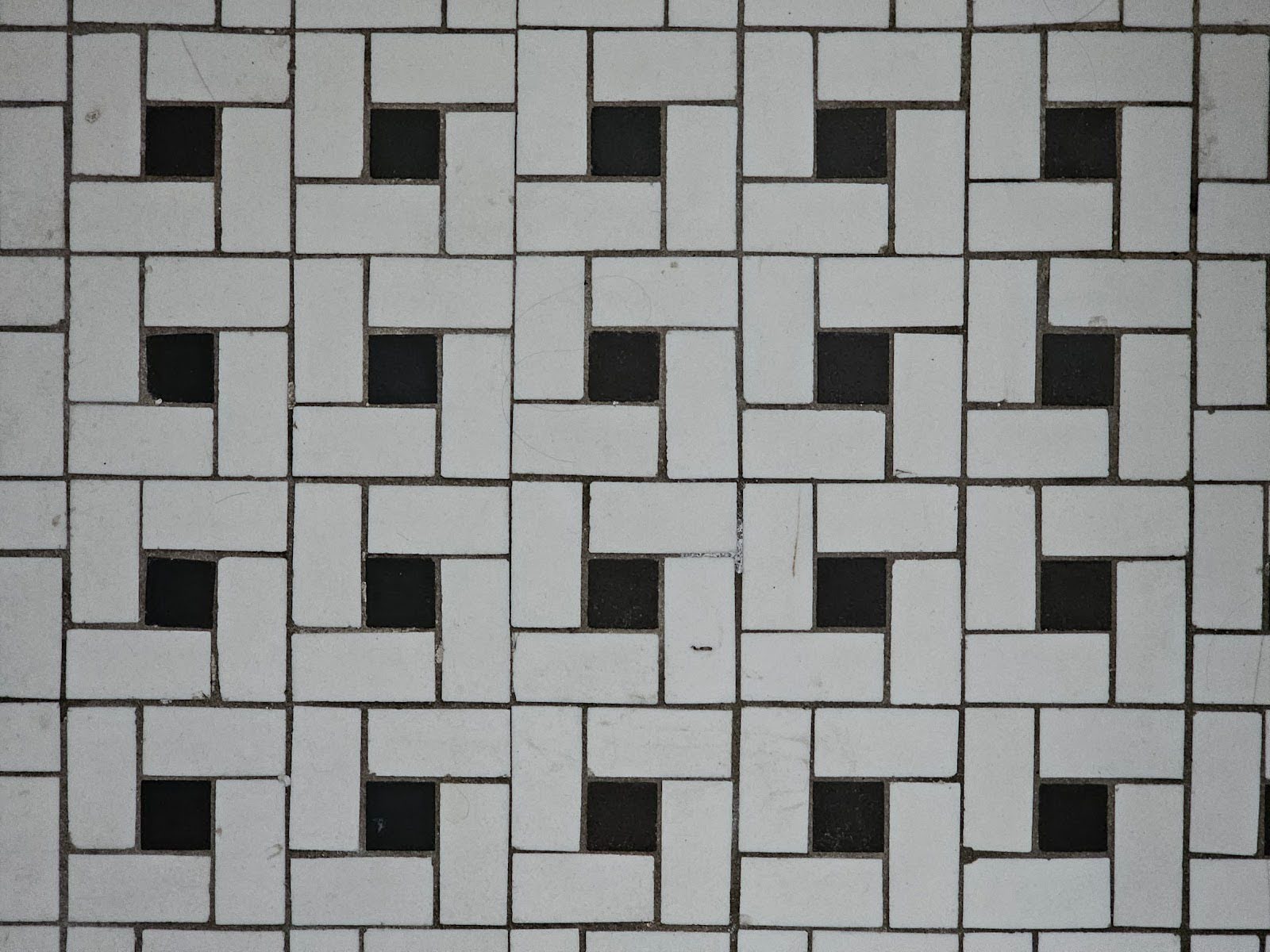
Today we’re going to look at one of the common bonds of rectangular mosaic tiles here in Washington DC. In the picture below, you can see an example of the Spanish bond. This particular tile layout is very common in older, unrenovated bathrooms here in Washington DC. We particularly find them in historic row homes. Some people refer to this Spanish Bond layout as a pinwheel layout. You can see how it kind of looks like a pinwheel because around each black square there are four tiles laid in line almost as if they’re spinning. Sometimes, people also mistakenly refer to this layout as a basket weave layout. It’s not the same though.
A basket weave layout is actually two tiles run horizontally next to two tiles that are run vertically, that pattern continues. At each successive course the layouts are staggered so above and below each horizontal layout, there is a vertical layout. If the individual pieces of the mosaic or layout are of a different shape so that the length of each tile is three times the width instead of two times the width, then the pattern can be set with three horizontal tiles next to each set of three vertical tiles.
An example of this kind of Spanish tile or pinwheel tile layout follows in the picture below. The old toilet is set into a recess of about 30 in in width. The building code today requires that there is 15 in clear on both sides of the center of the toilet. Overall that requires a 30-in clear space. This helps, especially for Americans, who are generally bigger people.
When trying to back up into a space that’s much smaller than 30 in, it’s inconvenient. As well, if the toilet is all set on one side of the center of a 30 inch space it makes it uncomfortable because you’re too close to the wall or cabinet. It doesn’t leave enough room.
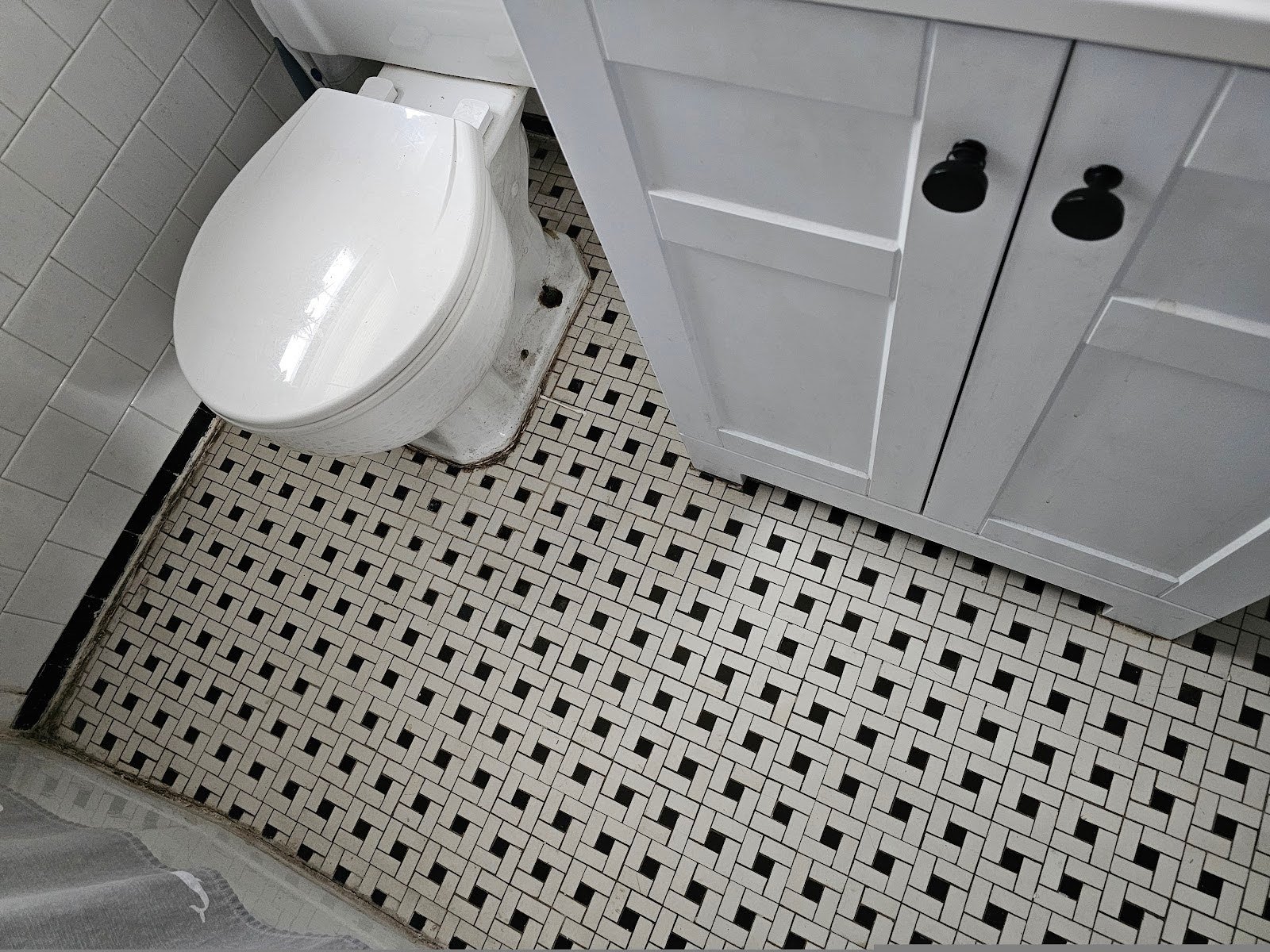
In this bathroom layout, you can see that there’s a vanity cabinet right next to the toilet which is right next to the wall. There’s a tub in front of the cabinet and the toilet. This is a really common type of bathroom layout, especially in historic row homes. Here they’ve used a dark color grout which shows all of the white tile, essentially creating an outline.
We refer to this tile as a historic tile, but it was just coming out on the market when the majority of these homes in the historic parts of Washington DC were being built. It’s different from modern tile. Many of these historic tiles have what we call through-body, and they were set in a thick-set mortar instead of a modern thinset mortar. Because of the through-body, they were mostly unglazed. Will explain each of these different characteristics, one by one.
Through-body
Most types of modern ceramic tiles, which also includes porcelain, are made with a clay or earthen body and then coated with a glaze at the finished surface. Once fired with that glaze applied, it becomes a bit like a tiny film of glass. It’s mostly impermeable. This works well and tiles are mostly very durable. If a tile surface chips or breaks though, the underlying earthen body will become exposed.
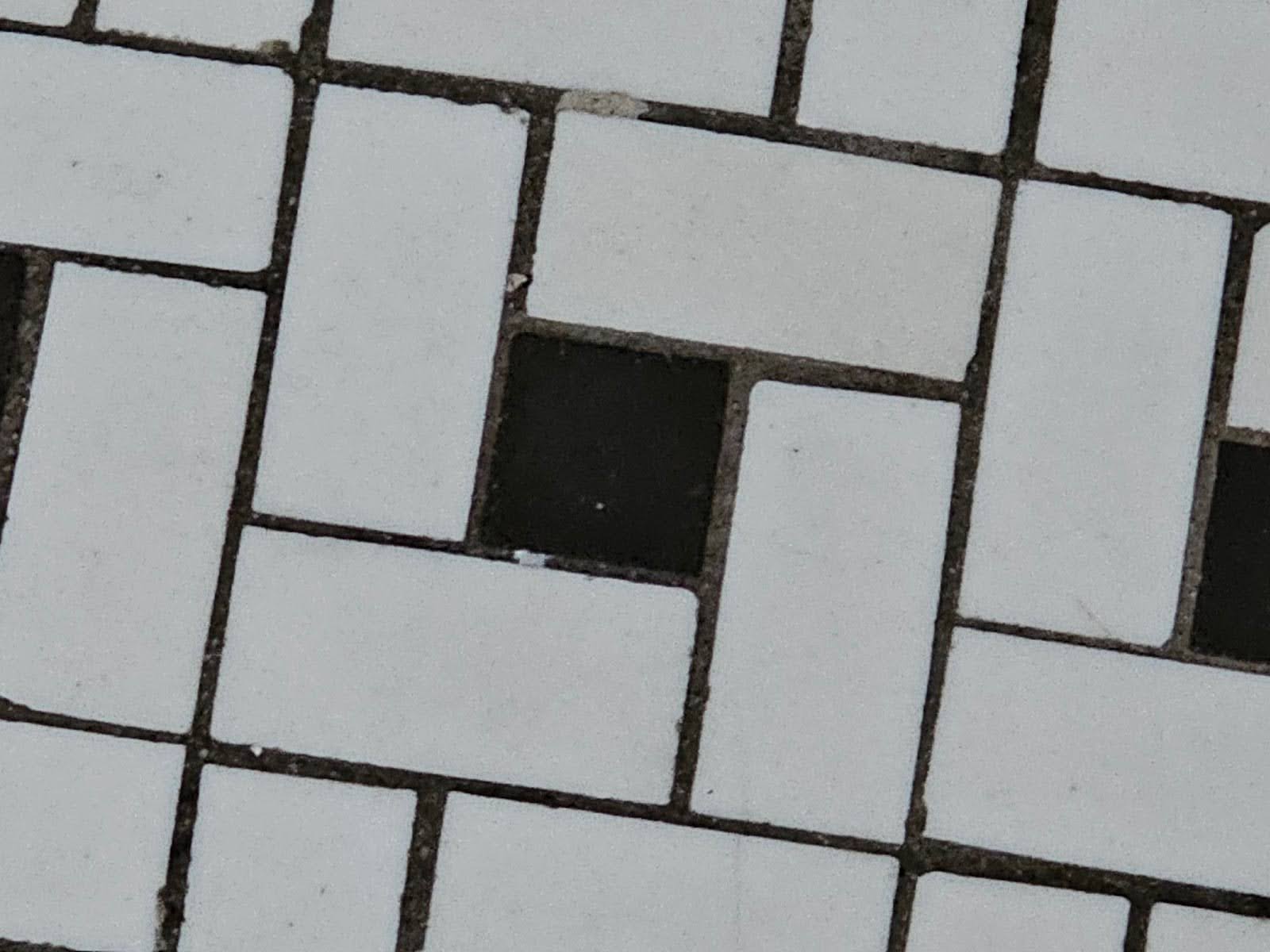
These historic tiles, that were showing, we’re different though. They had a consistent color and material through the entirety of the tile. If they were to become chipped or braided, they would remain the same color because that color was consistent all the way through.
Unglazed
Because they were unglazed, the color variety and the patterns of the design were also limited. They only have one solid color.
In historic times, in the early 20th century, some glazes were also available. However, those glazes were generally made with chemicals that we wouldn’t use today. Often they used lead and arsenic. Today’s glazes don’t require those chemicals at all. As well, there’s some characteristics of modern glazes that are related to superior performance. Modern glazes can have a traffic slippage resistance. Some of the manufacturers describe the added abrasive materials, at the surface, as nanochemicals. That means that they’re so small that they’re essentially invisible to the human eye.
Just because some tile glazes can have slip resistance, though, does not mean they all do. You have to look at the individual specific tile products to see if it’s rated with a sufficient resistance for wet areas such as shower floors.
In this upcoming week’s blog article, we’ll look at some of the big differences between historic thick set and water and modern or contemporary thinset mortar. The put in really simple terms, thick set mortar was very thick and added a significant weight to the structural system of a building. By comparison, thinset mortar uses modern polymer additives and can be applied very thinly.
Dupont Kitchen & Bath Can Help
As dedicated and local DC metropolitan kitchen and bath builders and installers, we pride ourselves on turning your visions into reality. Your kitchen and bathrooms can reflect your unique style and be designed with personalized aesthetics. It can be a process from creative designs to the realization of your dream space. Dupont Kitchen & Bath Specializing in kitchen and bath construction, we bring expertise and skills to every project. If you’re contemplating a renovation, upgrade, or modernization in the local market, we’re happy to be your team. Consult with us, and we can start together on a path to redefine and elevate your DC living experience.
You can visit our company website at https://dupontkitchenbathdc.com/
Here at our website you will find a simple and convenient web form that you can fill to contact us quickly.