3D Wall Tile – Part II

Custom 3D Wall Tile Solutions in Washington DC – Part II

This past week, we looked at several different images from a bathroom built with a three-dimensional tile.  This tile has more than just a bit of a texture at the surface, It has relatively distinct shapes away from the wall plane. It looks pretty interesting. It’s not the type of thing you put everywhere though because it doesn’t fit with all different styles of aesthetics.

We mentioned this past week, this type of tile looks very modern. We wouldn’t even really call it contemporary. It looks a little bit more advanced or futuristic.
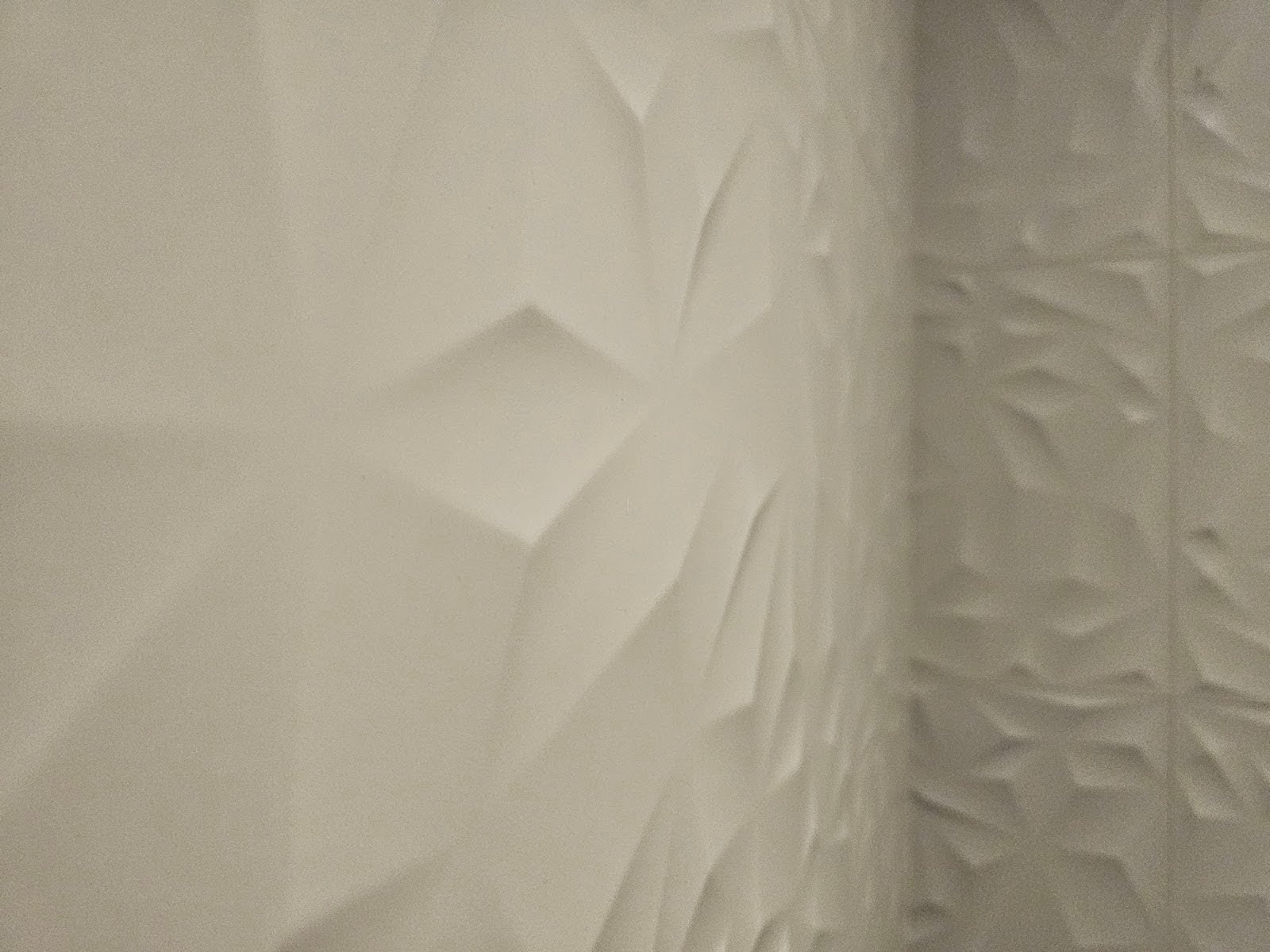
3D Wall Tile - Part II

As we mentioned, these particular type of tiles are very large. They’re not like the historic type of texture tiles that are just 4×4 or 6×6 size. They’re also very different than mosaics. Mosaics are small little pieces that may have a lot of visual contrast and interest, but these instead are single large pieces with small areas of detail in the surface.

The installation of these types of large tiles requires a different type of substrate preparation. Generally, installation on a wall can be a bit easier than installation on the floor. This is for a few different reasons. One of the important ones here though is that a wallboard surface, if well prepared, can be more true than a typical floor system.  This particular statement isn’t necessarily perfectly true across the board, but when dealing with a concrete floor substrate, there’s generally a high degree of variability in the trueness and flatness of the surface. By comparison, wall board can be flatter.

Having a very flat surface is important if a tile is very large. Inconsistencies in the levelness or trueness of the setting of the tile can be hidden, to a large extent, in a very large grout line.

Essentially, the larger the grout line, the easier it is to hide inconsistencies in the trueness of a tile setting. The amount that a tile is set out of parallel is essentially most extreme at the edges. It’s essentially amplified or cumulative at those points.  The amount of difficulty in the level of required skill is a function of the overall size of the tile and the comparative size of the grout line. You could basically express this level of difficulty in the form of a ratio.
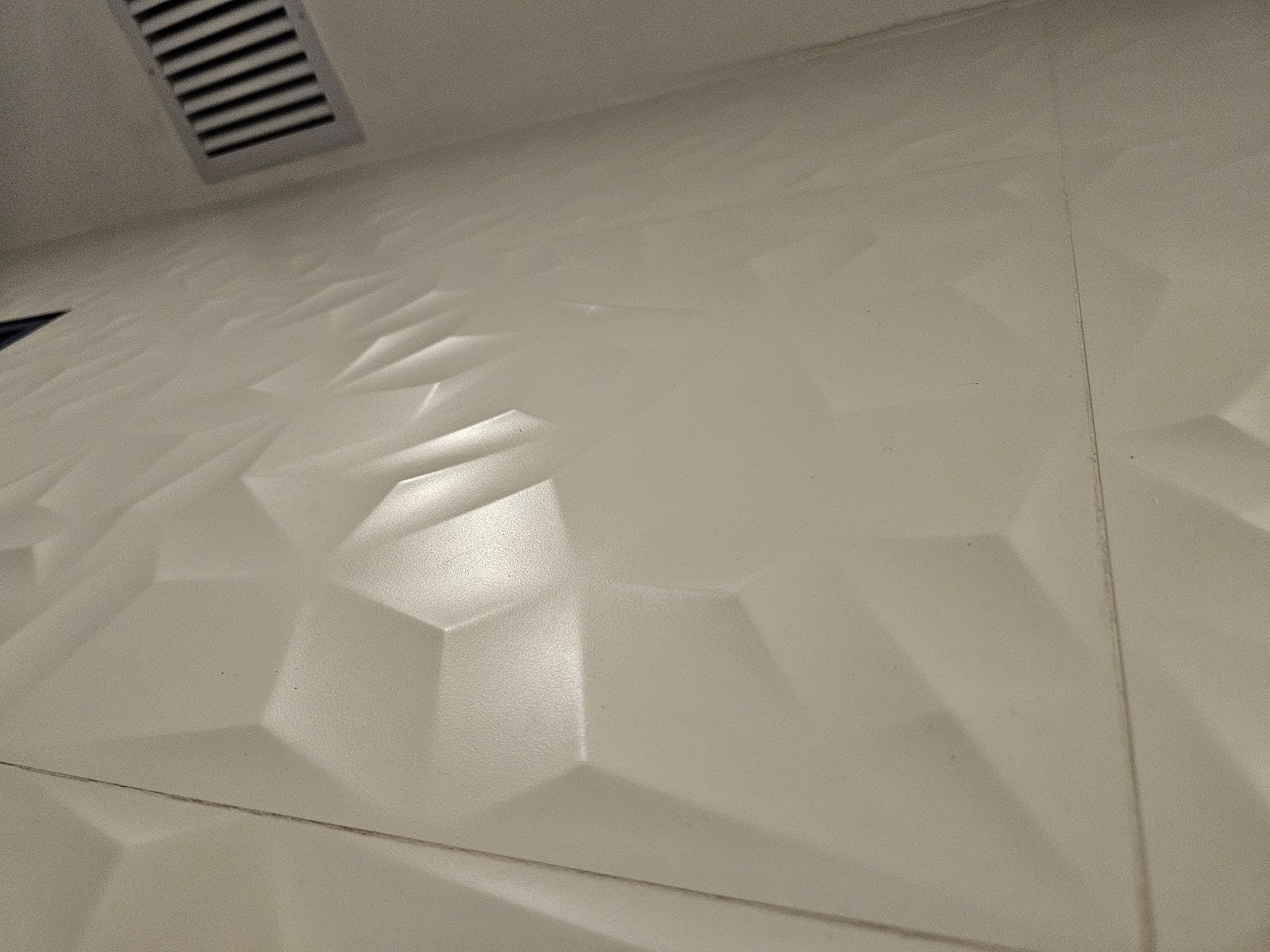
flat surface is important if a tile is very large

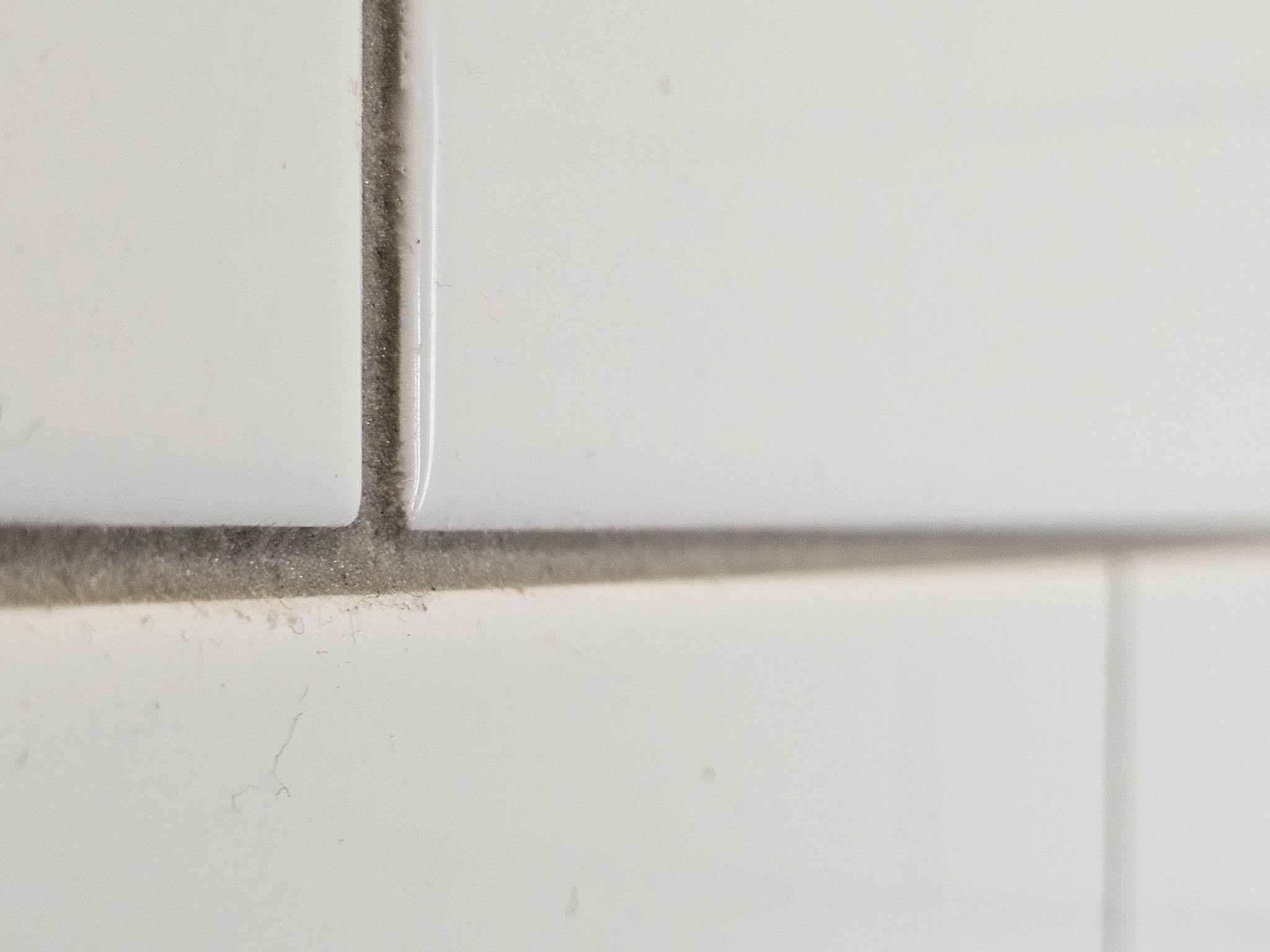
In the picture below you can see the kind of lippage that is common with large tiles combined with small thin grout lines.  The tile color here happens to be the same as the grout color.  This grout line is meant to be minimalist. However, with the lighting coming down from the ceiling, it exaggerates the shadow caused by lippageFixing lippage, shown here below, at this point, is very difficult. It’s not as easy as just taking the tile out and putting in a new tile. That can be done, but it’s going to be also very hard to adjust the new tile at level once the current tile is removed.

It’s generally an ordeal trying to deal with fixing the substrate. Often in bathrooms we recommend the installation of a cement tile backer board. These type of boards are much more durable and much more water resistant than pretty much any type of gypsum board. They are more expensive though and they come in smaller sizes so they require more details in installation.
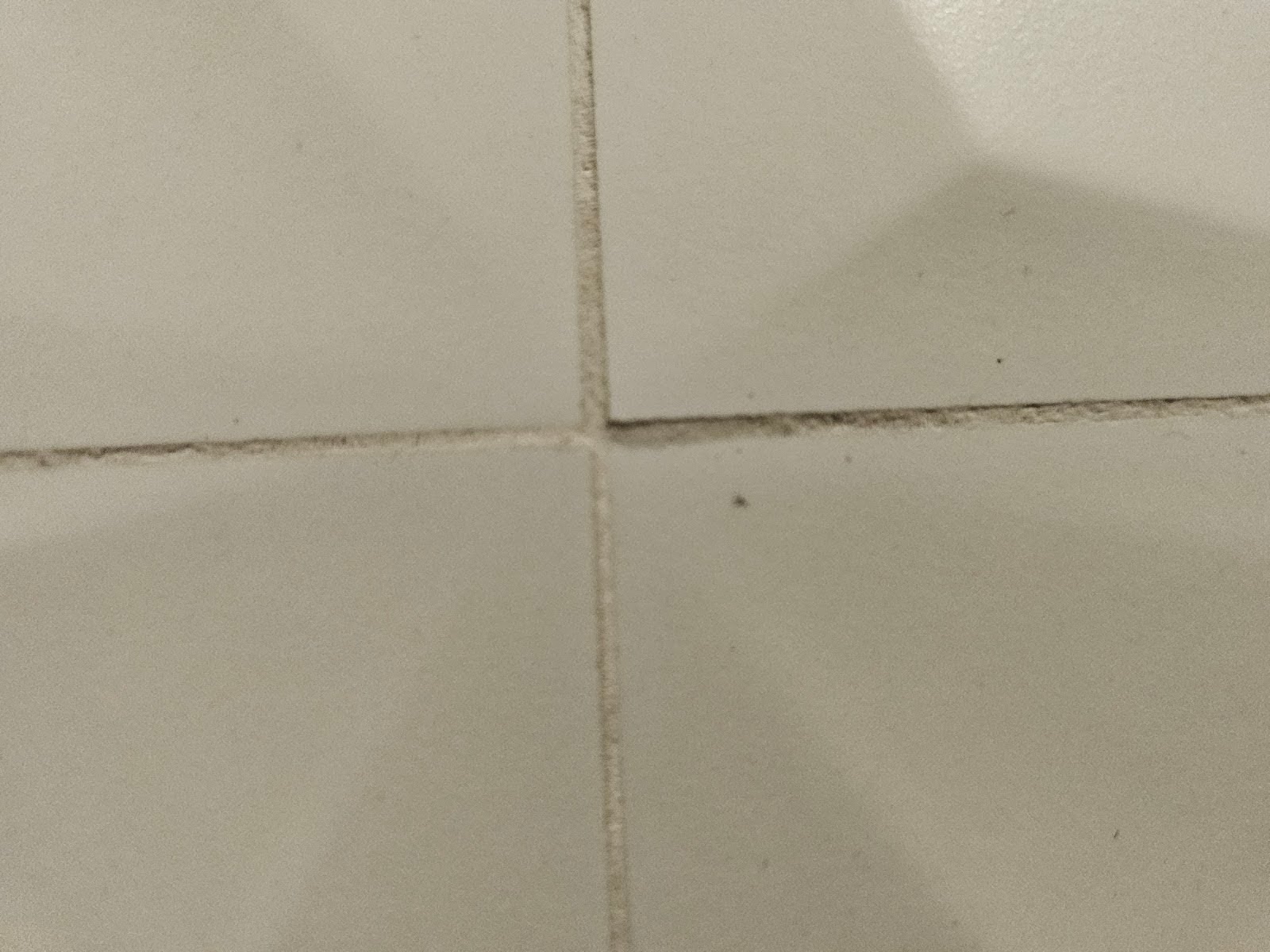
tiles combined with small thin grout lines

Theoretically, if this tile is to be removed, it will be a very tedious operation. And even though this doesn’t look perfect, we’ve picked out some of the worst spots and we’re not sure that it’s clearly out of acceptable tolerances.  From a quality control perspective, it’s a pretty good idea to keep an eye on these kinds of tile joint variances, especially at the area around head height.

A specific eye level depends on the viewer. Some people are short, some people are tall. Obviously, there’s a range in what eye level is to different people. Generally, we recommend keeping a very close eye on these types of details from about 4 ft to about 7 ft above the finished floor height. This is not a hard and fast rule, it’s just a rule of thumb.

Dupont Kitchen & Bath Can Help

As dedicated and local DC metropolitan kitchen and bath builders and installers, we pride ourselves on turning your visions into reality. Your kitchen and bathrooms can reflect your unique style and be designed with personalized aesthetics. It can be a process from creative designs to the realization of your dream space. Specializing in kitchen and bath construction in DC, we bring expertise and skills to every project. If you’re contemplating a renovation, upgrade, or modernization in the local market, we’re happy to be your team. Consult with us, and we can start together on a path to redefine and elevate your DC living experience.

You can visit our company website at https://dupontkitchenbathdc.com/

Here at our website you will find a simple and convenient web form that you can fill to contact us quickly.
On Key

Related Posts

The tile used on his bathroom is an unterminated or hexagonal tile with an embossed texture. Unlike most wall tile installations which terminate all the way up at the corner of the joint between the wall plain or have a termination strip, this tile is installed with a raw staggered edge. Sometimes an edge like this is called a floating edge. If you look in the picture below, you can see that the tile at the vertical inside corner of the wall is cut to fit the shape provided by the wall plane. The top of the tile though is left raw to just follow a staggered edge of the hexagonal tile itself. The staggered unterminated edge of the tile doesn't necessarily look bad, in this example. They've been careful during installation to not let mortar ooze out in a way that looks rough or unfinished. At the lower tiles though, in the picture below, you can see the top of that unterminated edge. There are two problems with that kind of unterminated edge. First, you can see the raw edge of the tile itself. Since this is not a solid piece of natural material, the front or exposed face of the tile is a different color than the internal composition or body of the tile. When it's exposed like this and doesn't have a terminating edge you can see that difference which makes it visually apparent that it's not a real material. It's a manufactured material. The second problem with this type of unterminated edge is that the mortar itself has a thickness of roughly 1/8 of an inch. When applied with a 3/16 inch Notch trowel, the mortar becomes compressed but still even when flattened as much as possible there still is a thickness of that mortar. Once it is dry and cured, you can still see the thickness of that mortar. In almost all cases of tile installation, unlike stone masonry or even brick masonry, the tile mortar is not intended to be exposed at the joints. In between joints, in the field of the tile, the mortar will be covered with a colored grout. In this case, the tiles are set so tightly that there is almost no visible grout line between them. The grout used is a color that's very similar to the tile and the effect works. In some cases when the tile has a variation of significant color difference between the ranges of colors within the tile it's difficult to have a grout that complements or blends. Here though because the colors continuous across the face of the tile and the grout has been matched so well, you can't even hardly notice it. You can see that joint or between the back of the tile and the wall very clearly in the next picture below. You can see there's a very thin line with a black dark shadow between the tile and the wall. In some cases, when a tile is left unterminated at the edge, a gun applied caulking can be applied across the edge, smoothed, to almost make it look intentional. Sometimes in bathrooms without really good ventilation, if there's steam from hot water, that steam can condensate and build on the wall. When the vapor droplets accumulate enough they'll roll down the wall and in this case they'll sit on top of and get back behind the edge of the tile. That's one of the downsides, here though, this bathroom is just like a powder room with a toilet and a sink, but it doesn't have a shower. Most of the steam moisture buildup in bathrooms comes from showers. In the picture below you can see the distance between the other side of the ceiling and the top of the tile. Here they were at least smart enough to bring the top of the tile to a point that's above eye level. Typical eye levels are around 60 to 75 inches above the finished floor height. The mirror used above the bathroom sink has an integral LED light that wraps the perimeter of the round mirror. It basically provides a dramatic high contrast to the adjacent tile. That high contrast accentuates the texture of the tile. This tile has this intentional embossed or relief texture which is well employed when lit in a way that emphasizes the texture. The next picture below shows a close-up view of that edge at the top of the tile. Dupont Kitchen & Bath Can Help As dedicated and local DC metropolitan kitchen and bath builders and installers, we pride ourselves on turning your visions into reality. Your kitchen and bathrooms can reflect your unique style and be designed with personalized aesthetics. It can be a process from creative designs to the realization of your dream space. Specializing in kitchen and bath construction, we bring expertise and skills to every project. If you're contemplating a renovation, upgrade, or modernization in the local market, we're happy to be your team. Consult with us, and we can start together on a path to redefine and elevate your DC living experience. You can visit our company website at https://dupontkitchenbathdc.com/ Here at our website you will find a simple and convenient web form that you can fill to contact us quickly.
Hex Wall Tile

Modern Hex Wall Tile for Bathrooms in Washington DC The tile used on his bathroom is an unterminated or hexagonal tile with an embossed texture.