Modern Look of Cement Finished Bathroom Walls
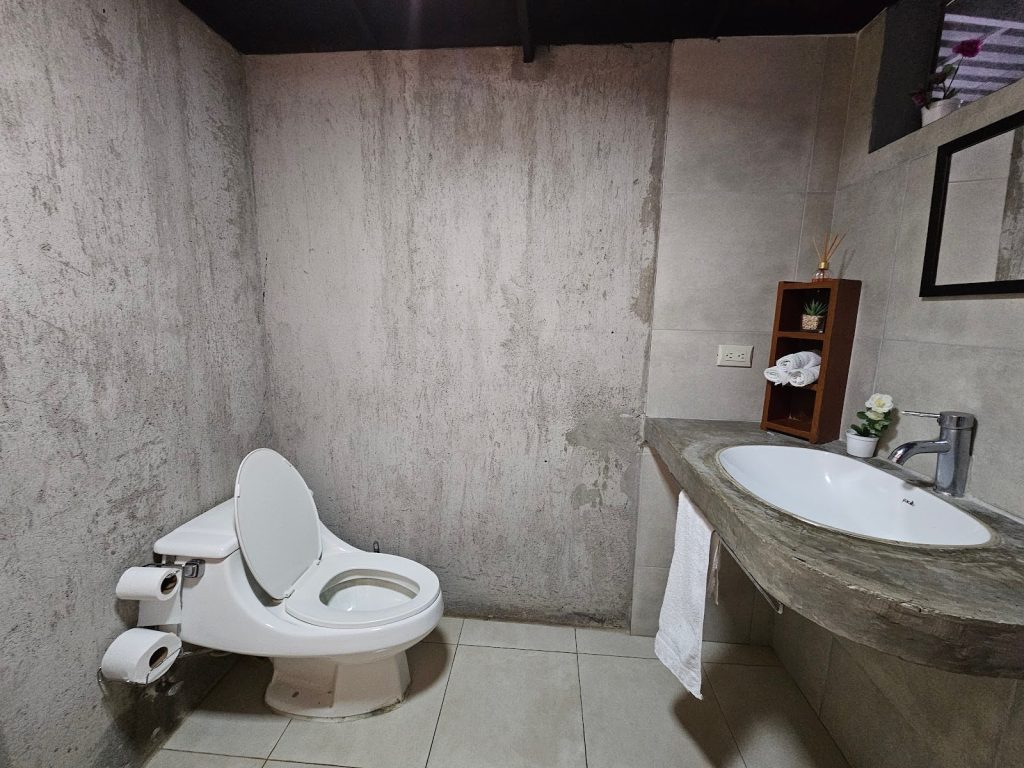
A while back, we took a look at a relatively interesting bathroom. We ourselves hadn’t built this bathroom, but we thought it was a good example of using relatively common materials in a different way to create a unique aesthetic. The bathroom has a relatively low ceiling and a relatively small footprint, but it’s built with a look that works, more or less. There are definitely a handful of things that we would change if we were designing and or building this bathroom. So we’re not saying that this bathroom is perfect but it’s an interesting example of ways that materials can be used unconventionally.
Even though it isn’t an example of the fanciest bathroom ever built, things can still be learned by examining details of this bathroom. We generally take the same perspective with other kitchens and bathrooms. Good or bad, understanding the details of design and construction helps inform future examinations, analysis, and decisions. These elements are all part of improving a practice in kitchen and bathroom design and renovation.
This particular bathroom is almost a full bath, but it doesn’t have a tub. Before we get too deep into talking about the wall finishes of this bathroom, which is its most unique detail, we will talk about the layout. Although the elements of the layout are not unique, there are still some somewhat glaring complications we should mention. A bathroom with a stand-up shower but no tub is typically considered a three-quarter bath, not a full bath. Tubs don’t fit within the layout constraints of all bathroom spaces.
We generally recommend at least 5 fee in total width of available space to install a tub. And it should have at least 30+ inches of clear width available in the floor plan. If that space encroaches too close to the vanity countertop, it makes the space uncomfortable. If the edge of the tub encroaches to limit the space of the toilet more than 15 in from the centerline then there’s not enough space.
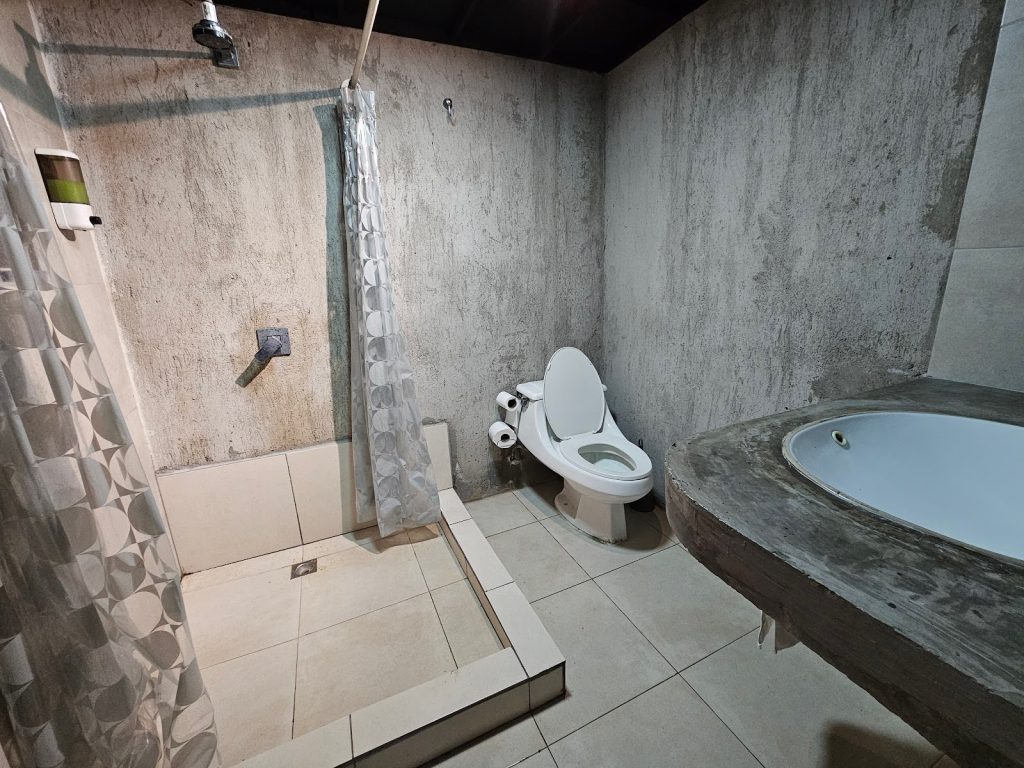
In fact, a toilet should have at least 15 inches of clear space on both sides of the centerline. In this particular example, we consider this toilet’s layout a mistake. It’s not that the toilet is too close to the shower though, the problem here is that the toilet is too close to the wall.
The centerline of the toilet is essentially the bisecting line of symmetry. During the installation of the toilet, you can find this line relatively easily by identifying the twelve o’clock and six o’clock positions of the round toilet flange. If a line were to run directly through the middle of the circle, like the hands of a clock, this line would run from front to back, bisecting the circle.
Then measuring out 15 in on each side of the inferrefñd line would give you the minimum boundary space. It’s always better to pad a little bit of extra space when you’re laying things out on a job site. Installing things so that they are exactly at a minimum required increment can lead to problems. For example, if the wall would need to be built a tiny bit thicker, then the toilet flange would be in the wrong location. Modifying the location of a toilet flange is extremely complicated. In this particular case, since the toilet and bathroom are in an interdependent configuration of constraints, using the limited space effectively is essential.
The only way to modify that slab is to at least break up a bit of the concrete. However, breaking up concrete should always be avoided if there’s an alternative. Here the alternative is simple, the builder could include a little bit of extra space, maybe 1 inch. The overall net allowance of space provides sufficient margin for installing the flange on the center of the netspace and still having more than sufficient space on each side of the bisecting line of symmetry of the toilet.
Also, another detail that you can take a look at in the picture below is that even though the bathroom doesn’t allow for a ton of space, they chose to install a very large sink. This seems like a problem. It may have actually been part of a strategy though. One of the downsides to bathrooms that don’t include a tub are that it’s difficult to wash a baby. Washing a baby in a stand-up shower is not easy.
It’s easier to kneel beside the curb of a tub and put the baby in the tub to wash the baby. The curb or side of the tub keeps the person washing the baby a bit more dry. That’s why it’s complicated to wash a baby in a stand-up shower. In kitchen and bathroom redesigns, we generally recommend that at least one bathroom in each house have a full size tub, for this reason. Even if the owners of the building, who are our clients, don’t have babies, it can make resale easier to have at least one bathroom with a full size tub.
Here though, one interesting detail is that since the bathroom sink happens to be so large, it can help in tasks like washing a baby. It’s a bit like a trade-off. Since there isn’t a full size tub it actually helps to have a large sink. It’s not something that people normally think about, but here even though the oversized sink seems like an impediment, there’s at least one advantage and sometimes the strategy in designing a bathroom involves trade-offs.
Dupont Kitchen & Bath Can Help
As dedicated and local DC metropolitan kitchen and bath builders and installers, we pride ourselves on turning your visions into reality. Your kitchen and bathrooms can reflect your unique style and be designed with personalized aesthetics. It can be a process from creative designs to the realization of your dream space. Specializing in kitchen and bath construction, we bring expertise and skills to every project. If you’re contemplating a renovation, upgrade, or modernization in the local market, we’re happy to be your team. Consult with us, and we can start together on a path to redefine and elevate your DC living experience.
You can visit our company website at https://dupontkitchenbathdc.com/
Here at our website you will find a simple and convenient web form that you can fill to contact us quickly.