Timeless Wood Bathroom Countertops
We have looked at several examples of wood countertops, in kitchens, here on our website. We don’t see these wood countertops as often in bathrooms; however, today we’re going to look at an example of a wood countertop installed in a bathroom with a double pedestal sink setup. We happen to think that the overall design installation was pretty well done, but there are some caveats to know about before using wood countertops in bathrooms. Like many different types of material choices in design and construction, there are trade-offs with everything and all of these materials have different requirements and timelines for upkeep and maintenance.
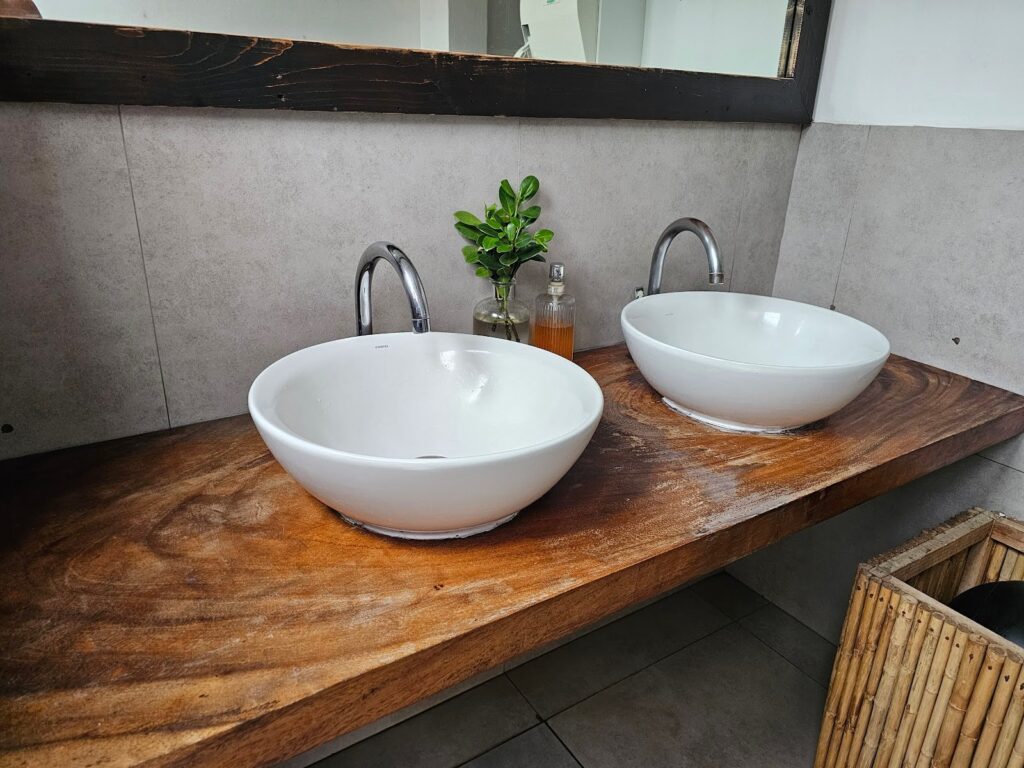
Bathrooms typically, in most households and or commercial uses, have more water exposure on countertops compared to kitchens. However, the behavior and use of each specific occumlpant will really determine the amount of water applied to a countertop in each use of the accompanying sink. People who are messy and sloppy, who splash water all over the place damage wood countertops faster, for example.. If they don’t go and clean it up with a towel or a cloth relatively quickly after use of the sink, that water will stay there on top of the wood surface and slowly cause damage with each successive, sloppy use, over time.
____
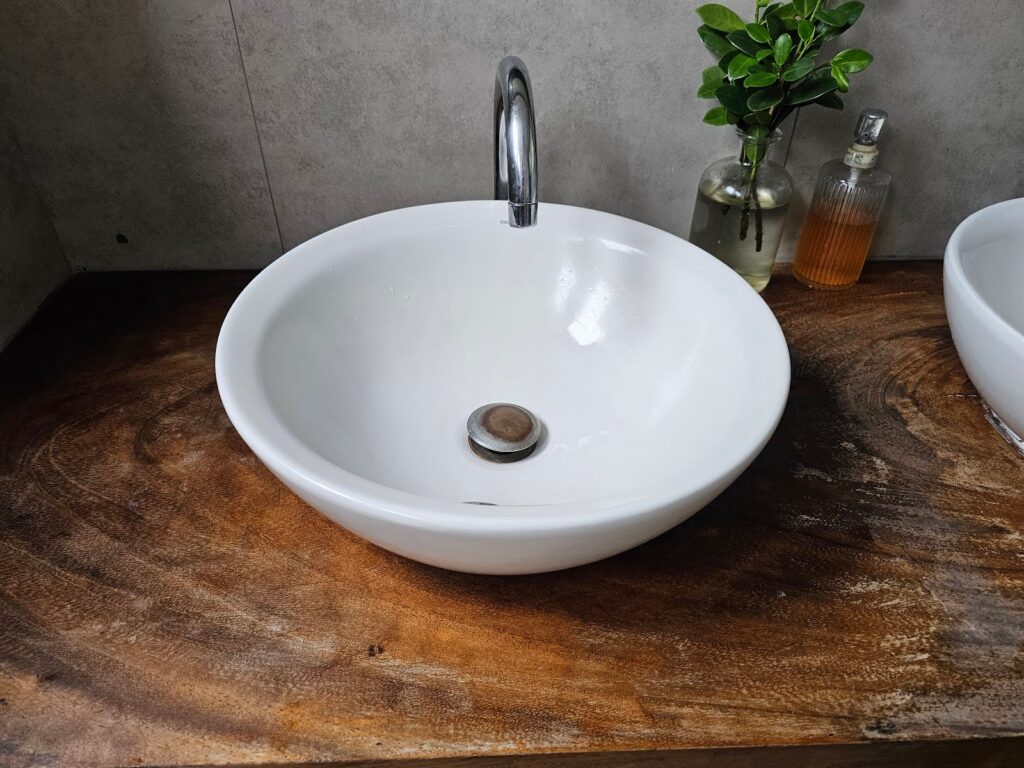
The amount of user user caused water spread really depends and the specific of the layout and type of materials used activities performed in each space. In bathrooms, frequent washing up, tooth brushing, and personal grooming activities cause direct, frequent water splashing onto the countertop surface. Users tend to be less careful about water cleanliness, with water splashes commonly occurring from sink use such as washing, and makeup application.
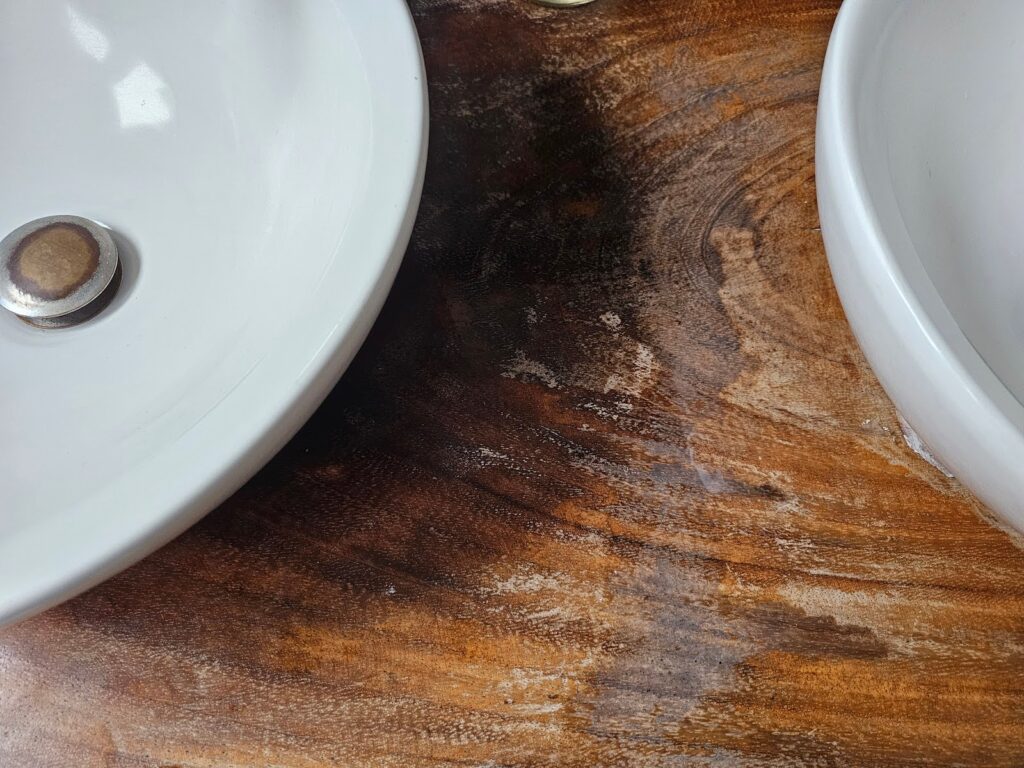
Kitchen countertops, while exposed to water, are generally managed more specifically. Users typically use selected areas for water-related tasks like washing dishes or rinsing produce, often employing dedicated spaces like sinks or designated washing areas. Kitchen users are more likely to use towels, mats, or deliberately positioned items to clean up at the time of usecontrol water spread.
The design of bathroom sinks—typically smaller and with different shapes and configurations, in compared to kitchen sinks—contributes to increased water sispersion. Also, bathroom faucets are often shorter and positioned closer to the counter surface, increasing the likelihood of water splashing back uo beyond the immediate sink area.
Material selection also has on effect, not on the splashing and spread of water butnof the ensuing damage. Bathroom countertops are often designed with water resistance in mind, as designers often anticipating higher moisture exposure, while kitchen counters might have more varied material considerations like aesthetics or food preparation functionality. As we said near the start, wood countertops are much less common in bathrooms. These factors, altogether,create a higher probability of water accumulation on bathroom countertops when compared to kitchen surfaces.
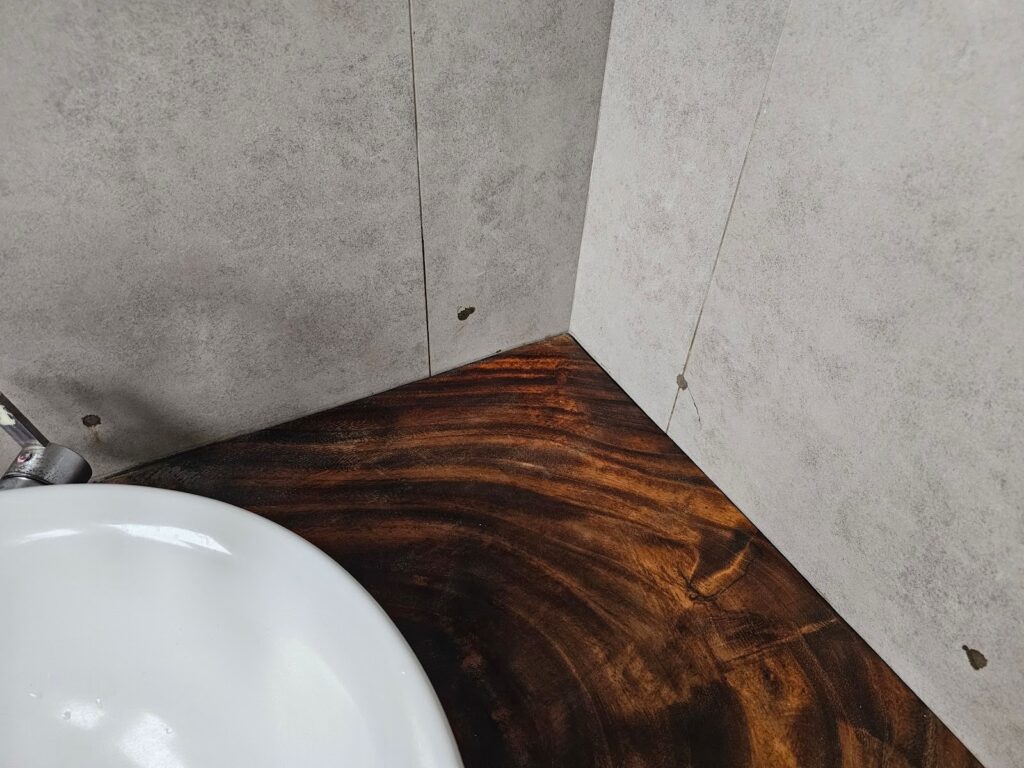
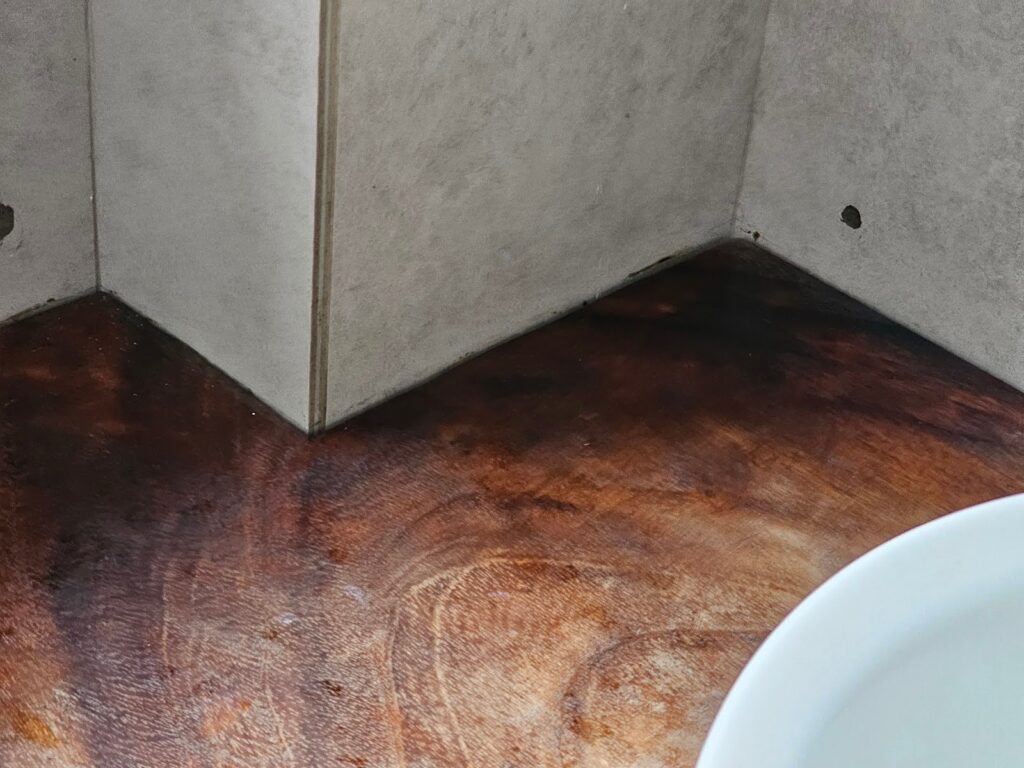
Here in the corner, in the picture shown below, you can see, that the wood countertop is not really sealed to the adjacent side and back wall. This makes a big difference too because the edges of the slab are generally less protected than the surface itself.
During the initial staining and sealing of the countertop, the slab might actually be well treated, but during successive reapplications unless the slab of wood is actually removed and uninstalled from its permanently installed position, then anyone applying recoats of sealers and stains, really can’t access the edge. Therefore as the stain and sealer deteriorates at the edge, it’s more difficult to reseal. Good caulking applications can help prevent water from seeping down from the countertop itself towards the exposed edge of the wood slab.
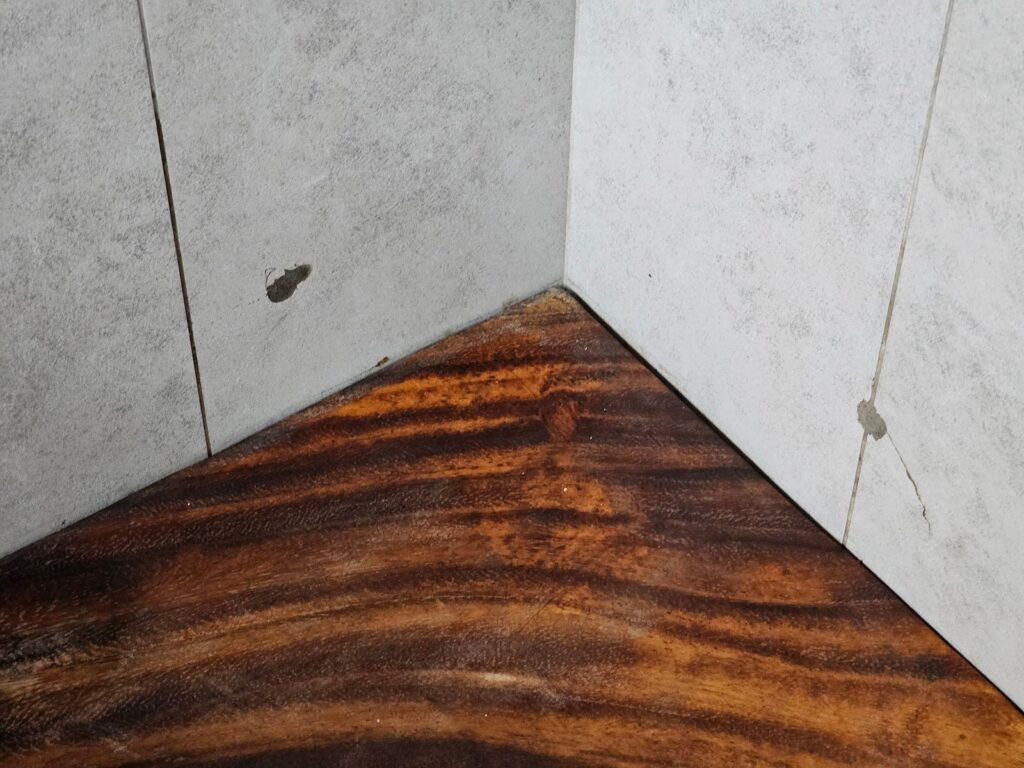
Back at the top of this article, we spoke about timelines for upkeeping maintenance. Wood like this needs to be resealed every so often. Generally without significant exposure to moisture and to ultraviolet rays, you might be able to go more than a year or two before needing to reseal the wood. The species of wood selected for the countertop makes a big difference. For example, tight grain woods will generally be able to hold a stain and be more durable and can normally go longer between recoats and reapplications of stains and sealers. Softer woods however will generally need to be resealed more often.
 Dupont Kitchen & Bath Can Help
As dedicated and local DC metropolitan kitchen and bath builders and installers, we pride ourselves on turning your visions into reality. Your kitchen can reflect your unique style and be designed with personalized aesthetics. It can be a process from creative designs to the realization of your dream space. Specializing in kitchen and bath construction, we bring expertise and skills to every project. If you’re contemplating a renovation, upgrade, or modernization in the local market, we’re happy to be your team. Consult with us, and we can start together on a path to redefine and elevate your DC living experience.
You can visit our company website at https://dupontkitchenbathdc.com/
Here at our website you will find a simple and convenient web form that you can fill to contact us quickly.