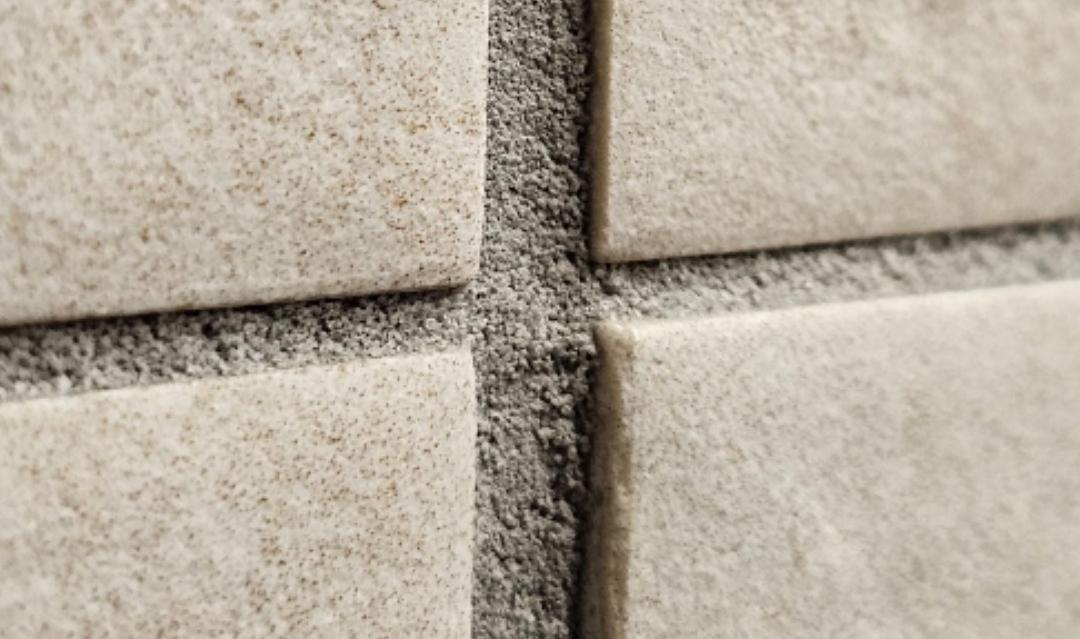
This past week, we happened to look at this particular ceramic tile, shown here as well. It’s a distressed or aged look to a modern or contemporarily made or manufactured tile. It’s just intended to have this aesthetic where it looks distressed or aged. They’ve used an aluminum termination strip. Aluminum products like this can be treated and finished in a variety and wide range of different colors and textures, but here it’s a simple round over with an anodized aluminum finish.
That aluminum finish is a mechanically or chemically induced aluminum oxide covering. Like rust on iron or steel, which is a ferrous oxide, aluminum oxide is just the oxidation on the surface of aluminum metals. It happens to look a little bit more dull than a perfectly clean piece of aluminum, but it’s pretty similar. Iron, for example, also looks shiny, almost like silver, when it’s very clean.
When it oxidizes though it turns to a bright red color. We see ferrous oxide all around us all the time. It’s in dirt. Often when we see really red dirt, it’s has that color because it has a pretty high iron content. Bricks, for example, are mostly made from clay that comes from the ground, just like regular dirt. In fact, clay and mud and dirt are all kind of similar.
There’s some differences, on a pretty technical level, but they aren’t completely different. When those materials are heated for long periods of time at high temperatures, essentially fired, the clay goes from a muddy brownish kind of color to a bright red. Here though, in the case of aluminum, when aluminum oxidizes it just turns into a stable type of duller color, very similar to the original aluminum color.
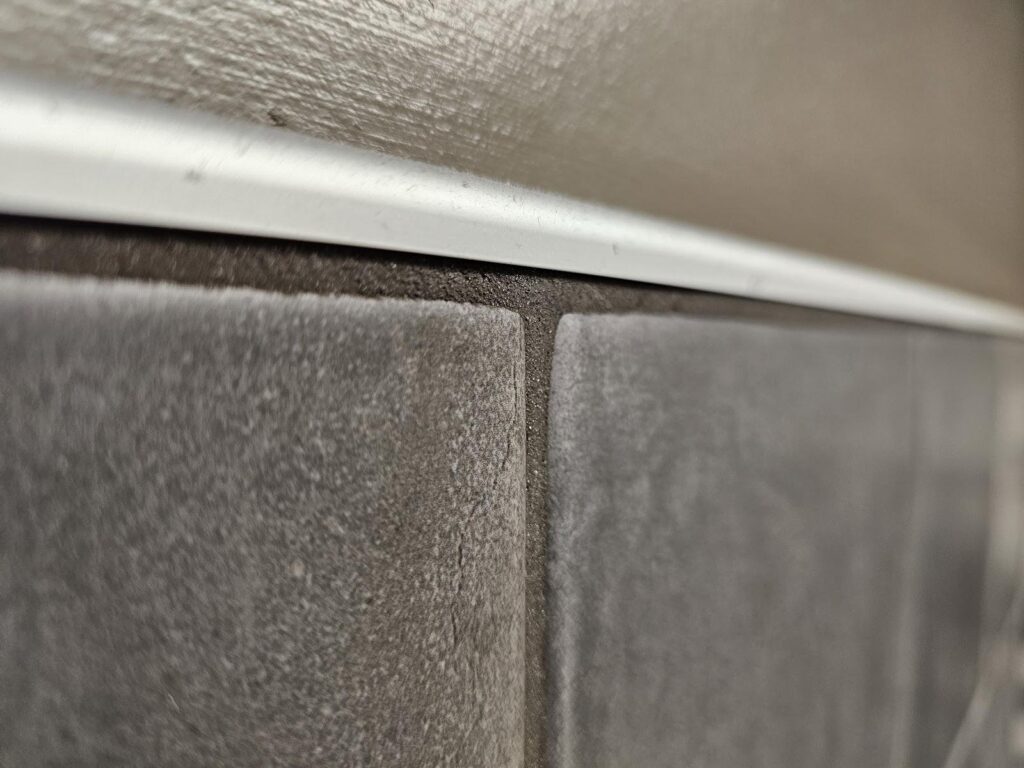
We looked at the top of the wainscoting in this past week’s blog and from a more of an oblique angle, as shown below, you can see it a little differently. Here, you can see that the functional purpose of this termination strip is that it basically fills the space between the surface of the tile edge to the depth of the tile’s thickness. It transfers that top edge and returns it back to the wall. It’s not just the thickness of a tile itself, the space covered also includes the thickness of the mortar bed. Altogether, those elements amount to about 3/8 in thickness.
Another big difference is that, while the aluminum happens to be stable in its oxidized form, iron is unstable in an oxidized form. It basically just turns to dust. Large pieces or chunks of metal or iron will rust. The rusting starts off with just a red patina, but then it’ll start to get powdery on the outside with a red dust. Then as more and more time goes by it’ll start to delaminate and separate, enlarging to thick flakes. As the oxidation continues, it will eventually just turn back the dust and dirt.
Here in the case of anodized aluminum, they’ve basically, in a manufactured type of setting, just turned the surface of the aluminum to an oxidized coating. Some people prefer this duller color to the shiny color. The shiny colors, in construction, often look gaudy. When you think of Trump Tower and someone’s design obsession with things that are gold-plated or shiny, it seems juvenile.
There was a time, back in around the 1980s when there was this Hollywood Regency type style at the core where all sorts of cheap things like flat shipped inexpensive particle board furniture were designed with accents that had gold plating all over them. Today, people who have been exposed to that type of design and furniture and installations and construction might regard that type of aesthetic as just really cheap. The plating hardly cost anything because it is a super thin fake application. It just ends up wearing off anyway and looking like a cheap knock-off.
By comparison, this anodized aluminum is intentionally dull, like a matte or a satin type of sheen because it’s not intended to look gaudy or fancier than it really is. It has a functional purpose and it looks uniform enough to do his job properly. It’s almost a little bit intentionally understated. However, it does look manufactured.
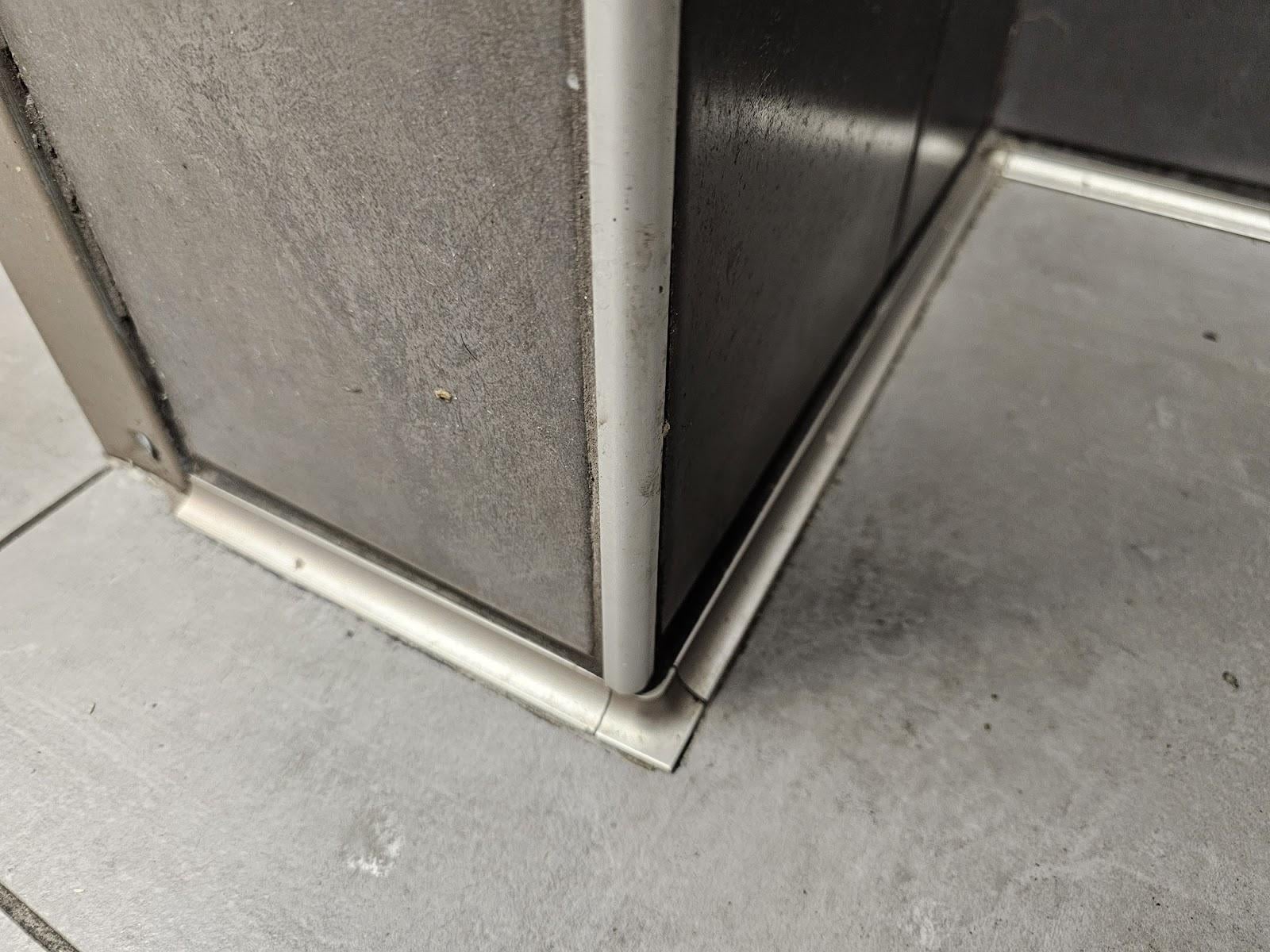
In the next picture below, you can see a different type of termination strip. The previous type we showed was a roundover bullnose. The one shown below though is almost the inverse or opposite. It is really not needed for functional purposes. Here they’ve used it just for aesthetics only. The floor tile could be installed first and then the wall tile could be set directly on top of that floor tile.
The joint between the two of them would essentially be a grout line. Then on top of the grout line, a gun applied caulking could be applied to seal the bottom of the wall to the top of the floor. In that type of assembly, you wouldn’t have any exposed raw tile edges. That type of simple default installation would work fine, from a functional perspective
Here though, they went a step farther, even though it wasn’t required, and installed this particular termination strip to continue here at the floor. In this configuration, the lines of the termination strip are like a pinstripe that runs throughout.
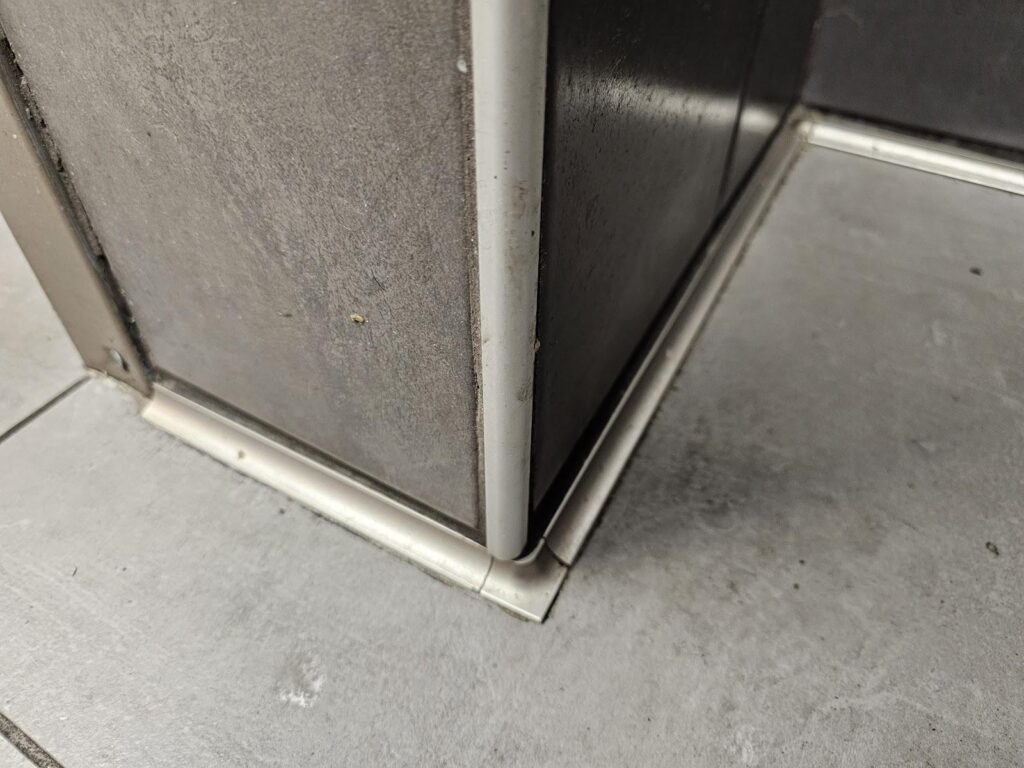
That particular style, of something that’s manufactured, does not work well with this particular brown tile. The brown tile has an intentionally just distressed aesthetic. Taking something that’s clearly a manufactured aesthetic and pairing it with something that’s supposed to look like an aged and worn rustic aesthetic doesn’t make any sense. That’s our opinion though, as we explained last week, Everyone’s entitled to their own opinion.
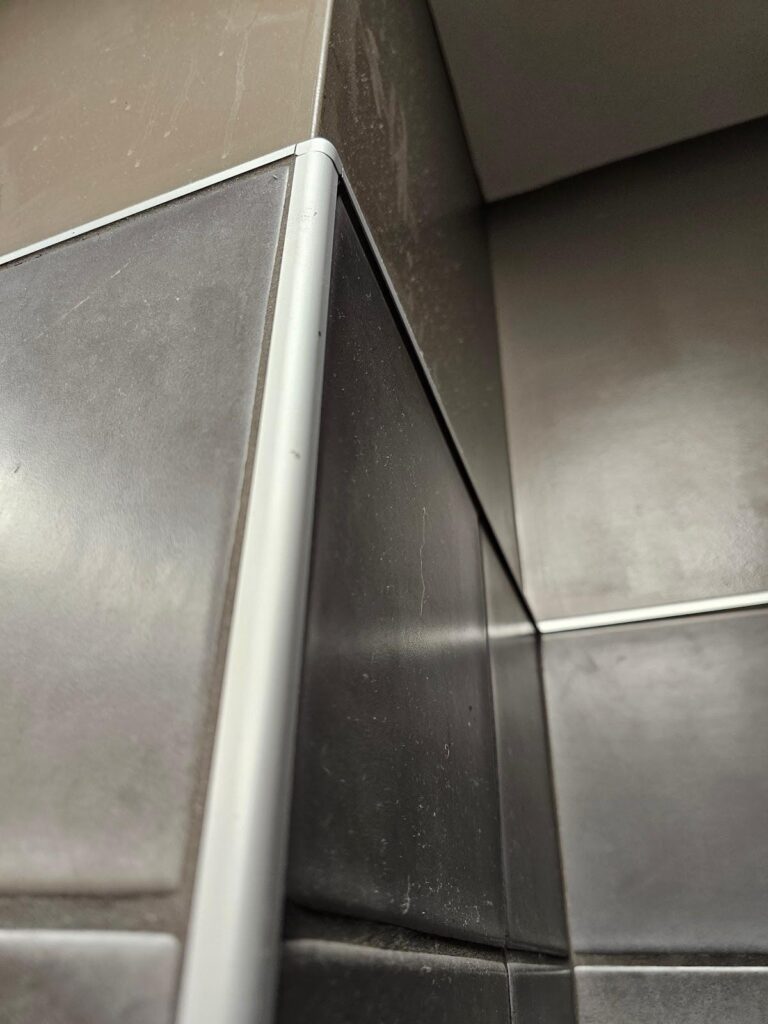
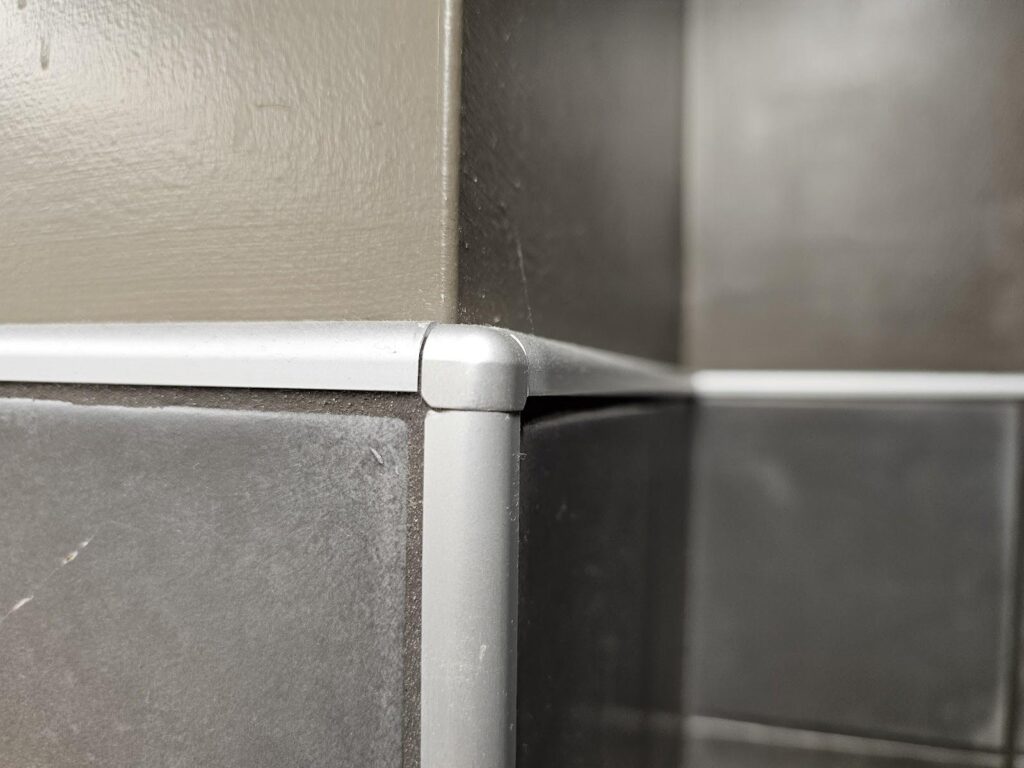
If you look closely where the termination strip that runs across the vertical corner meets the termination strips at both sides of that same vertical corner at the top of the wainscoting, you’ll see there’s a small extra little cat that’s made just for those types of outside corners. Not all types of termination strips have this type of accessory detail. In other cases, the particular termination strip might need to be cut at a 45° angle so that it can be mitered to create the corner.
Dupont Kitchen & Bath Can Help
As dedicated and local DC metropolitan kitchen and bath builders and installers, we pride ourselves on turning your visions into reality. Your kitchen and bathrooms can reflect your unique style and be designed with personalized aesthetics. It can be a process from creative designs to the realization of your dream space. Specializing in kitchen and bath construction, we bring expertise and skills to every project. If you’re contemplating a renovation, upgrade, or modernization in the local market, we’re happy to be your team. Consult with us, and we can start together on a path to redefine and elevate your DC living experience.
You can visit our company website at https://dupontkitchenbathdc.com/
Here at our website you will find a simple and convenient web form that you can fill to contact us quickly.