Encaustic Tile Replicas & Patchwork Designs in DC
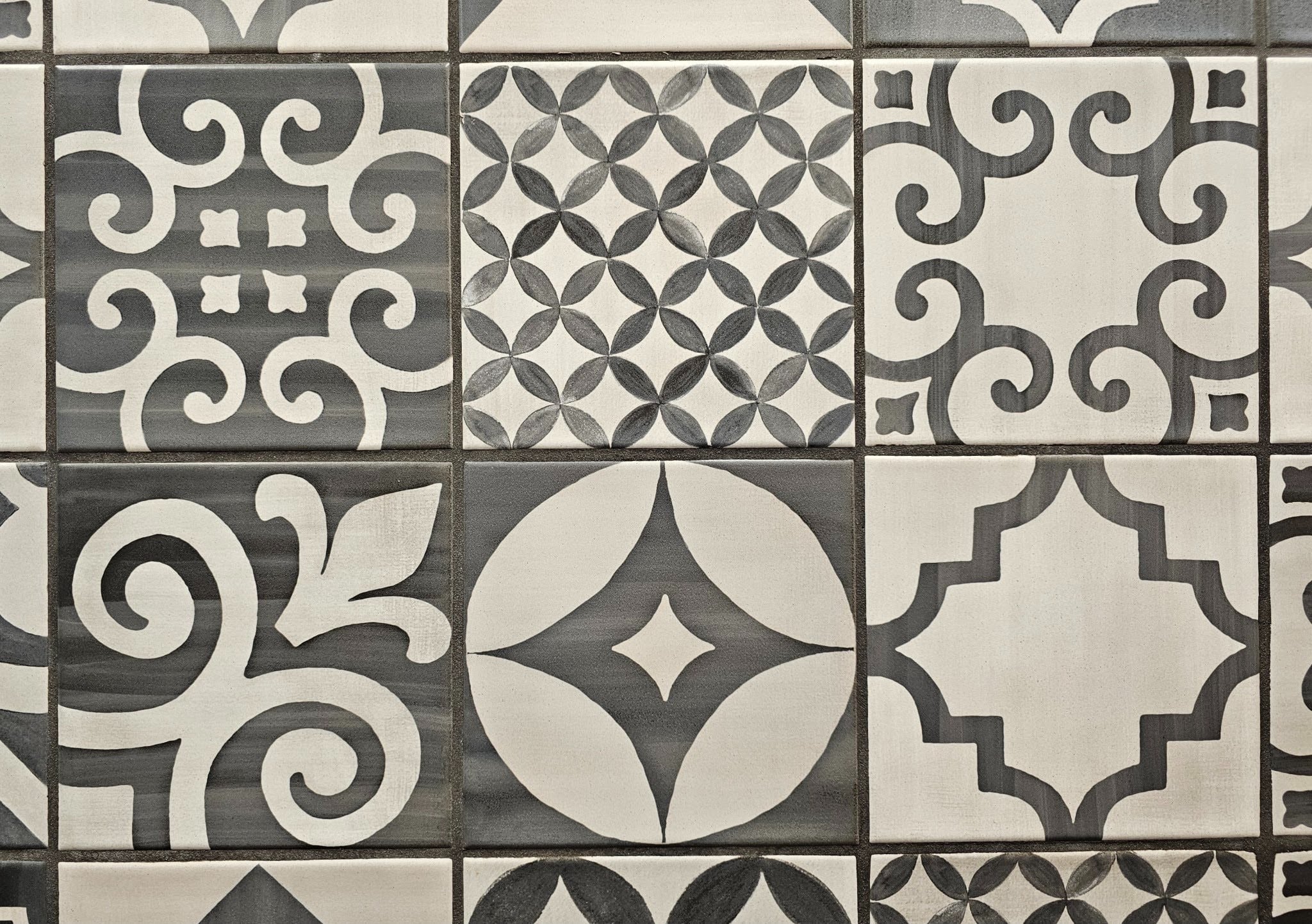
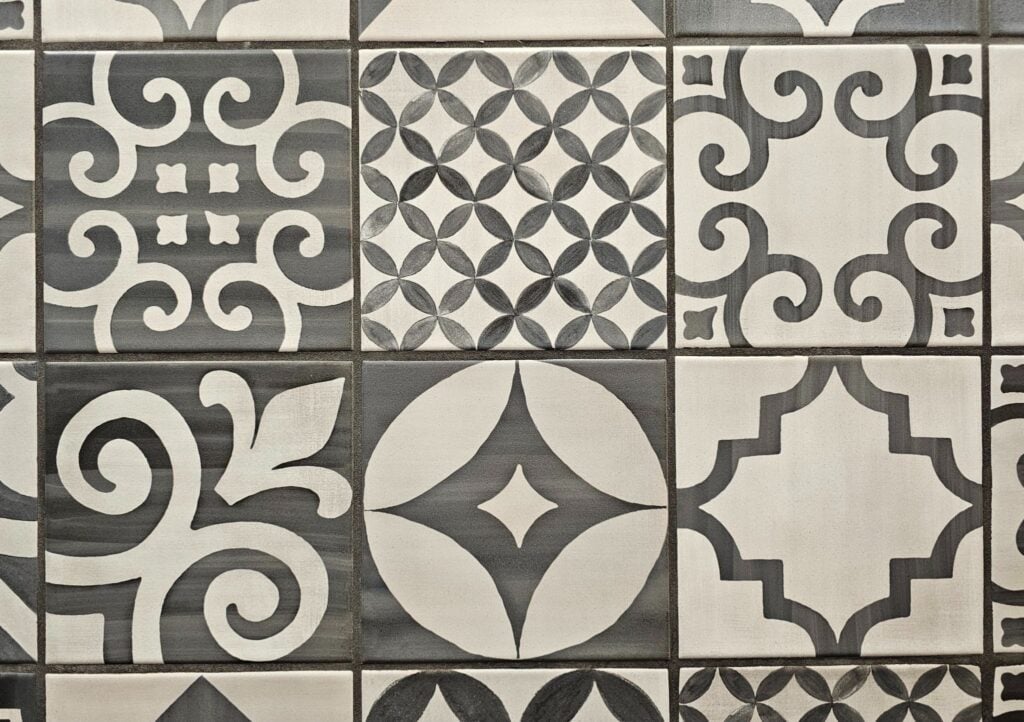
In the past, here on our blog and website, we’ve looked at a lot of interesting patchwork type tile arrangements. Some of them are vibrant and colorful and others are like simple line drawings. Here today we are looking at a different set that uses patterns that reflect art styles from Moroccan, Mediterranean, and even European history.
Here, this particular design uses a monochromatic black and white. Generally, in design when people talk about monochromatic color usage, they’re really referring to just one color and an opposite or contrasting secondary tone. Often, in monochrome art, there will be different uses of the same color, but here they are using only high-contrast binary color. This may also be referred to as a pure duotone.
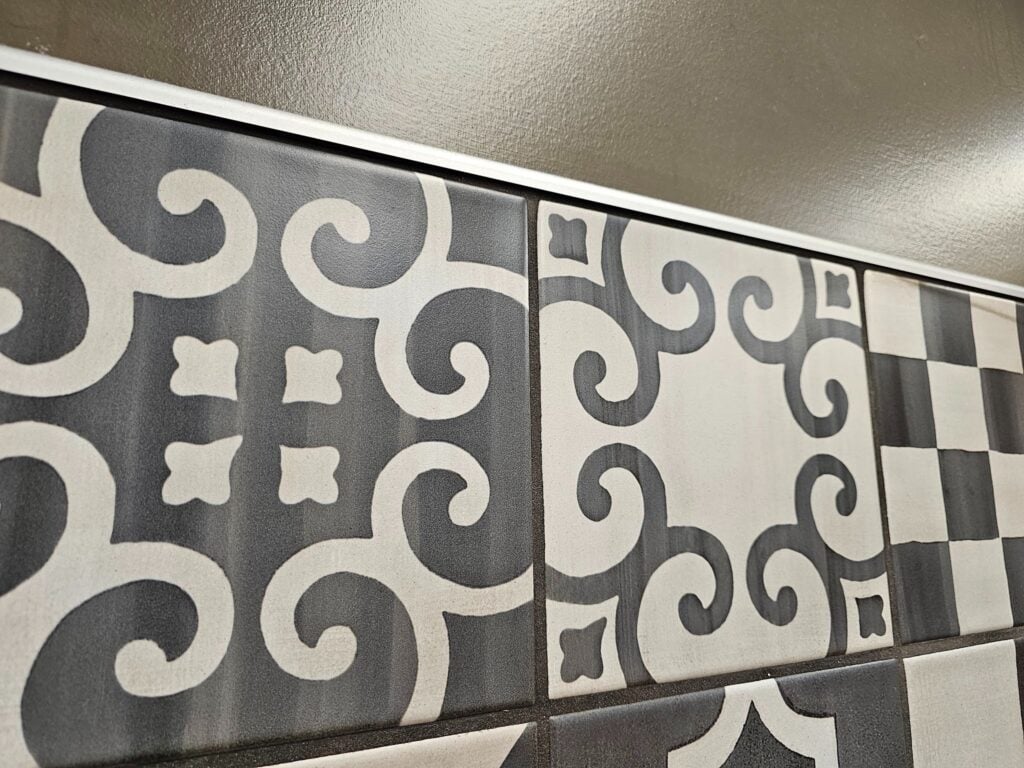
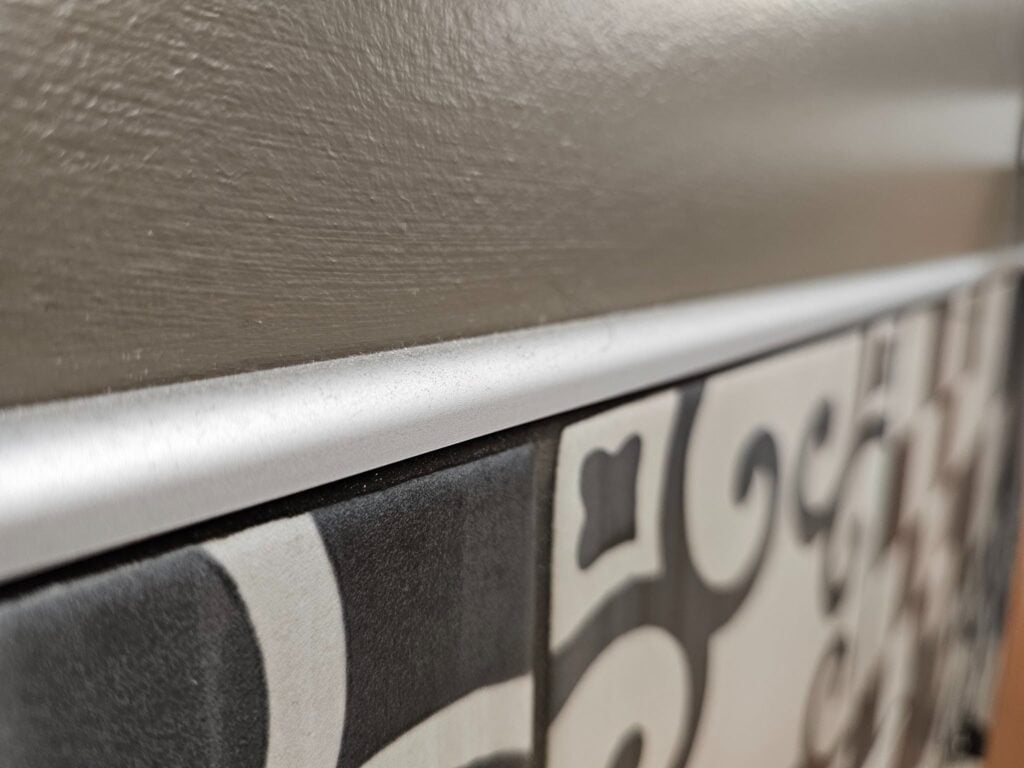
To terminate the top of the tile, mid-wall, they used an anodized aluminum termination strip. This termination strip has a portion of aluminum web that sits into the mortar underneath of the tile. The projecting or extending part that comes out and sits beside the tile essentially terminates the edge neatly. Without this termination strip in place really tall people could essentially look down into the bare edge and see the raw mortar bed which would look incomplete or unfinished.
When tile is installed part way up a wall but not entirely all the way up to the underside of the ceiling, you can call that wainscot tiling. In some cases we think of wainscotting as beadboard panels that are installed up to a chairrail height.
Thinking about the traditional wainscoting, using bead boards, common in Victoria area and Craftsman or Edwardian ara homes throughout much of the 19th century, it’s interesting how technology has significantly influenced architectural design. Roughly coinciding with the onset of the Industrial Revolution, panelized boards and industrial cut timbers became used prolifically throughout the construction industry. Beadboard became very affordable. It was used quite commonly in parts of the United States in kitchens, bathrooms, hallways, and mudrooms. We still find it quite often here in Washington DC and kitchens and bathrooms before we renovate them.
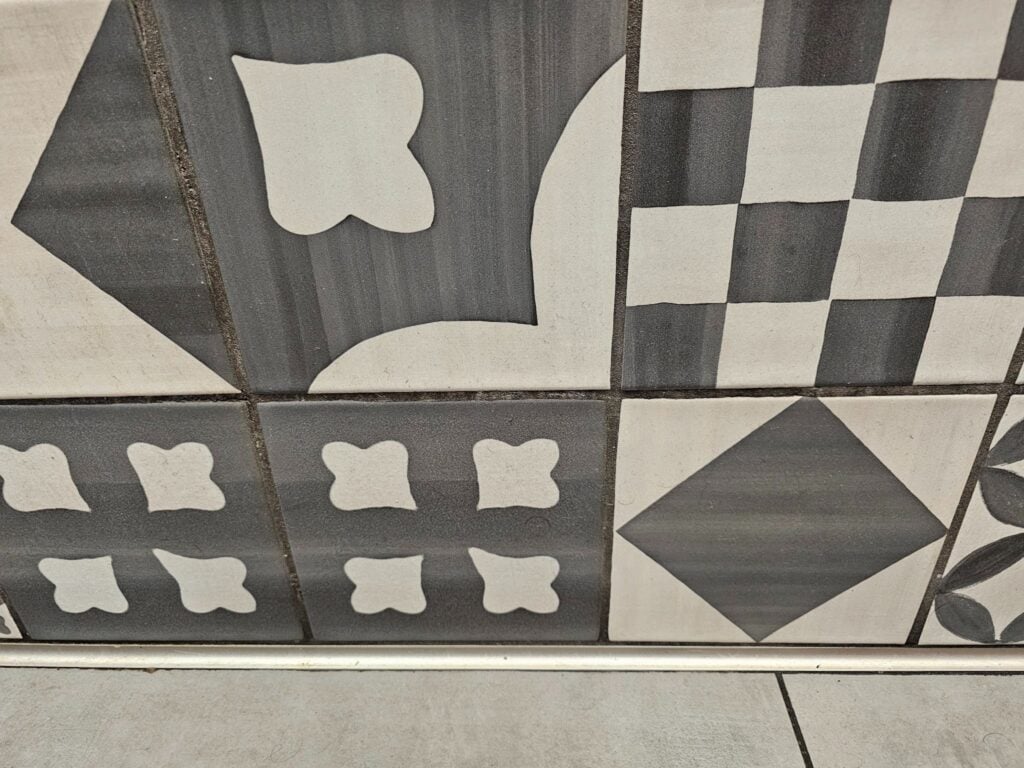
If you look at the top right corner of the picture below, you can see that they’ve used the tile that has just a square grid, like a checkerboard. This is an example of a design that’s a bit more like cubism. Cubism came a little bit later than some of the earlier designs or influences shown in the other tile art in this range. Later, in a future blog article, we’re going to take another look at a different set of encaustic replica tiles which uses a lot more of the cubism type art.
We happened to call the other set look-alikes. But they’re really the same kind of thing. They’re replicas but they’re not intended to be actual copies of the originals. They’re just borrowing from a few particular styles of older art.
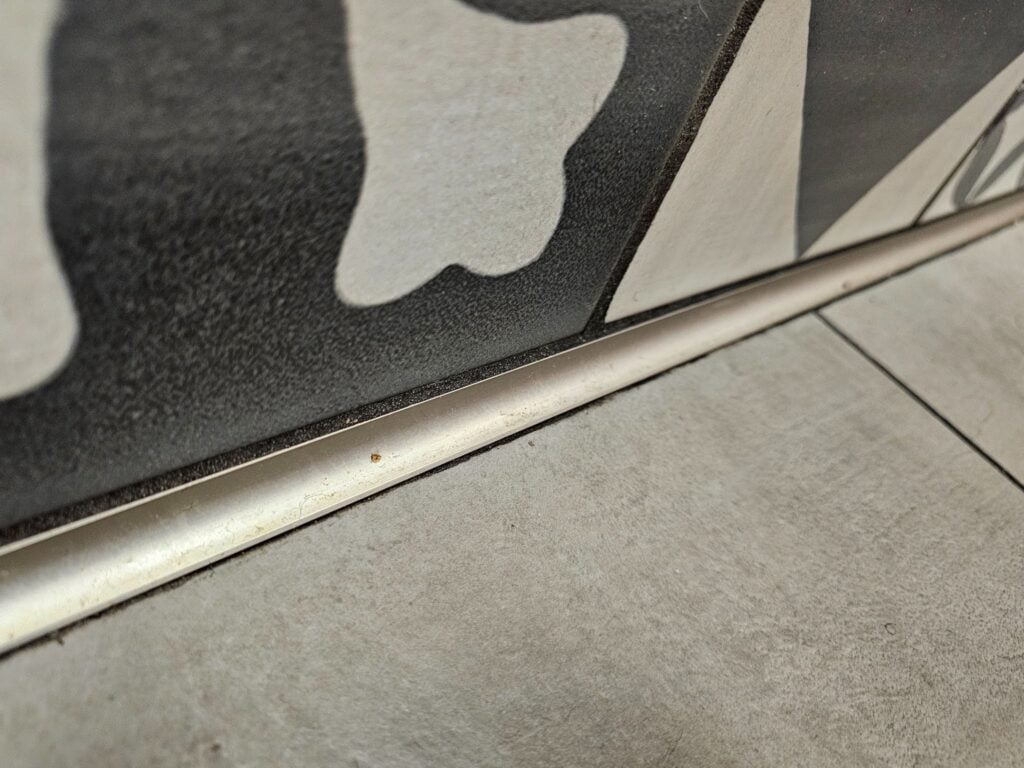
Instead of just sitting the bottom course of the tile directly above the floor or instead of using a baseboard or base tile that complemented the design, they used a different cove style anodized aluminum termination strip. It’s a subtle detail but this added aluminum element marries the floor to the wall without an awkward transition.
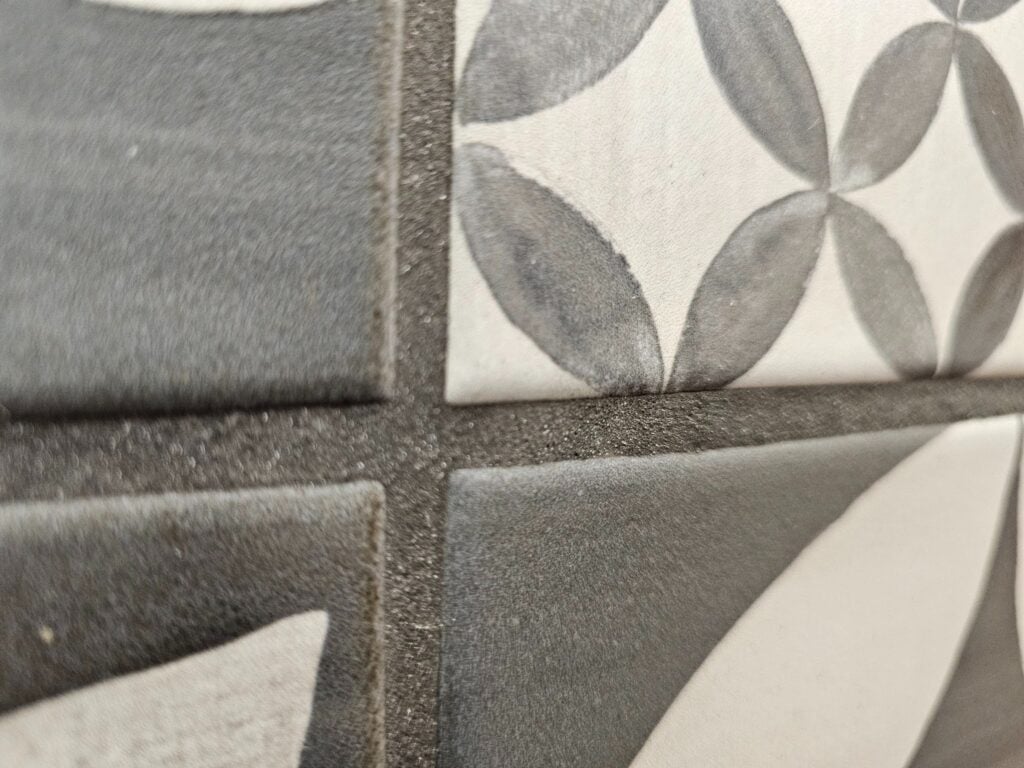
We think their choice of grout colors here was appropriate because they picked a grout that was roughly in line with the almost black color of the binary color scheme used in the tilework.
When we talk about the wainscoting tile that runs up short of the full height of the wall, and we look back at the history of beadboard wainscoting, the proportionality of the height of the wainscoting is an interesting concept. Typically in the past, during the Victorian and Craftsman and Edwardian era of architectural design, Chairrails would often be set at around 36 in above the floor. Today, many designers consider that particular height to be an error. They considered it an inappropriate place to terminate a wainscoting. Most ceiling heights range from about 8 ft high. Proportionately, 3 ft is a bit larger than the first third of the wall height.
Many designers think that when the wainscoting divides the wall by more than 1/3 it draws the eye downward because there’s an internal human mental bias to want to divide spaces evenly. Essentially, they claim that it psychologically is mentally inherent to want the division to occur at ⅓ the wall height. The rest of the wall and the architectural elements which create the surroundings up to the height of the ceiling, are therein imbalanced which causes a visual cognitive dissonance.
Dupont Kitchen & Bath Can Help
As dedicated and local DC metropolitan kitchen and bath builders and installers, we pride ourselves on turning your visions into reality. Your kitchen and bathrooms can reflect your unique style and be designed with personalized aesthetics. It can be a process from creative designs to the realization of your dream space.
Specializing in kitchen and bath construction, we bring expertise and skills to every project. If you’re contemplating a renovation, upgrade, or modernization in the local market, we’re happy to be your team. Consult with us, and we can start together on a path to redefine and elevate your DC living experience.
Visit the Dupont Kitchen & Bath website to learn more about our services and explore your renovation options. You can also use our convenient online contact form to get in touch with our team and discuss your project.