Modern Look with Cement Finished Bathroom Walls
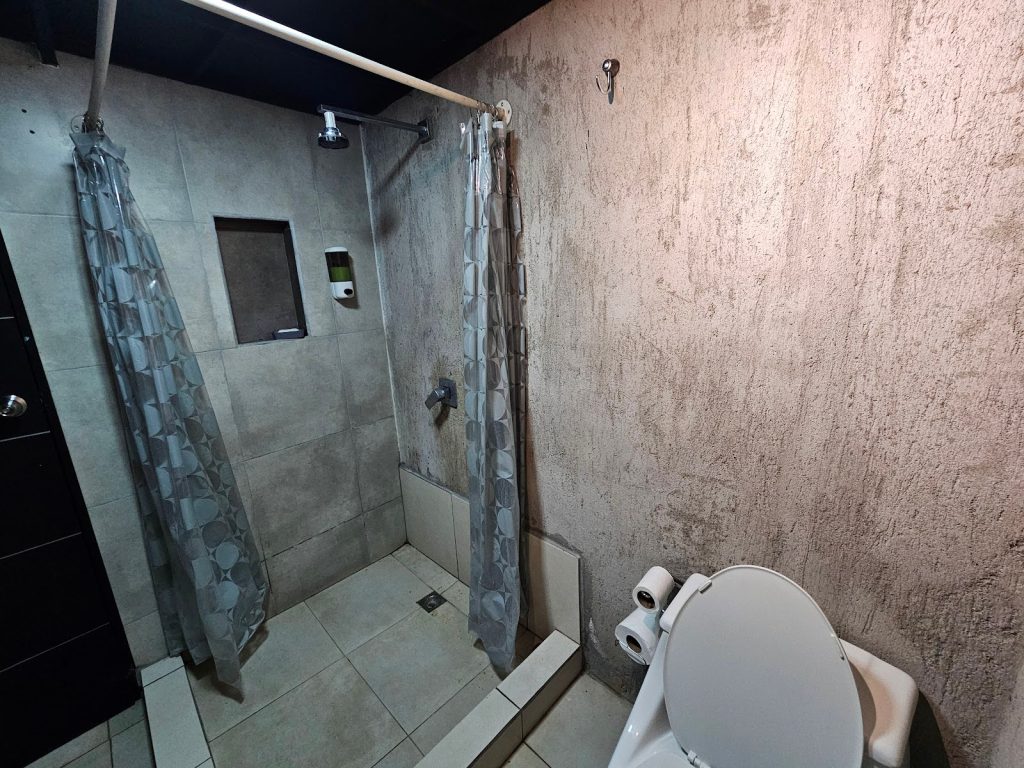
This past week, we started taking a look a look at a bathroom with really interesting walls. Instead of leaving them just covered with plain painted drywall which isn’t very resistant to moisture and associated deterioration, they built the walls a cementitious type finish. It might not be quite as moisture resistant as walls clad in ceramic tile, but it looks pretty interesting and is less complicated in some ways.
We would say that it’s less complicated in some ways, but it’s debatable. If, for example, the wall were to be built with cast in place concrete, it would clearly cost more money, use more materials, and be way more expensive. It’s a similar context if we were to build the wall with CMU and then cover the CMU with a parge coat or stucco application. These types of construction are very heavy and time consuming. Cementitious materials aren’t necessarily expensive, but the volumetric amount of materials needed is much higher, therefore in summation it is more expensive. Plus wholly cementitious materials are simply heavy, and therefore laborious, to work with.
There’s distinction here though, is that what has actually been used is not wholly cementitious. The backer board is a lighter type of material that works well with high moisture locations. As opposed to a gypsum core and cellulose paper faced type of drywall, see images boards are more resistant to wet environments. Bathrooms and kitchens as well can be high moisture areas.
The cementitious boards have a high amount of durability, even in wet use areas. Here, a cementitious application has been applied, similar to a stucco or parging application. Many types of cement walls are finished with a parge coat or cementitious type application on the surface.
In most cases, the cementitious application is applied for aesthetic reasons. Here as well, this application is applied for aesthetic reasons, to make the overall wall look more consistent. As well, the application covers joints that are inherent in a cladding or sheathing made with individual boards. Here also, just to clarify, we should explain that even though they’re referred to as boards, they’re not made from the typical type of boards like wood. Wooden boards are used for a multitude of different applications in building and construction, but sheets of drywall or cementitious panels are also often referred to as boards. Those materials aren’t really made from wood though.
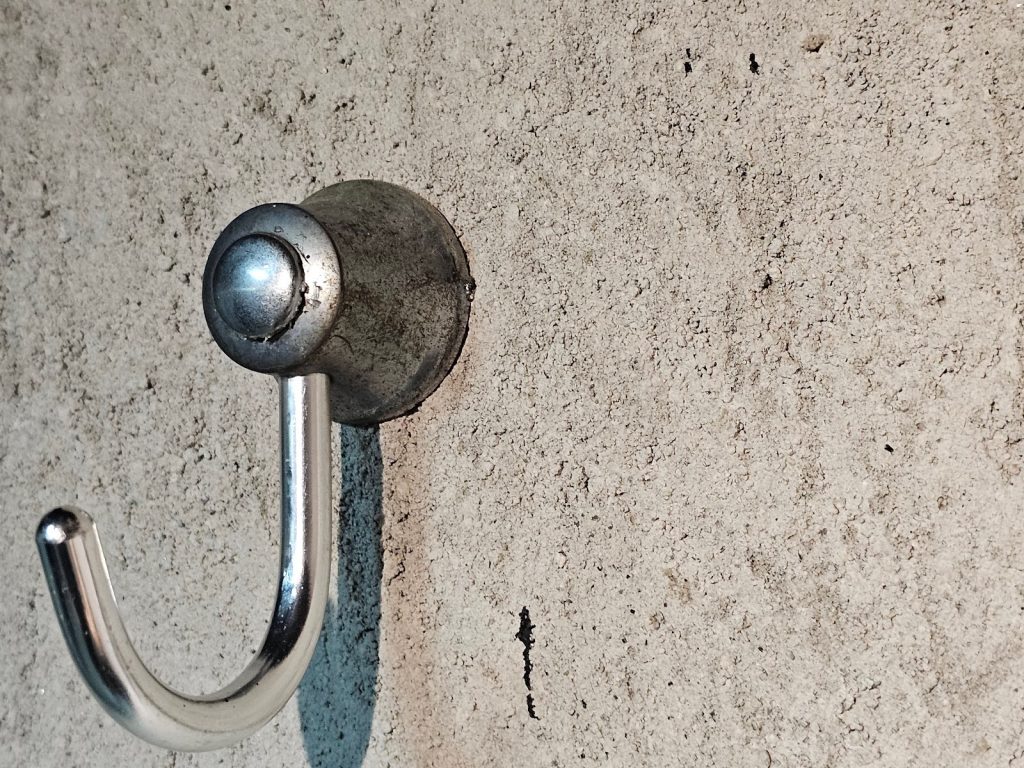
Bathrooms use a variety of small types of hardware. Not every bathroom has the same set of accessories and hardware, but there are common ones that are seen throughout different styles and installations of bathrooms. The picture below shows a robe hook. Robe hooks like this can also be used to hang towels, but towel bars are also often used to provide a space to hang individual multiple towels across the horizontal bar.
A list of some of the most common types of bathroom hardware and common bathroom hardware accessories follows:
- Towel Bars
- Towel Rings
- Toilet Paper Holders
- Robe Hooks
- Soap Dishes
- Grab Bars
- Shower Curtain Rods
Towel bars are generally 18 inches or larger, typical sizes come in 6-in space increments. Larger bars can generally be set along open wall spaces and above toilet tanks, for hanging full bath towels. Towel rings are mostly for smaller towels and wash clothes. They are generally placed near the sink for holding a hand towel.
Toilet paper holders are used for holding a roll of toilet paper, often available in pivoting, spring-loaded, or open-arm styles. We recommend placing the toilet paper holder within a foot or two of the edge of the toilet bowl, at a height that is basically a round shoulder height from a seated position at the toilet. Stand up toilet paper holders can also be used to rest the toilet paper holder on the floor if the wall is an inconvenient location for mounting, depending on the configuration of the bathroom. Our preferences is to provide a toilet paper holder mounted on the wall, but not all arrangements are optimal for wall mounting.
Robe hooks are often mounted on the back of the bathroom door or near the shower / tub for hanging robes or extra towels. The robe hooks can be made with a single hook or sometimes multiple hooks. People often use these robe hooks for hanging towels as well.
Depending on the configuration or layout of the bathroom, we will often recommend installing a wall mounted soap dish on the wall behind the vanity or bathroom sink. These are convenient, but not absolutely necessary. Soap dishes can be also set directly on top of the vanity countertop, but mounting them on the wall reduces clutter on the counter top.
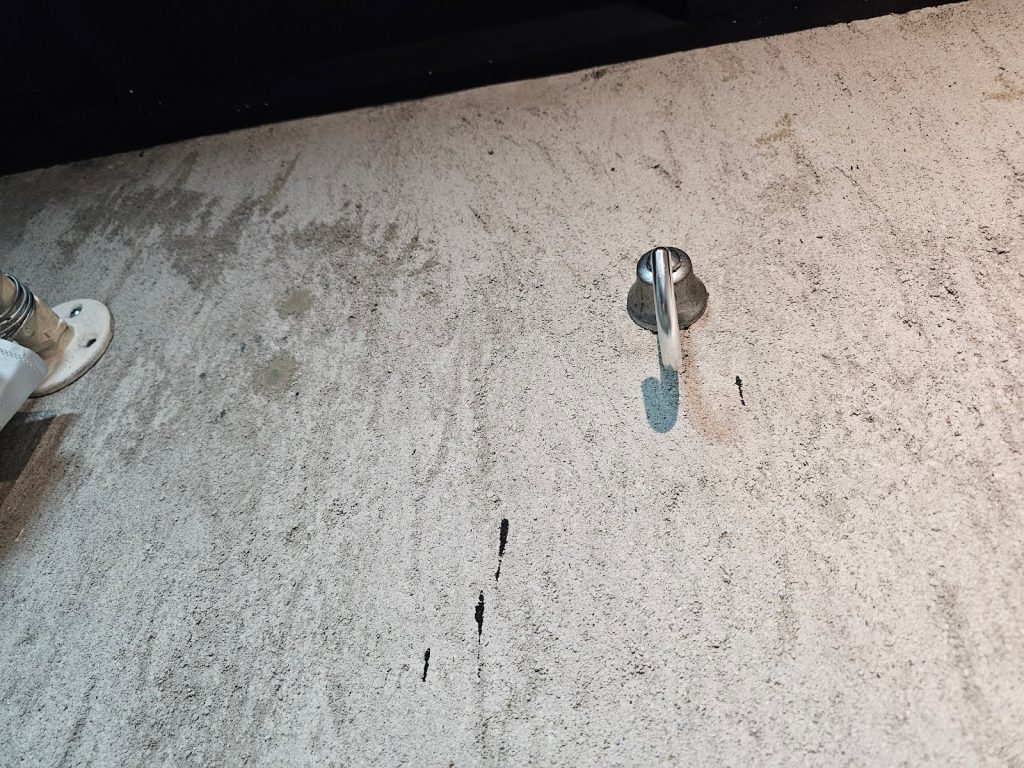
The picture below shows the robe hook install just outside of the shower area. When the shower curtain is closed, it puts the road hook into an area that is intended to stay dry.
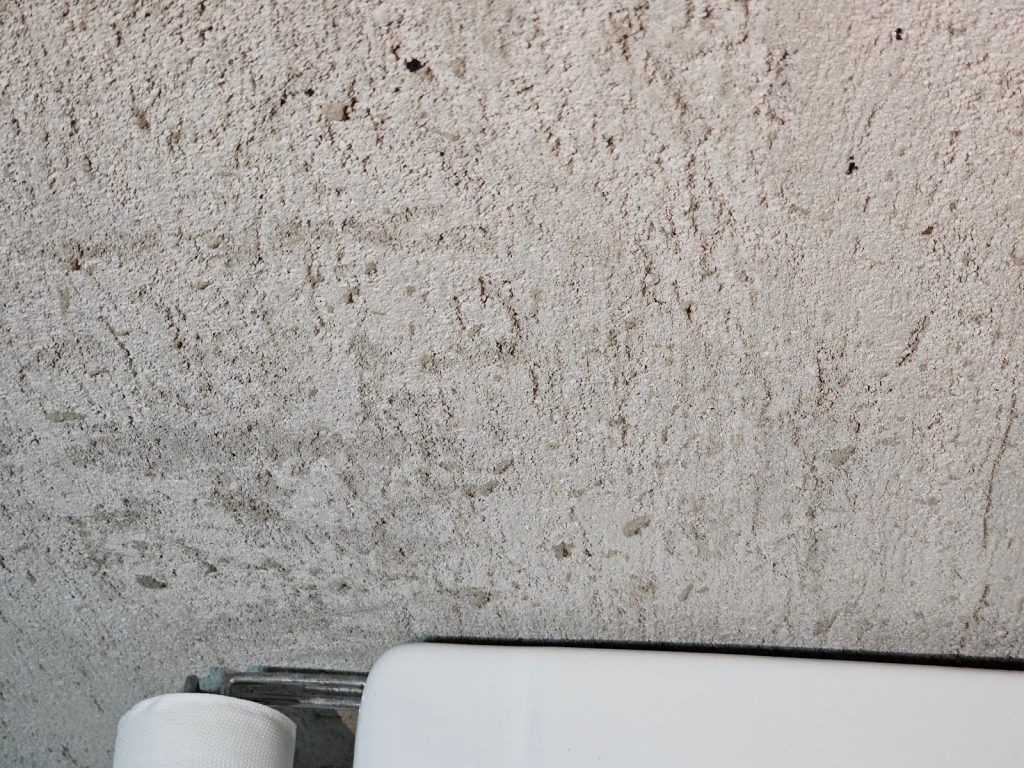
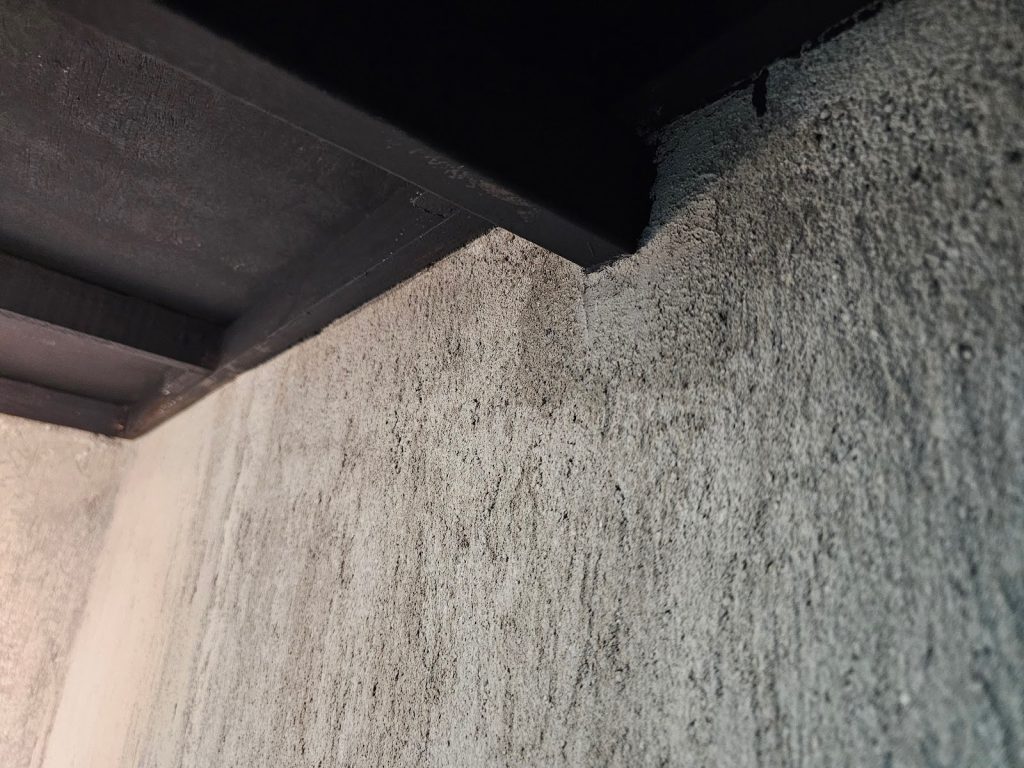
The picture below shows a view looking upwards at the texture at the top of the wall. Depending on the light used in the bathroom, the wall texture becomes accented or muted. Here, there’s a little bit more directional light shining downwards and it accentuates that texture.
Dupont Kitchen & Bath Can Help
As dedicated and local DC metropolitan kitchen and bath builders and installers, we pride ourselves on turning your visions into reality. Your kitchen and bathrooms can reflect your unique style and be designed with personalized aesthetics. It can be a process from creative designs to the realization of your dream space. Specializing in kitchen and bath construction, we bring expertise and skills to every project. If you’re contemplating a renovation, upgrade, or modernization in the local market, we’re happy to be your team. Consult with us, and we can start together on a path to redefine and elevate your DC living experience.
You can visit our company website at https://dupontkitchenbathdc.com/
Here at our website you will find a simple and convenient web form that you can fill to contact us quickly.