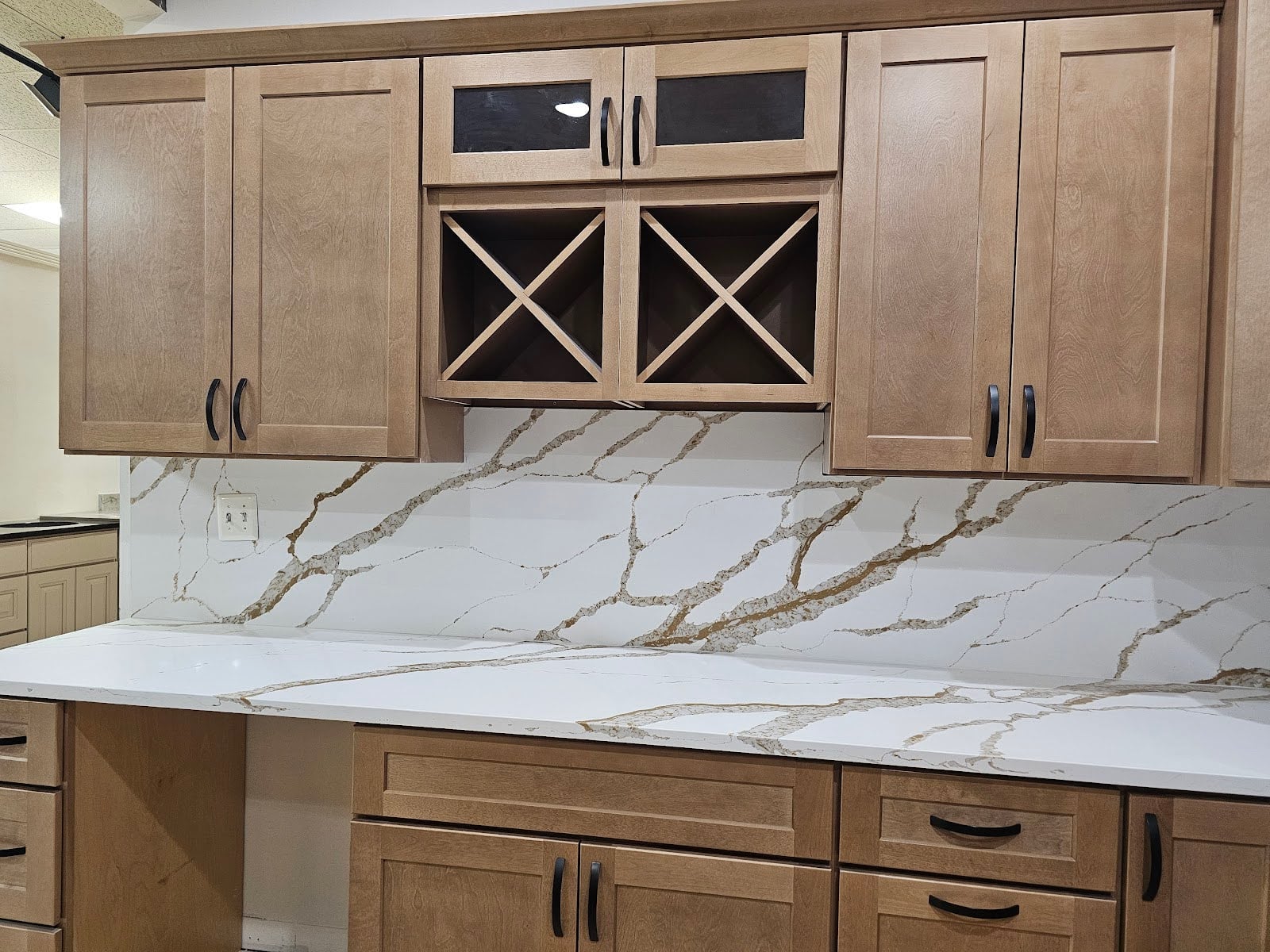
Ceramic Tile Floor Drains for Better Drainage
We’ve looked at a few examples of floor drains in the past. Most often, floor drains are installed in bathrooms where there is an expectation for there to be a degree of water on the floor. Bathrooms with curbless showers, for example, are a type of location where it would be an imperative to install a floor drain.
In cases of bathrooms with showers that do not have a curb, there’s generally a smooth transition from the floor outside of the shower area to the floor in the shower area. In fact, and most of these cases, the floor looks the same. In other words it can be an continuous tile that is essentially uninterrupted. However generally, even where it looks continuous, there will still be a change in the grade.
The change in this slope or grade of the floor may be very subtle. But generally it’s intentionally built with enough difference in angle or grade so that water in the main shower area will flow to the center or to the edge of the area inside of the shower. Even when the remainder of the floor also angles slightly towards the drain, the area of the shower itself should have a more significant grade.
We generally recommend a slope of roughly 1/4 in per foot or more. This is enough grade to allow water to flow without building up or puddling, Yet comma it’s generally not so much grade that it feels uncomfortable to stand on or walk on.
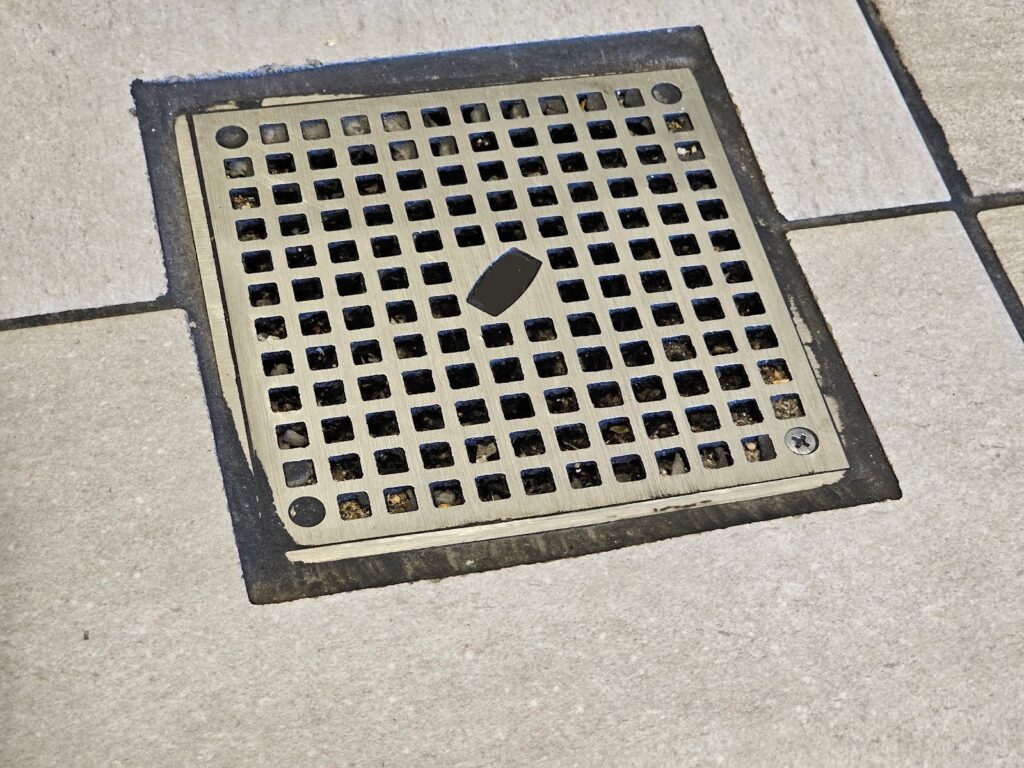
A picture of a square floor drain follows below.
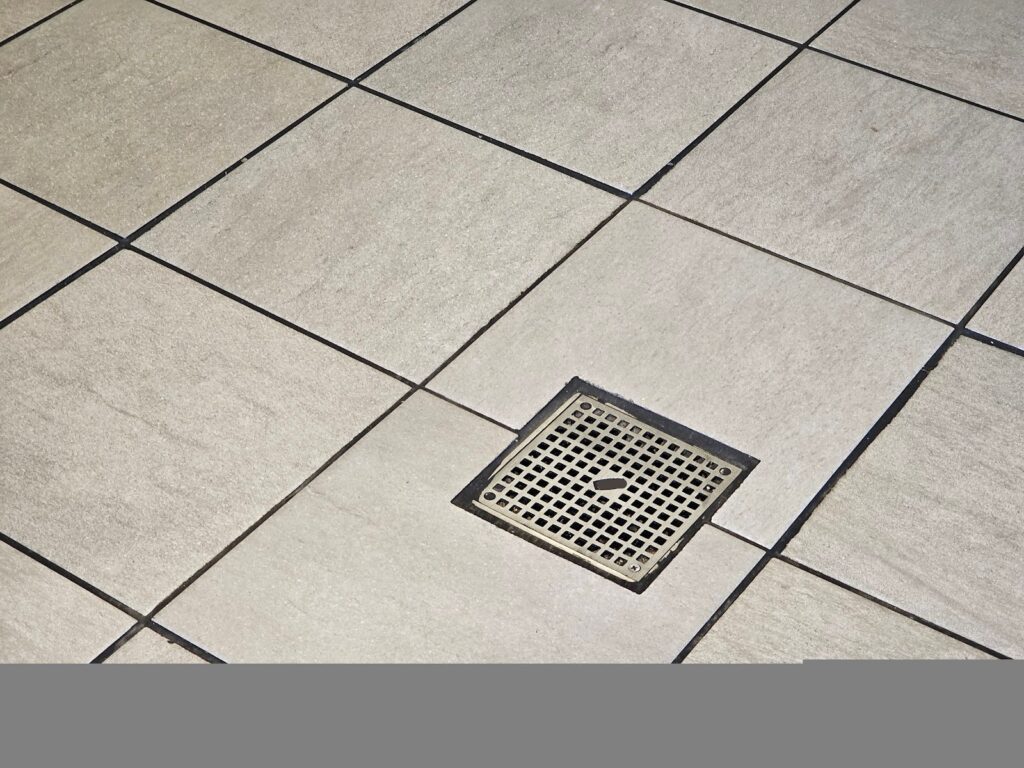
This particular drain is made from a cast alloy. It happens to be strong enough to resist point loads that would cause some materials to break, yet perforated enough to allow a moderately high flow of water drain through the grate without backup. In building construction, it’s important to understand the concept of a point load. Essentially, a large American person might weigh as much as 300 pounds, but if they have big feet that weight is distributed between an area that’s moderately large.
However, when they put all of their weight onto one toe, it’s a high amount of pressure in a relatively small area. This type of point loading is a concept that applies both to something as simple as a floor drain, and also to structural elements in buildings such as columns and or floor joist and floor decking. The concept is important because in analyzing structural loads and resistance to failure or breakage, it’s important to consider both an overall live load and also point loading resistances.
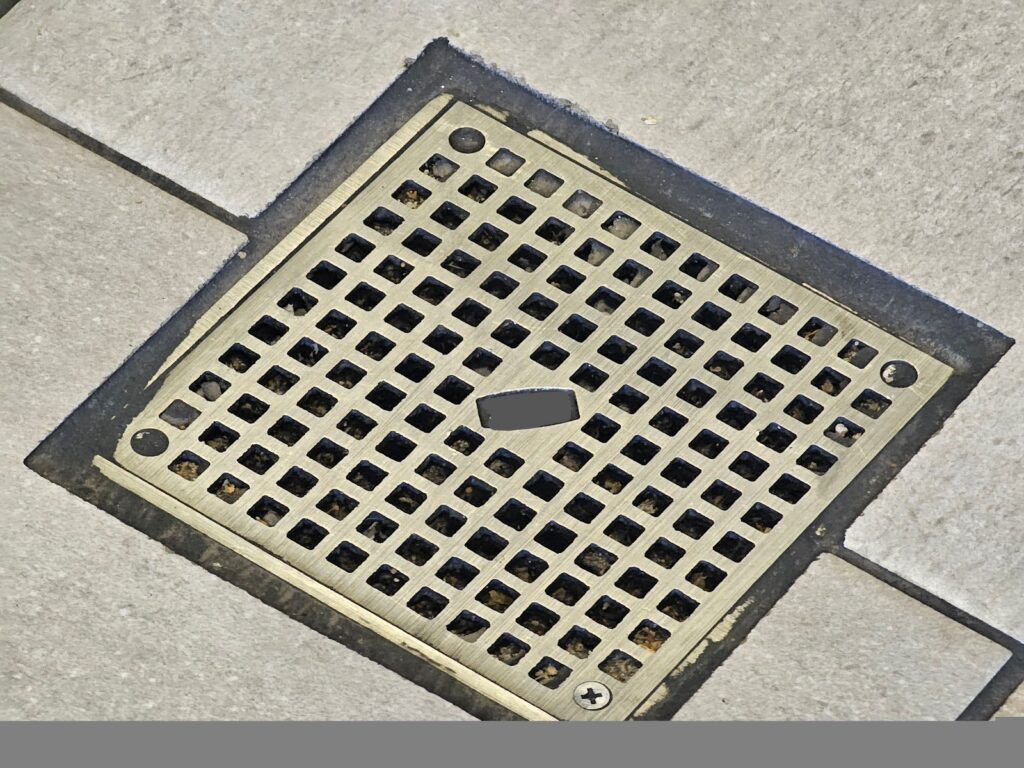
The particular floor drain area happens to be larger than the two-dimensional cross-sectional area of the drain pipe. That difference or relationship of comparative sizes is common in floor drains. The concept applies both to interior floor drains in kitchens and bathrooms and also to areaway drains or exterior drains.
In almost every other area of the drain piping system, the piping should only increase in size in the direction of flow. In other words, if the floor drain is connected to a 2.5 inch diameter pipe, the lower portions of that pipe can increase to 3 inch or even 4 inch. The lower portions of the pipe though cannot decrease down to 2 inch or 1.5 inch in diameter. A reduction is prohibited by the building code in the direction of the flow of the water because it can lead to build-up of debris or materials. Build-up can then lead to blockages by those debris which can lead to backups of wastewater.
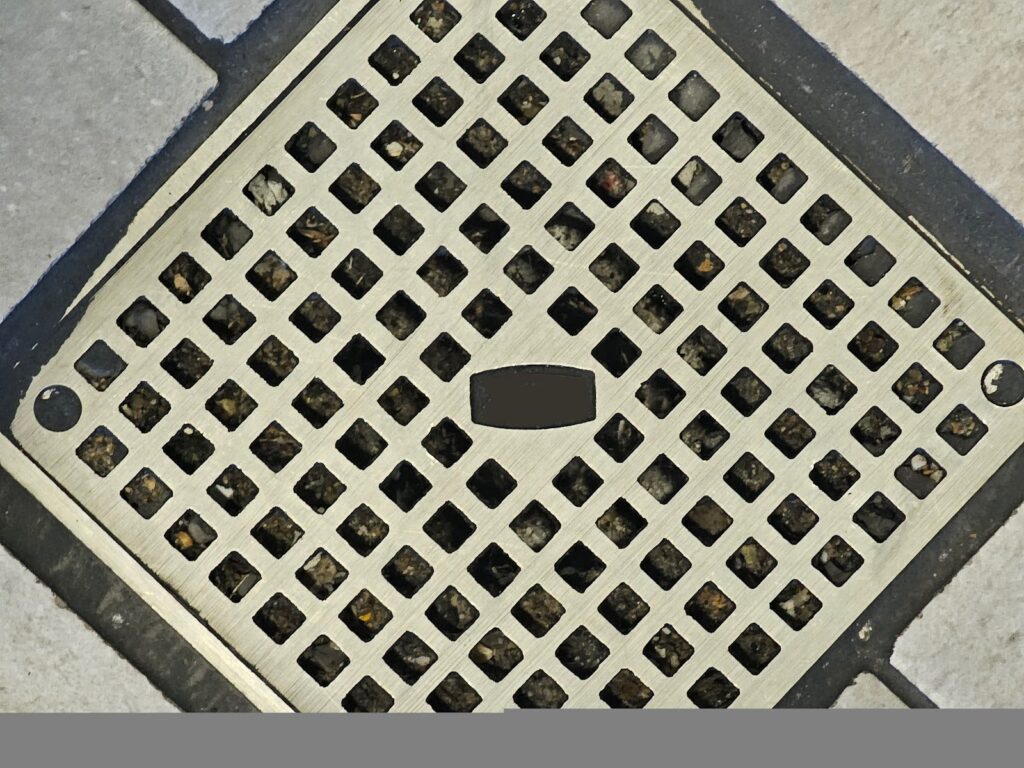
The area around the perimeter of this particular floor drain has been grouted as if it were continuous or the same material as the tile itself. In most cases when there’s a connection between ceramic flooring and dissimilar materials such as a floor drain or penetration through the floor, we would recommend installing a flexible sealant of a similar color to the grout. One of the problems in this approach though is that grouts are available in a wider range of colors than sealants. Sometimes there isn’t a sealant available that matches the color of the floor grout.
Dupont Kitchen & Bath Can Help
As dedicated and local DC metropolitan kitchen and bath builders and installers, we pride ourselves on turning your visions into reality. Your kitchen and bathrooms can reflect your unique style and be designed with personalized aesthetics. It can be a process from creative designs to the realization of your dream space. Specializing in kitchen and bath construction, we bring expertise and skills to every project. If you’re contemplating a renovation, upgrade, or modernization in the local market, we’re happy to be your team. Consult with us, and we can start together on a path to redefine and elevate your DC living experience.
You can visit our company website at https://dupontkitchenbathdc.com/
Here at our website you will find a simple and convenient web form that you can fill to contact us quickly.