Personality and Pattern with Mosaic Tile Designs
In bath and kitchen remodeling and interior design, the small details can make a outsized impact. Although cabinets and countertops usually are central to a design style in kitchen design, the backsplash can be a smaller area that often brings it all together or accentuates the overall look of a room. We recently saw an interesting kitchen layout, which seemed to be an ordinary ceramic tile backsplash, but it was actually glass mosaic tile with a design that looked like encaustic art, paired with adjacent wood surfaces.

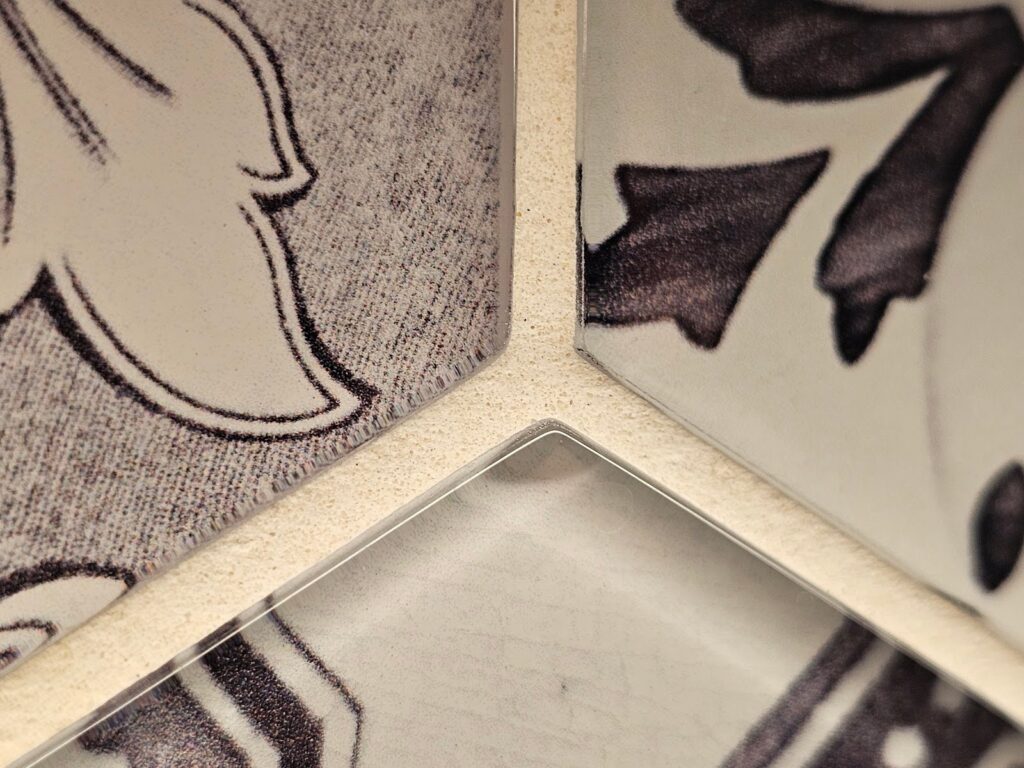
As you can see in the picture above, at first glance this tile does look like typical ceramic or porcelain tile, but when you look much closer you can see that it’s actually made from a glass tile instead. Glass tile is similar to ceramic or porcelain tile, often found in multiple types of locations but glass on the other hand which is primarily used for wall tile. It is a little bit different yet still looks similar.
Glass tile is transparent on the surface and has a printing or design on the back. Often the preparation required for installation of glass tile is more extensive than the typical preparation for installation of both mosaic tile and or other types of traditional ceramic or porcelain tile. Better preparation is often required simply because you can see through the glass tile, even when there’s a color or graphic imprint on the back of the tile, it’s often still somewhat transparent.

One of the different characteristics with glass tile is that it is impermeable to most types of typical non-impact or non-abrasion elements that could damage or stain ceramics or porcelain materials. Porcelain and ceramic materials, to an extent, also have a degree of vitreousness, similar to the characteristics of glass, but nonetheless it is slightly different. Glass can be easily cleaned of almost any stains which would otherwise damage other types of materials. Particularly with stone surfaces or even cementitious or concrete surfaces, as well, sometimes seen in kitchens, glass does not have the same level of risk of staining.
These other types of materials which have higher degrees of porosity, often will stain much easier. Particularly at countertops, where cement or concrete type materials may be used, particularly in modern designs, certain food products like red wines or spaghetti sauce, or other types of foods, can stain the surface, even after deep cleaning, some of the fine pigment or residues may remain inside the pores of the material. This staining can seriously damage countertop surfaces, for example. The same risk applies in many different types of surfaces.

Although, as we discussed here, many traditional types of ceramic and porcelain tiles are similar, several ways to glass tile, there are some differences. From an installation perspective, glass tile needs to be cut much more carefully. Using the same tools, glass tile can easily break or leave edges that show imperfections. In some cases, natural materials or ceramic materials might be slightly more forgiving. In most cases, both types of materials require wet cutting. This means that the materials are generally cut with a wet blade such as a wet saw.
A proper setup for cutting with a wet saw or similar type tools may be able to be done on a relatively small scale, but often larger machines work more effectively. In the case of installation of most types of glass tile, though, this work mostly needs to be done on site instead of in a factory or warehouse. En situ cutting is often important because it’s highly productive to be able to custom cut individual pieces of tile there at the job site instead of having to remove the materials from the job site after custom layout and only then make cuts only then to have to return them back to the job site.
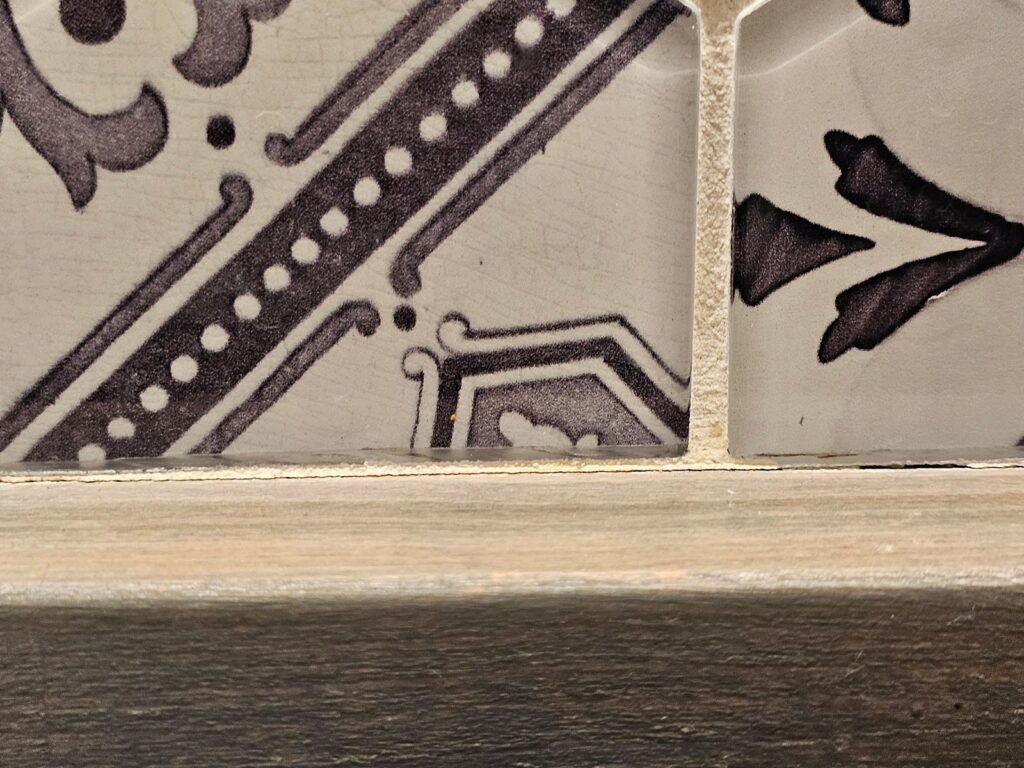
The picture below shows the top of the wooden countertop below the ceramic tile. In this particular case, the backsplash, at the countertop, continues with a similar finish as a countertop comes up into the base of the wall. In most cases, backsplash tile can be installed all the way down to the surface of the countertop without having to have a separate backsplash.
In this particular case though the countertop may have been installed with a short wooden backsplash that is set or sets directly on the face of the drywall surface. It may have only been later that the tile was installed and instead of removing the wooden backsplash, the installer may have then made the choice to keep that wooden backsplash in place and start their installation of ceramic tile on top of the backsplash.
Dupont Kitchen & Bath Can Help
As dedicated and local DC metropolitan kitchen and bath builders and installers, we pride ourselves on turning your visions into reality. Your kitchen and bathrooms can reflect your unique style and be designed with personalized aesthetics. It can be a process from creative designs to the realization of your dream space. Specializing in kitchen and bath construction, we bring expertise and skills to every project. If you’re contemplating a renovation, upgrade, or modernization in the local market, we’re happy to be your team. Consult with us, and we can start together on a path to redefine and elevate your DC living experience.
You can visit our company website at https://dupontkitchenbathdc.com/
Here at our website you will find a simple and convenient web form that you can fill to contact us quickly.