The True Cost of Remodeling a Bathroom

The Truth Behind The Cost Of Remodeling A Bathroom

Are you sick of your outdated bathroom’s broken, old tile and sealant? An updated bathroom, where you prepare for the day in the morning and wash away the tensions of the day at night, can be incredibly gratifying.

A well-done renovation can attract buyers and make a higher property price appear reasonable, whereas outdated bathrooms can lower a home’s market value. Remodeling a bathroom can cost anywhere from $6,152 and $16,615 on average nationally.

The size, shape, and quantity of fixtures, as well as whether or not to modify the current layout, are all factors that affect the average cost of a bathroom renovation. Luxury materials and finishes add to the overall cost and are worthwhile if they fit within your budget, but a quality redesign can be completed on a budget while still being stunning.

We looked at the fundamental elements that have an impact on bathroom renovation expenses to assist you in determining how to adjust your vision to your spending limit.

Let’s get started!

Variables that Influence the Cost of a Bathroom Remodel

As you start to do the mathematics between what you desire and what you can spend, these are the elements you’ll need to take into account.

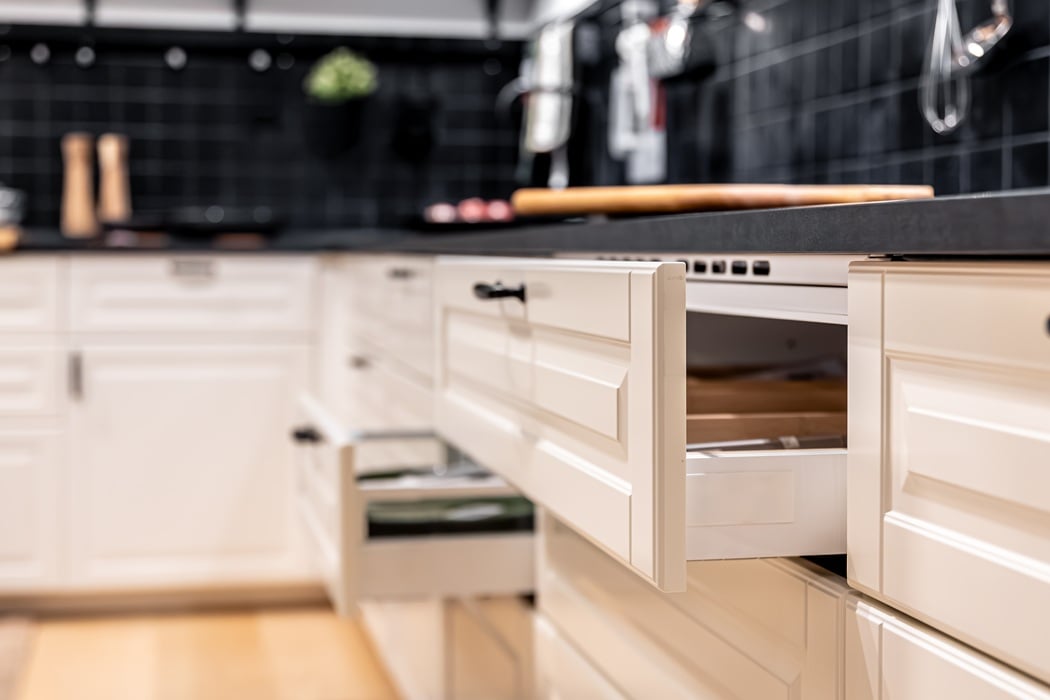
Cabinetry

  • While some bathrooms don’t have any cabinets, most can use a vanity or storage cupboard. To cut costs, you can refinish your current cabinets or choose new cabinets from a variety of big-box and chain stores. Based on the size of the room and the style you choose, you might anticipate spending anywhere between $300 and $3,800 for cabinets.

Plumbing and Faucets

  • The cost of the faucets will vary depending on the material, finish, and design is chosen, but lovely faucets are available at various pricing points. Older homes can have complicated plumbing, and it’s common for the discovery of plumbing issues, like leaky or rotten pipes, to turn a remodel into a renovation and substantially increase expenditures. Plumbing fixtures and faucets typically cost between $250 to $1,450.

Fixtures

  • cost of remodeling a bathroomA bathroom’s aesthetics can be much improved by changing the lavatory, basin, bathtub, or tub/shower combination, especially if the old fixtures are very worn out. The price of fixtures can range from $200 to $1,800 for specialized solutions.

Flooring

  • Items for flooring will take up between 10 and 15 percent of the overall budget, according to the size of your restroom, the number of cuts required, and the amount of trash generated. Porcelain tile flooring often costs between $860 and $2,600, and stone tile flooring typically costs between $900 and $2,800.

Walls, Ceilings, and Doors

  • Depending on the cost of the door you choose, replacing a bathroom door is a very simple process. In contrast, walls and ceilings might be challenging to define. This is due to the fact that exposing the walls and ceilings in a bathroom, a moist area might result in unforeseen surprises.

Thus, this portion of the budget needs to account for contingencies. You might discover that you require more plumbing work, a contractor for mold remediation, and wall demolition than you had anticipated.

  • The price of the finish you choose will affect how much it will cost to paint, wallpaper, or tile the surfaces. Based on the paint and the size of the space, painting expenses might range from $200 to $5,000 on average.

You should consider using a bathroom-specific paint that resists the formation of mold and mildew and prevents leaks in this humid region. Depending on your choices, tile and wallpaper alternatives will be more expensive.

Lighting and Ventilation

  • Any bathroom may look brighter by replacing a rusty, corroded bathroom fan and updating light fixtures. The cost of replacement light fixtures typically ranges from $100 to $400.

Check the location and orientation of the current wiring before making your selection. The cost will increase if you choose a new fixture that calls for shifting the wiring because you’ll need to repair the wall and move the electrical supply.

  • A demo or patching may be required if the new fan is much bigger or smaller than the old one. Otherwise, changing a ventilation fan is a very straightforward task. Ventilation fans range in price from $50 to $300 depending on their size and if a light or timer is included.

Learn The Cost Of Remodeling A Bathroom From Experts

Now that you know the basic things that can impact the cost of a bathroom remodel, its time to sit down and prepare a budget. For further help, feel free to reach out to the experts at Dupont Bathrooms and Kitchens! Call (202) 831-4869.

On Key

Related Posts

The tile used on his bathroom is an unterminated or hexagonal tile with an embossed texture. Unlike most wall tile installations which terminate all the way up at the corner of the joint between the wall plain or have a termination strip, this tile is installed with a raw staggered edge. Sometimes an edge like this is called a floating edge. If you look in the picture below, you can see that the tile at the vertical inside corner of the wall is cut to fit the shape provided by the wall plane. The top of the tile though is left raw to just follow a staggered edge of the hexagonal tile itself. The staggered unterminated edge of the tile doesn't necessarily look bad, in this example. They've been careful during installation to not let mortar ooze out in a way that looks rough or unfinished. At the lower tiles though, in the picture below, you can see the top of that unterminated edge. There are two problems with that kind of unterminated edge. First, you can see the raw edge of the tile itself. Since this is not a solid piece of natural material, the front or exposed face of the tile is a different color than the internal composition or body of the tile. When it's exposed like this and doesn't have a terminating edge you can see that difference which makes it visually apparent that it's not a real material. It's a manufactured material. The second problem with this type of unterminated edge is that the mortar itself has a thickness of roughly 1/8 of an inch. When applied with a 3/16 inch Notch trowel, the mortar becomes compressed but still even when flattened as much as possible there still is a thickness of that mortar. Once it is dry and cured, you can still see the thickness of that mortar. In almost all cases of tile installation, unlike stone masonry or even brick masonry, the tile mortar is not intended to be exposed at the joints. In between joints, in the field of the tile, the mortar will be covered with a colored grout. In this case, the tiles are set so tightly that there is almost no visible grout line between them. The grout used is a color that's very similar to the tile and the effect works. In some cases when the tile has a variation of significant color difference between the ranges of colors within the tile it's difficult to have a grout that complements or blends. Here though because the colors continuous across the face of the tile and the grout has been matched so well, you can't even hardly notice it. You can see that joint or between the back of the tile and the wall very clearly in the next picture below. You can see there's a very thin line with a black dark shadow between the tile and the wall. In some cases, when a tile is left unterminated at the edge, a gun applied caulking can be applied across the edge, smoothed, to almost make it look intentional. Sometimes in bathrooms without really good ventilation, if there's steam from hot water, that steam can condensate and build on the wall. When the vapor droplets accumulate enough they'll roll down the wall and in this case they'll sit on top of and get back behind the edge of the tile. That's one of the downsides, here though, this bathroom is just like a powder room with a toilet and a sink, but it doesn't have a shower. Most of the steam moisture buildup in bathrooms comes from showers. In the picture below you can see the distance between the other side of the ceiling and the top of the tile. Here they were at least smart enough to bring the top of the tile to a point that's above eye level. Typical eye levels are around 60 to 75 inches above the finished floor height. The mirror used above the bathroom sink has an integral LED light that wraps the perimeter of the round mirror. It basically provides a dramatic high contrast to the adjacent tile. That high contrast accentuates the texture of the tile. This tile has this intentional embossed or relief texture which is well employed when lit in a way that emphasizes the texture. The next picture below shows a close-up view of that edge at the top of the tile. Dupont Kitchen & Bath Can Help As dedicated and local DC metropolitan kitchen and bath builders and installers, we pride ourselves on turning your visions into reality. Your kitchen and bathrooms can reflect your unique style and be designed with personalized aesthetics. It can be a process from creative designs to the realization of your dream space. Specializing in kitchen and bath construction, we bring expertise and skills to every project. If you're contemplating a renovation, upgrade, or modernization in the local market, we're happy to be your team. Consult with us, and we can start together on a path to redefine and elevate your DC living experience. You can visit our company website at https://dupontkitchenbathdc.com/ Here at our website you will find a simple and convenient web form that you can fill to contact us quickly.

Hex Wall Tile

Modern Hex Wall Tile for Bathrooms in Washington DC The tile used on his bathroom is an unterminated or hexagonal tile with an embossed texture.