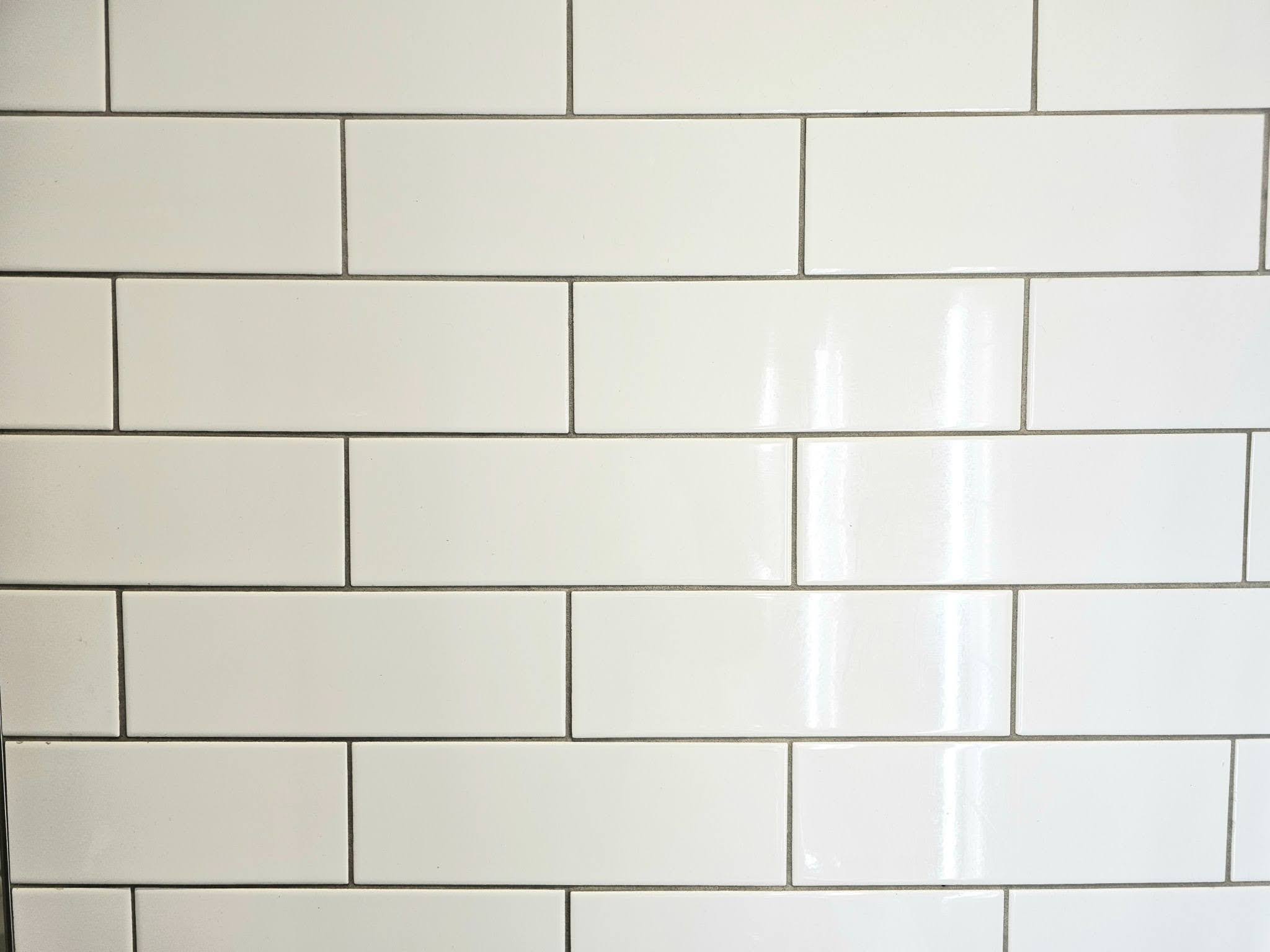
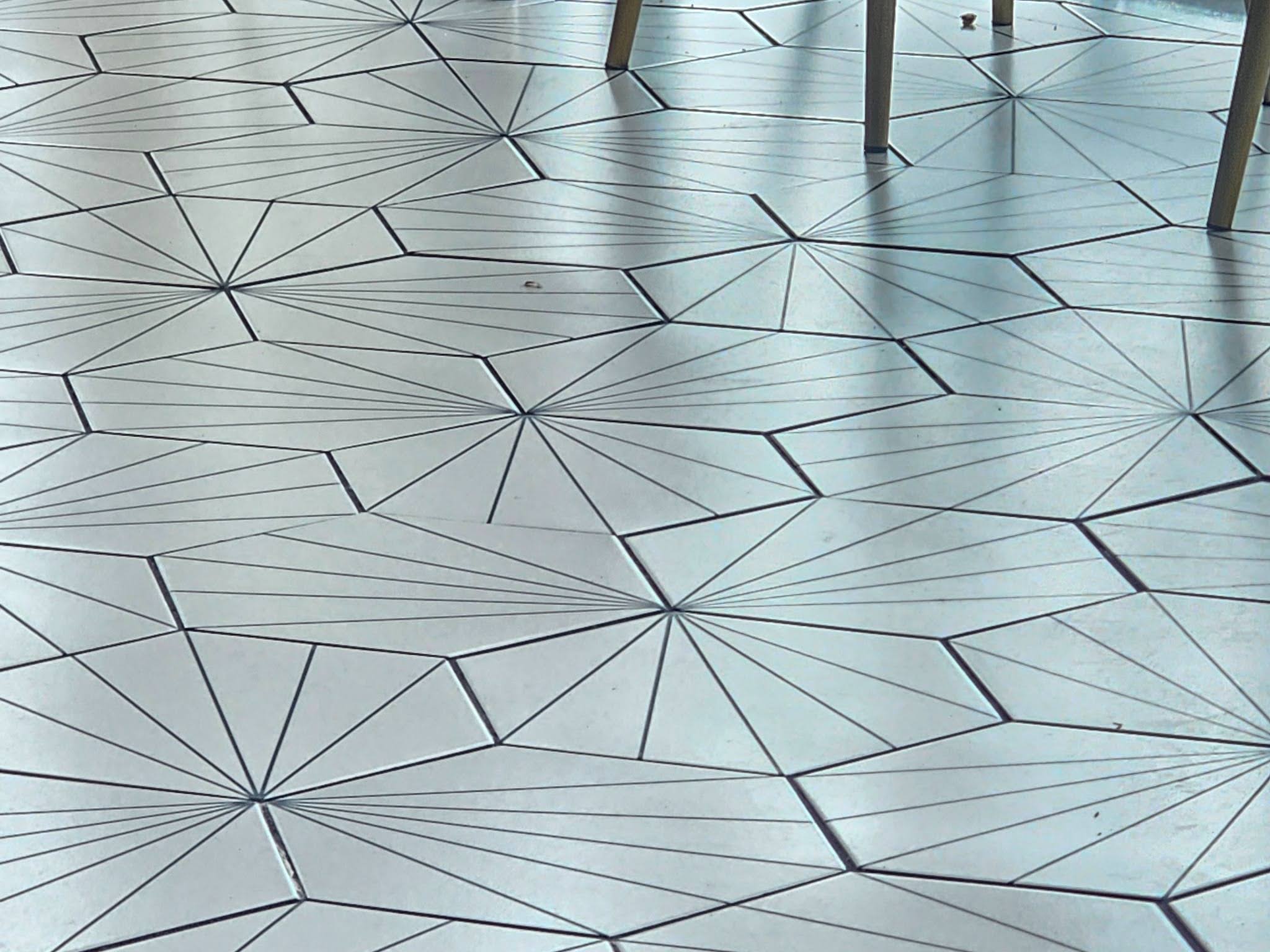
Subway Tile Bathroom Design & Grout Installation Tips
We have looked at many different types of tile installations here on our website and blog. Recently we looked at a few examples of hex tiles. Hex tiles have a particular way of fitting together and really do not have many other permutations or alternative configurations. Subway tiles, by comparison, are a rectangular shape. Traditional and original historic subway tiles were set in a running bond pattern. The running bond has each individual tile set in a horizontal configuration staggered halfway above the one below, continuing on above in the same pattern. This 50% offset is common in masonry. It is a relatively strong bond.
A picture of a typical subway bond is shown in the picture below. This layout is simple but its a minimalist and basic layout. It could be considered classic.
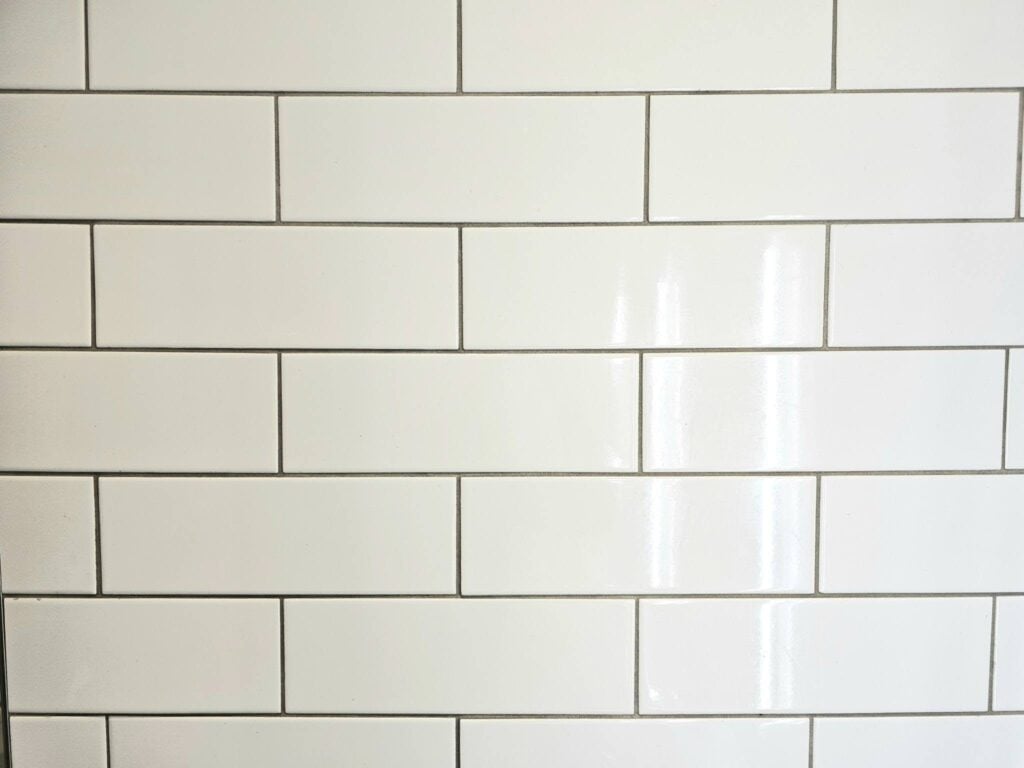
This interlocking brick format is very common. You may notice though that the tile shown below are a little bit different than the original subway tile shape. These particular tiles have a longer run in the stretcher position. Their layout ratio a bit wider. They are thin in proportion to the original Subway tiles. The original Subway tiles were 6 inches wide x 3 inches tall. That is a 2:1 ratio. Here, the tiles are actually much longer than the horizontal width of the original. They are more than a 1:2 ratio, they are instead a 1:4 ratio.
These tiles are also larger because while only 3 inches in height, they’re double the length of a traditional subway tile so therefore a 3 inch to 12 inch ratio.
In many cases, the large format Subway tiles like these have integrated self-spacing lugs. The spacing integral lugs are basically invisible to the eye, from the surface of the tile once the grout has been installed. The grout embeds and covers those integrated self-spacing lugs. They’re essentially there but hidden underneath the grout line so you cannot see them.
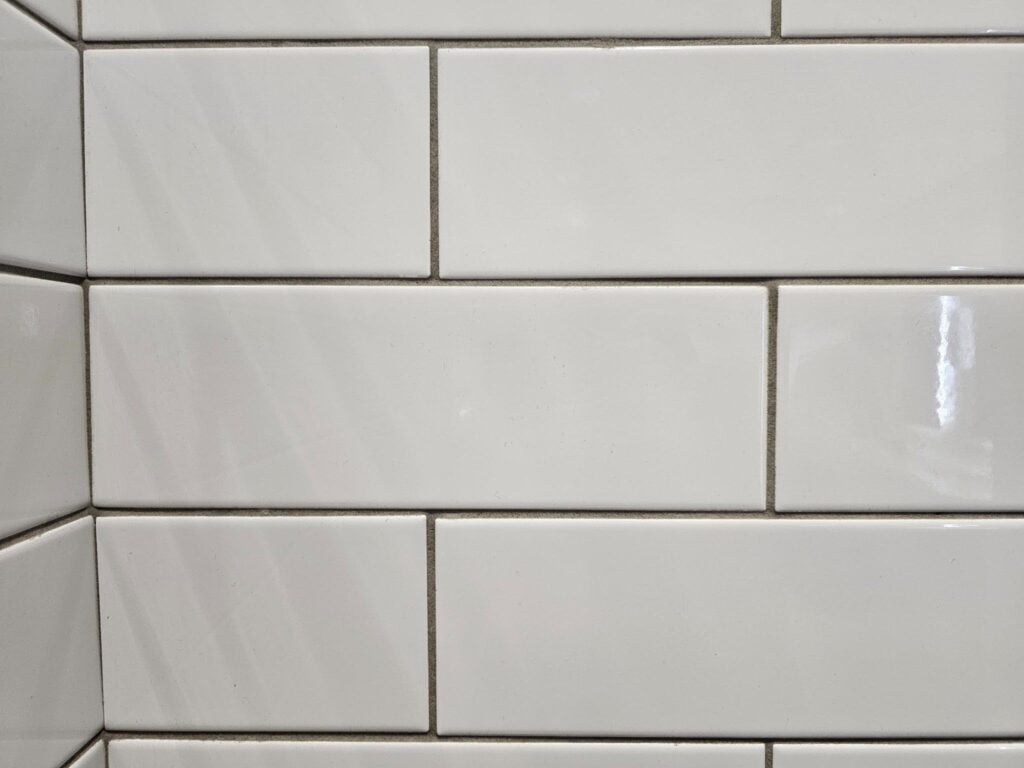
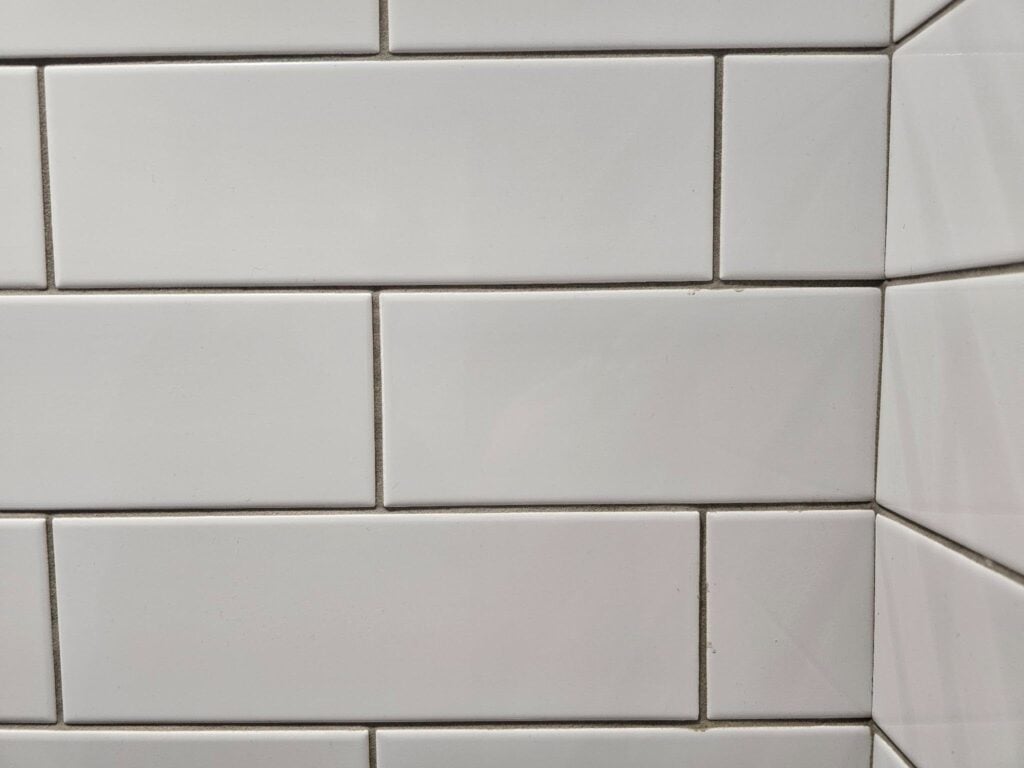
The picture below shows the vertical wall joint. The tiles butt up against the courses from the adjacent wall. This is one of the few places where you see a continuous vertical joint that runs from one course to the next. If you look very closely at the tile grout line, you may notice that the grout lines are supposed to be excessively recessed. This isn’t from typical wear and deterioration.
Instead, when they applied the grout they struck and cleaned away the excess grout too early and wiped away too much of the grout that was intended to remain within the joint between the tiles. Although this happens to be a relatively common type of mistake, it’s one that should be avoided by most experienced tile installers.
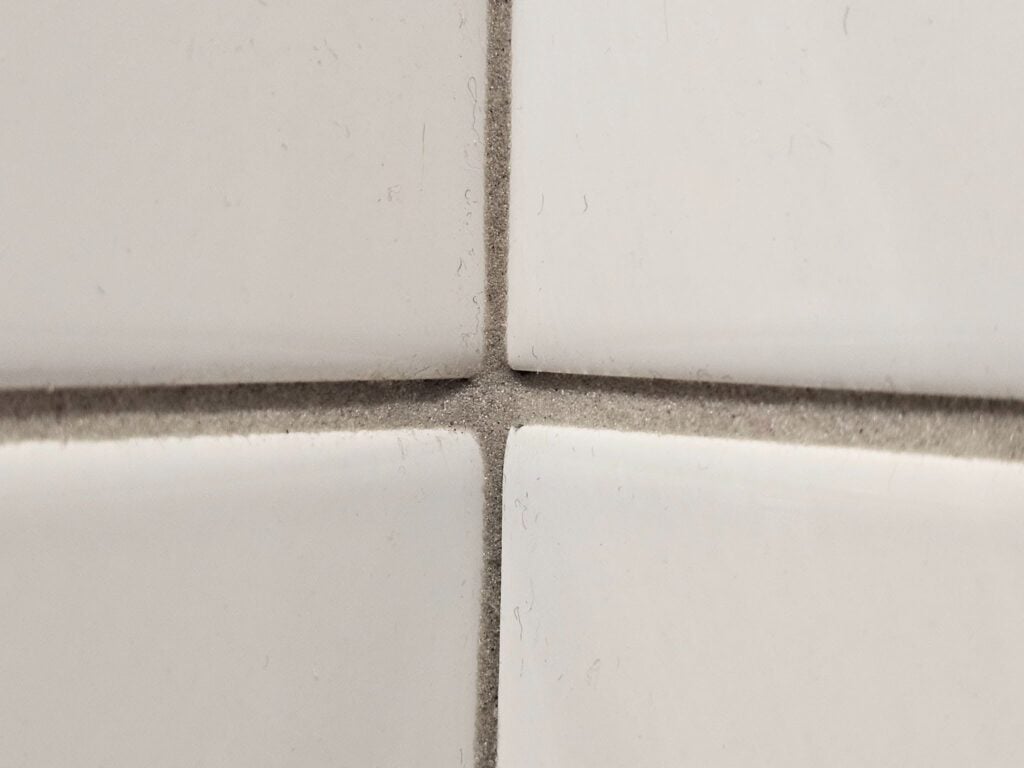
There are a few common reasons that over-wiping like this happens. One of the biggest reasons is either wiping the excess mortar away too early after it’s had a chance to only partially set, or using excessive amounts of water. In this case, when you look really closely, you can see there are too many granules exposed in the grout which means that it was probably overly hydrated or overly wet when cleaned.
There are many different types of varieties of both colors and classifications of grout. Some grouts are polymer modified, some are sanded and unsanded. Putting the color options aside, you can look at it just based on the chemical physical characteristic influencing makeup of the grout. The standard cementitious grout includes the varieties and types we described above: sanded, unsanded, and polymer modified. In addition to these more standard types, there are also epoxy grouts, high performance grouts and single component grouts.
These three types are all a little bit different from one another and definitely different from the standard more traditional types of grouts. In a future blog article, here on the website, we’re going to take a look at the different chemical make ups and performance characteristics of these different types of tile grouts. Understanding these differences is important from a construction and installation perspective.
Dupont Kitchen & Bath Can Help
As dedicated and local DC metropolitan kitchen and bath builders and installers, we pride ourselves on turning your visions into reality. Your kitchen and bathrooms can reflect your unique style and be designed with personalized aesthetics. It can be a process from creative designs to the realization of your dream space. Specializing in kitchen and bath construction, we bring expertise and skills to every project. If you’re contemplating a renovation, upgrade, or modernization in the local market, we’re happy to be your team. Consult with us, and we can start together on a path to redefine and elevate your DC living experience.
Visit our company website to learn more about our kitchen and bath services. You can also use our simple online contact form to get in touch with our team and discuss your project.