Porcelain Wall Tile with Single-Line Art
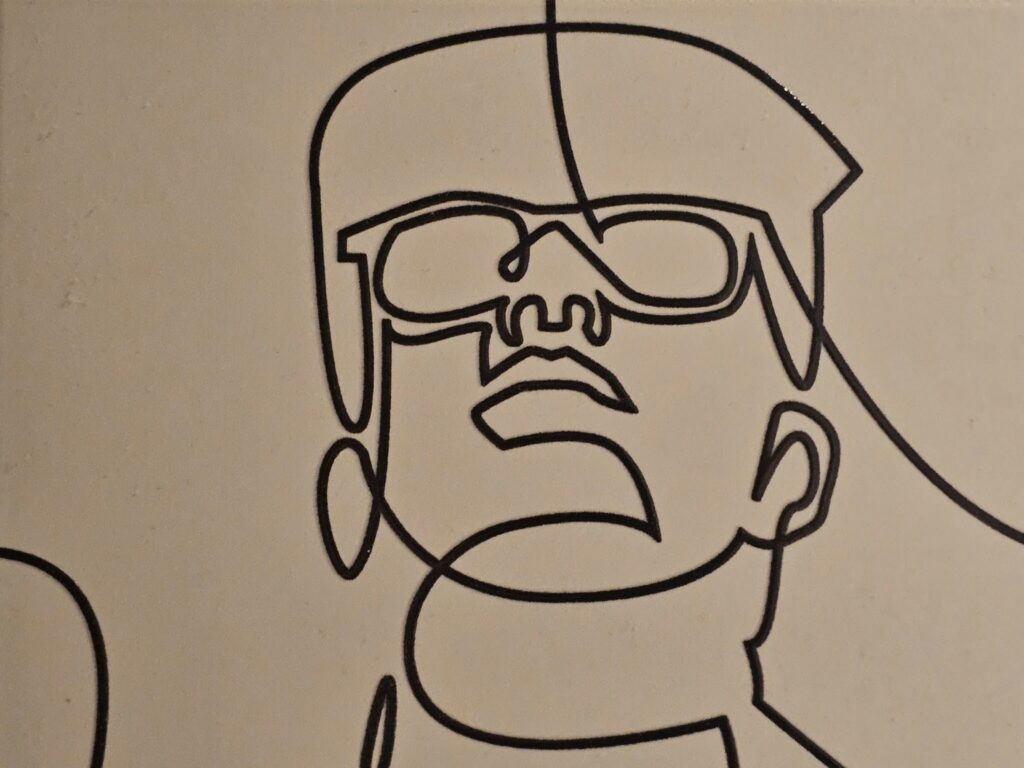
Today, we are looking at a particular type of porcelain tile that has an artistic design set into each of the individual tiles. These are basically single line drawings where the line stays almost continuous around each one of the faces drawn. The set of tiles includes 25 different designs. When installed with attention to the details they can be set so that there are very few repetitions within a limited area of the wall. These tiles, unlike many tiles which are intended for both usage in floors and walls, are mainly intended to be used for wall installation.
We always recommend our clients look at the traffic texture coefficient of a tile to determine if a floor tile will be safe from a perspective of slipperiness when wet. Some tiles are too glossy and lack a surface texture that deters slippage. When those types of tiles that lack for traffic texture become wet they can sometimes become dangerously slippery.
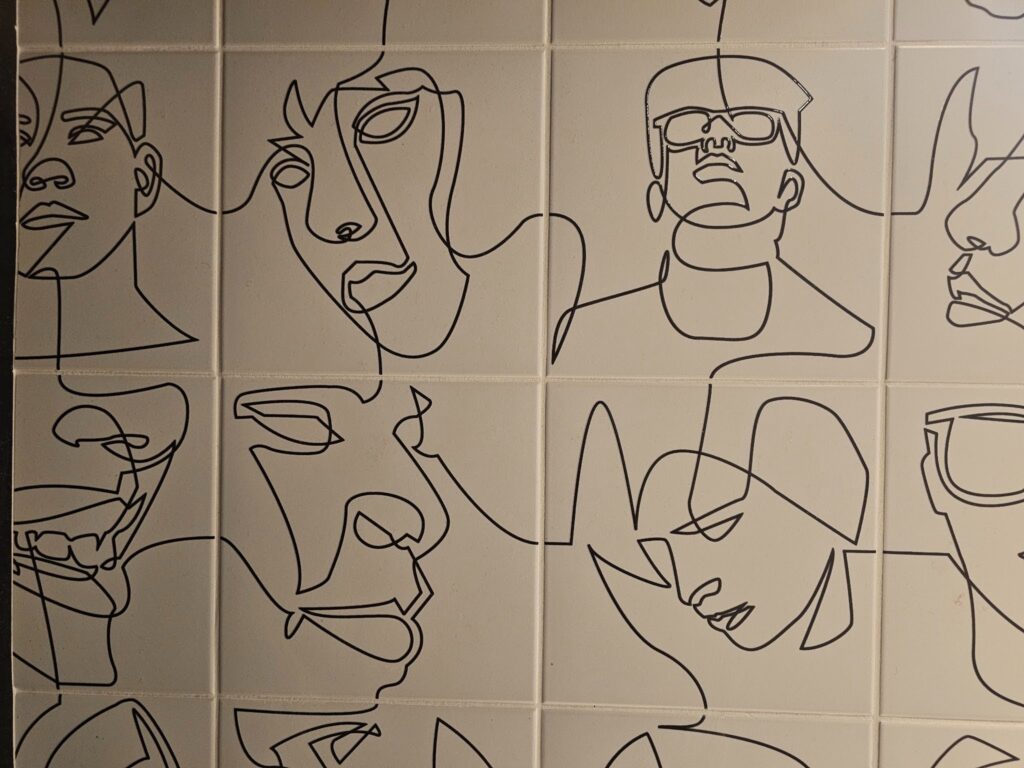
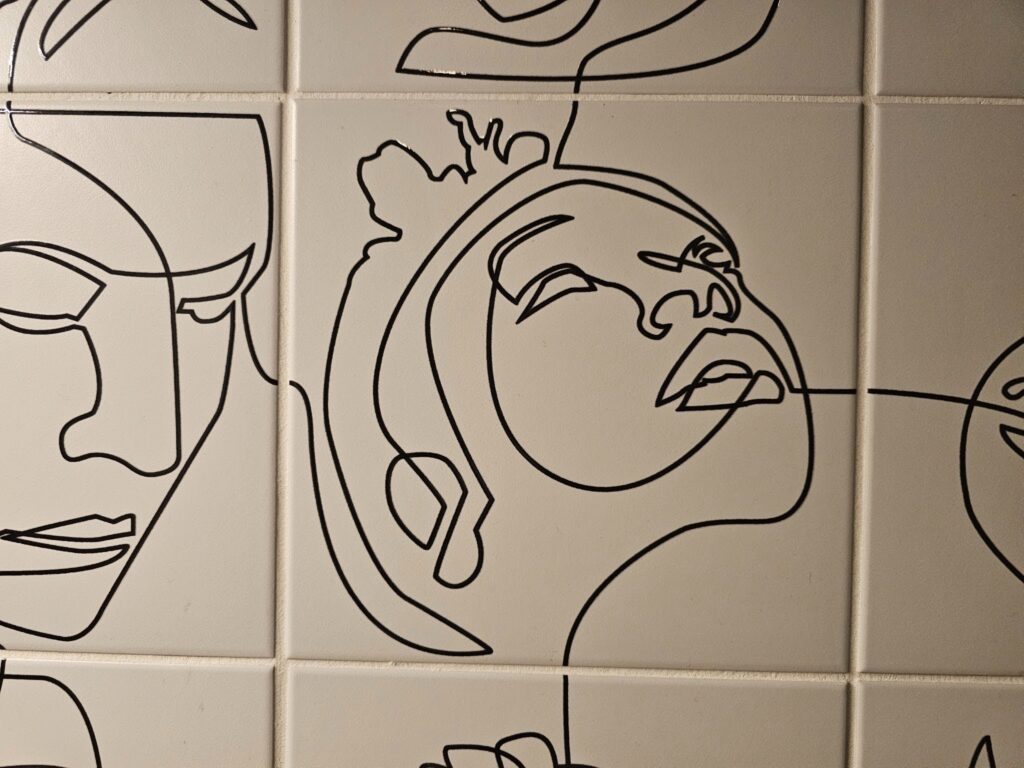
A close up of one of the designs follows below. The tile background itself is almost a pure white color. We photographed it metering a bit darker so that you can see the grout lines. Since it’s a white on white color scheme, it requires a little bit of underexposure in photography to show the details that the eye would normally pick up, natively.
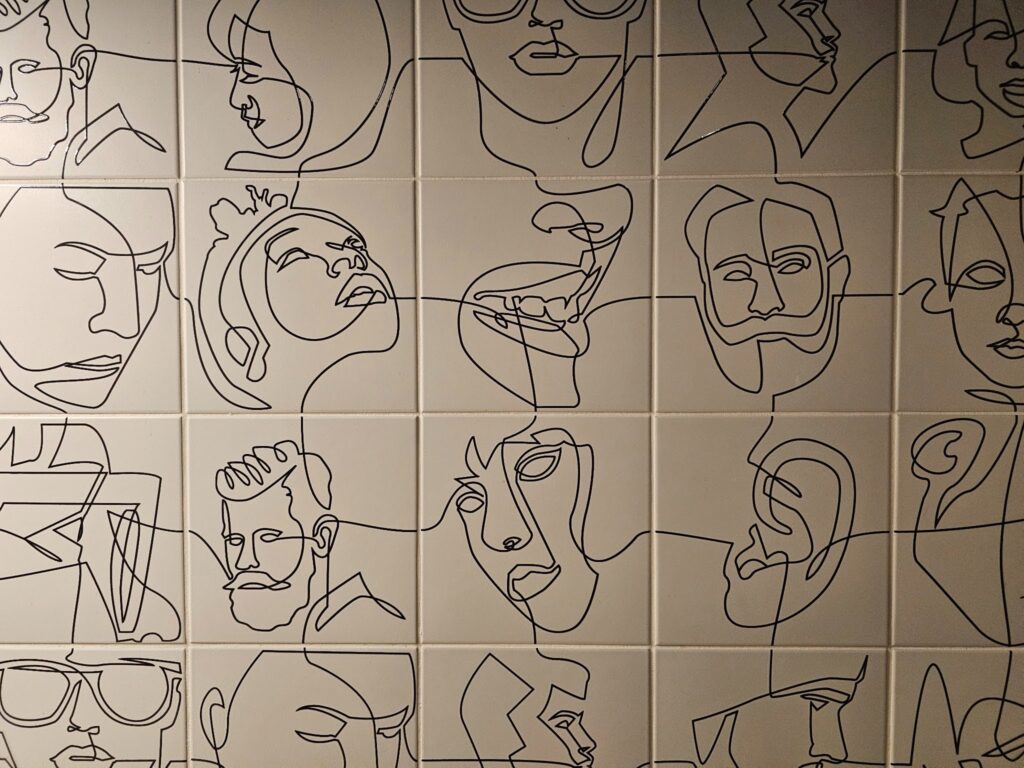
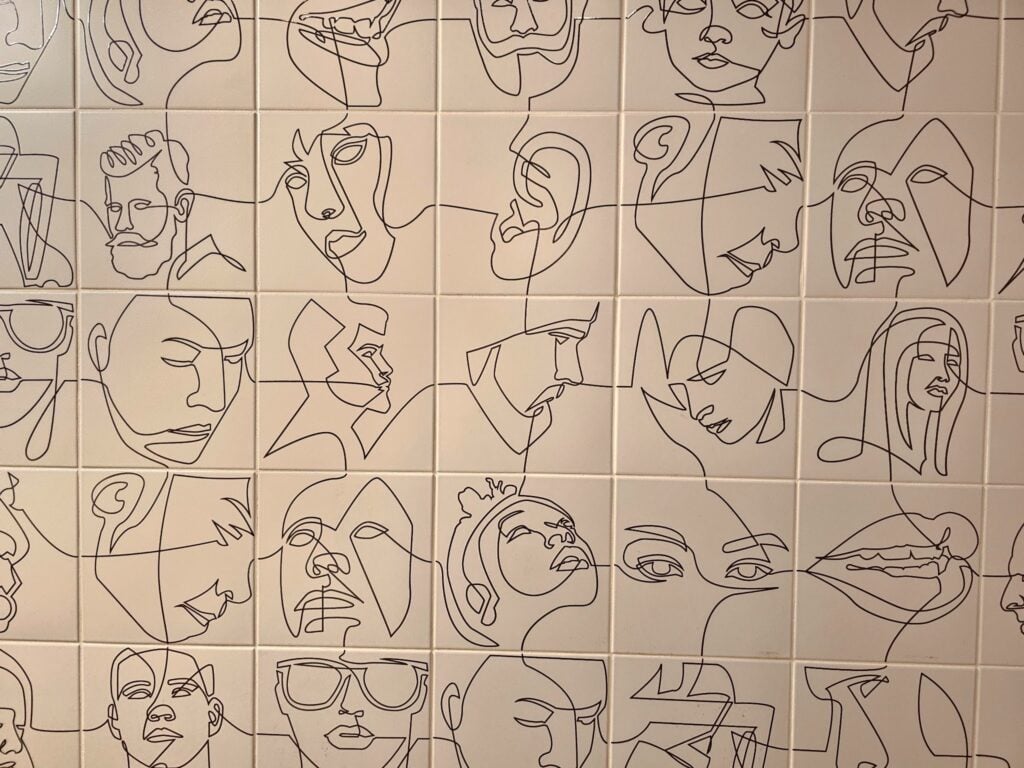
In the particular layout for grouping shown in the picture below, they have repeated the use of at least a few different designs. The repetition isn’t so concentrated though that it’s quickly observable. It’s there, but it doesn’t really jump out at you. There’s enough variety to kind of hide the repetitions within the grouping.
The porcelain materials used to create these tiles are a subset of ceramics. The industry generally describes porcelain as being a highly refined type of ceramics. When they say refined, they’re generally referring to filtering of the substrate materials to isolate elements. The filtering culls and or removes, exclude other than type materials that are considered, by them, to be impurities. Iron oxide, for example, is highly abundant in most types of earthen materials.
When we look at the red dirt so common in the typical soils of Washington DC, that red or light orange color generally comes from a combination of materials that includes moderate to high amounts of iron oxide.
The amounts of iron oxide that we find in those soils are not nearly high enough to be considered a rich iron ore that could be used for harvesting and manufacturing of iron materials themselves, yet the element is highly present. When ceramic materials such as clay are processed to develop concentrations of the more desirable porcelain substrates, they generally begin the process by creating slurries. Slurries are milkshake type consistency mixes of hydrated earthen materials.
Imagine a highly diluted mud. After that slurry is agitated and mixed with water it is then vigorously filtered. In modern times we use a variety of different mechanical and automated machinery. Some of the machinery will be electric and hydraulic powered.
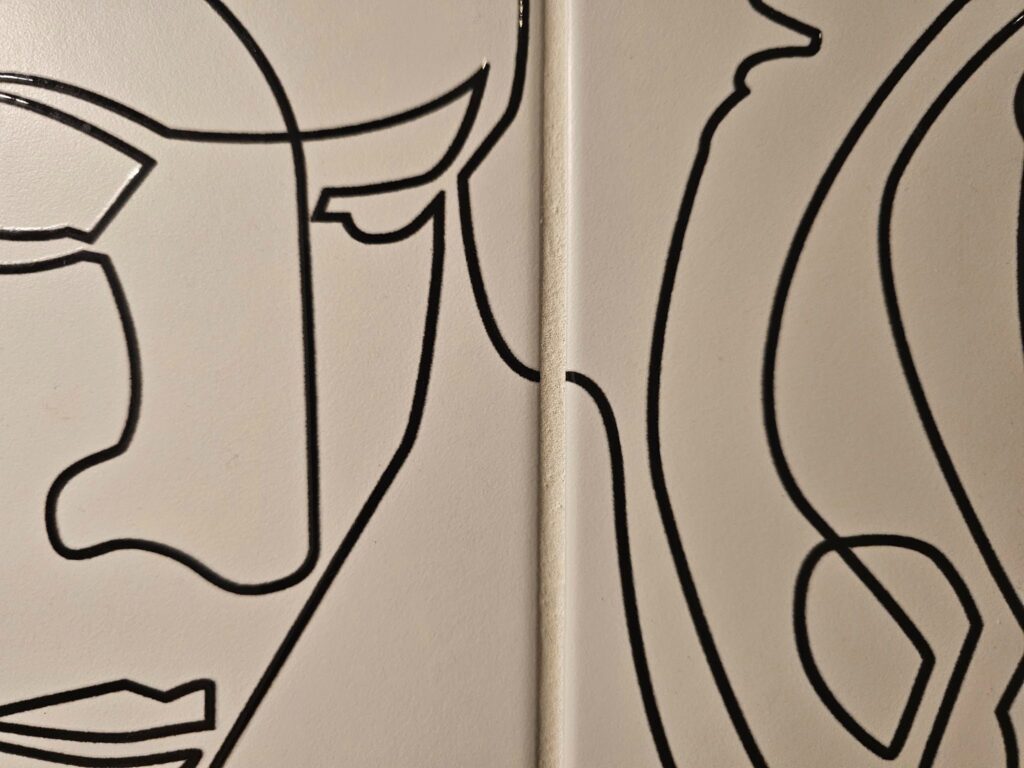
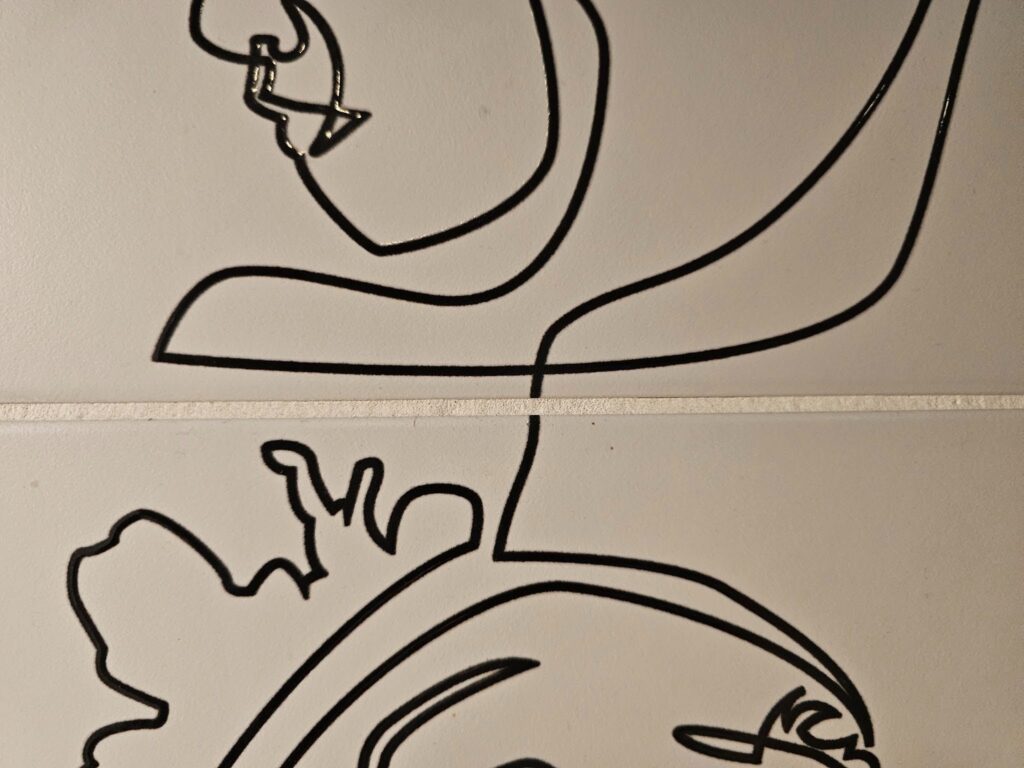
For the artistic elements of this design to work well, they particularly use lines that lead off the edge of the individual tiles at the center so that in almost any square bond of the tile setting, the lines could meet up to join from one tile to the next. This makes the artistic design look intentionally continuous.
One of the main materials in porcelain is referred to as Kaolin clay. Historically, Kaolin clay was first used most widely in China. Often, even here, in the United States, we will still refer to fine dining plates and dining wares as China, because the international trade of these porcelain materials first was based out of China. Today though the epicenter of harvesting of Kaolin clay is actually here in the USA. It’s not just because the USA was once the world’s leading superpower, it’s also because there are major bands of underground Kaolin clay in the US state of Georgia.
One of the other differences between earthenware clay and porcelain is that in some cases earthenware clay may be low temperatures. In contrast, porcelain tile is fired at very high temperatures that completely fuses the elements of the tiles to become highly vitreous. On a material scale, there are a bit more like glass then typical ceramic tile.
Dupont Kitchen & Bath Can Help
As dedicated and local DC metropolitan kitchen and bath builders and installers, we pride ourselves on turning your visions into reality. Your kitchen and bathrooms can reflect your unique style and be designed with personalized aesthetics. It can be a process from creative designs to the realization of your dream space. Specializing in kitchen and bath construction, we bring expertise and skills to every project. If you’re contemplating a renovation, upgrade, or modernization in the local market, we’re happy to be your team. Consult with us, and we can start together on a path to redefine and elevate your DC living experience.
You can visit our company website to learn more about our services and use our simple contact form to get in touch with us quickly.