We’ve looked at a wide range of different of tile here on our website. In some cases we’ve looked at small mosaics used in backsplashes, shower niches, shower floors, and even in wall areas on bathrooms and kitchens. We have also looked at the more common medium format tiles which generally range between a few inches wide and a few inches tall up to about 12 to 18 inches in their longer span.
Today we’re looking at something similar but a bit different. We are looking at examples of large format tiles.
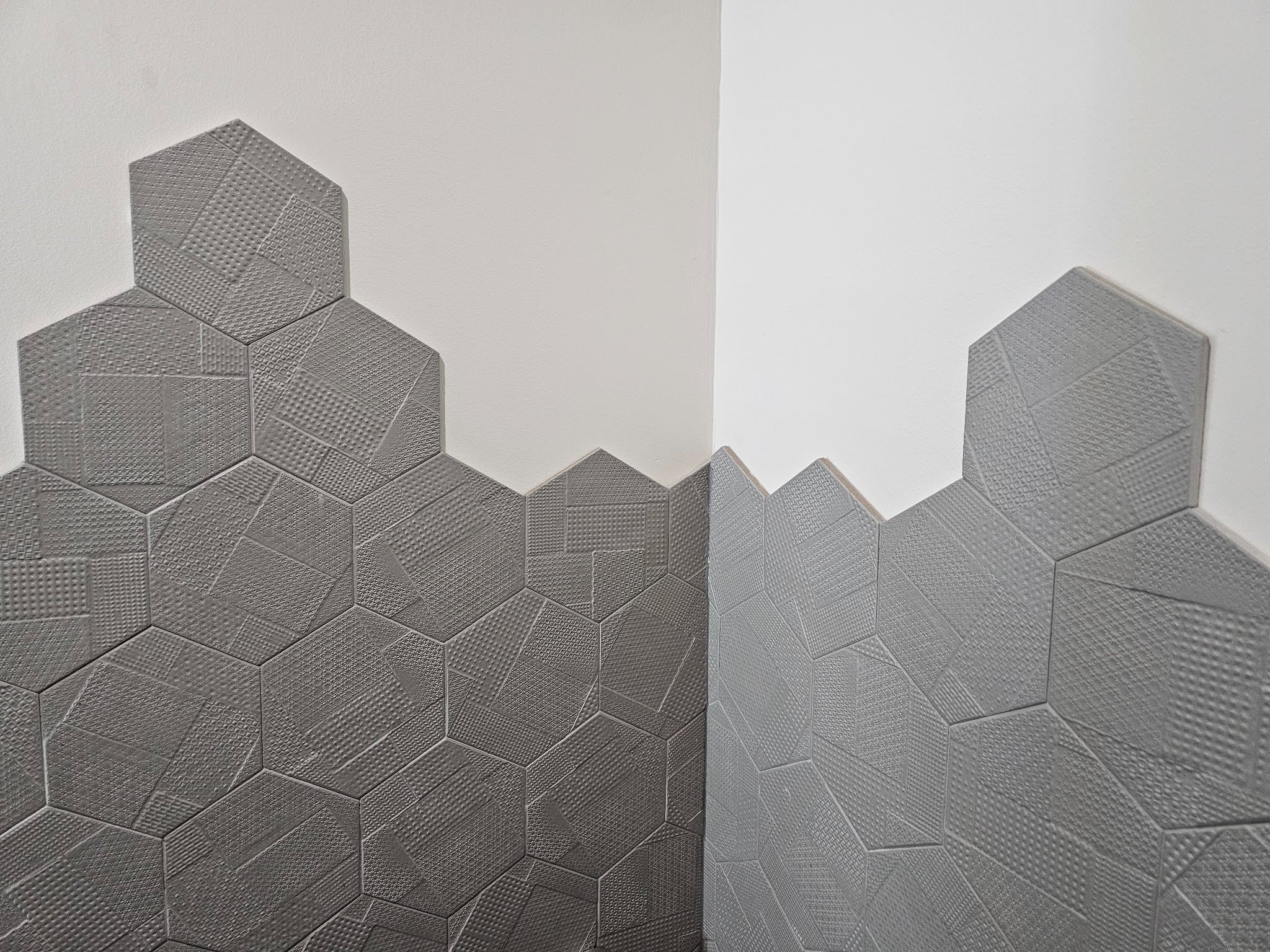
These tiles are generally between a few feet wide and several feet long. This past week, for example, we looked at hexagonal tiles that were about 6 inches across from perpendicular edge to perpendicular edge and about 7 inches across from point to point in their longest dimension.
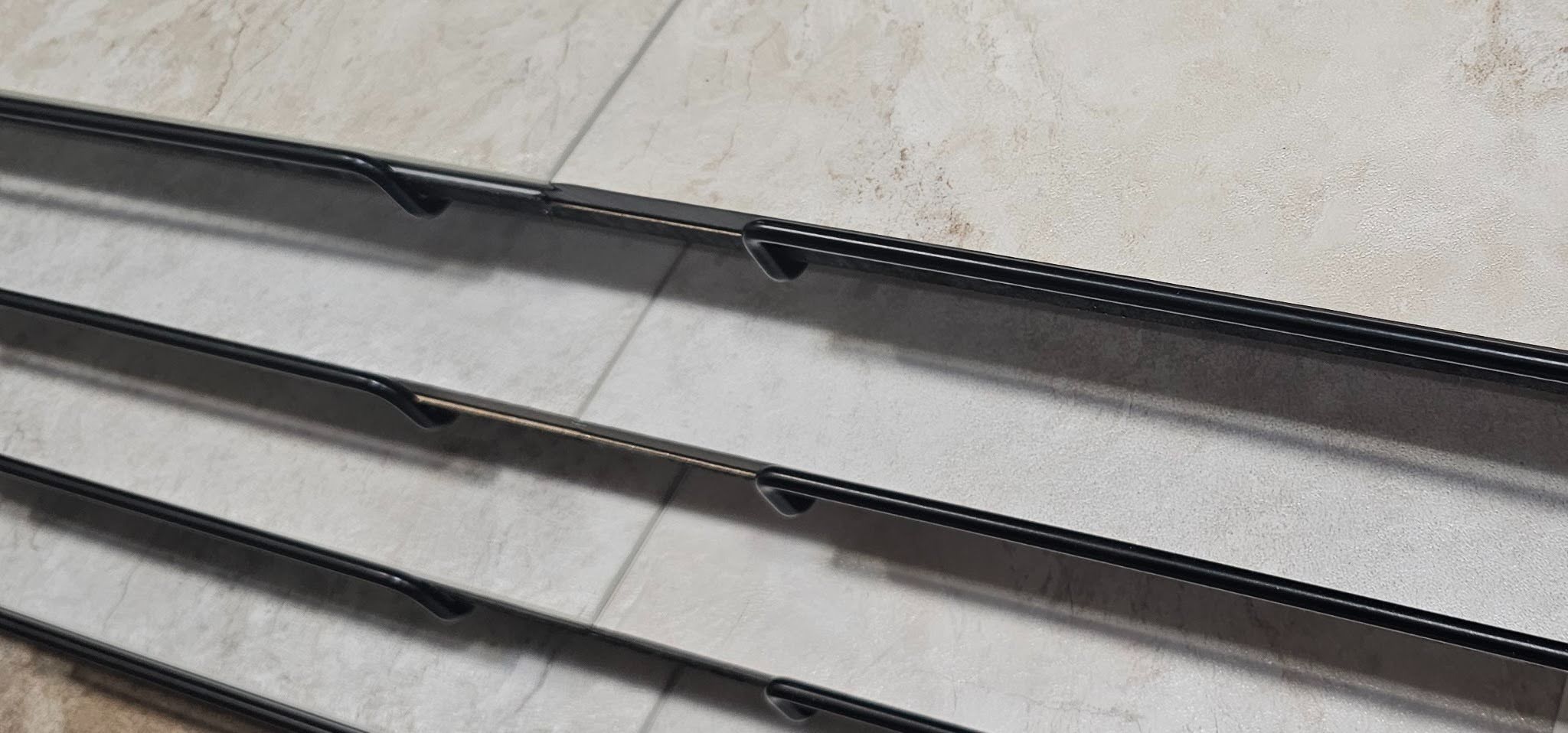
In contrast, the tiles shown in the picture below are much larger. These tiles are 24 inches wide x 48 inches tall, in their current position. Here, as shown below, they are just sat onto a display rack where it can be selected for purchase. In this display, several different tiles of similar shape and size are positioned together for presentation.
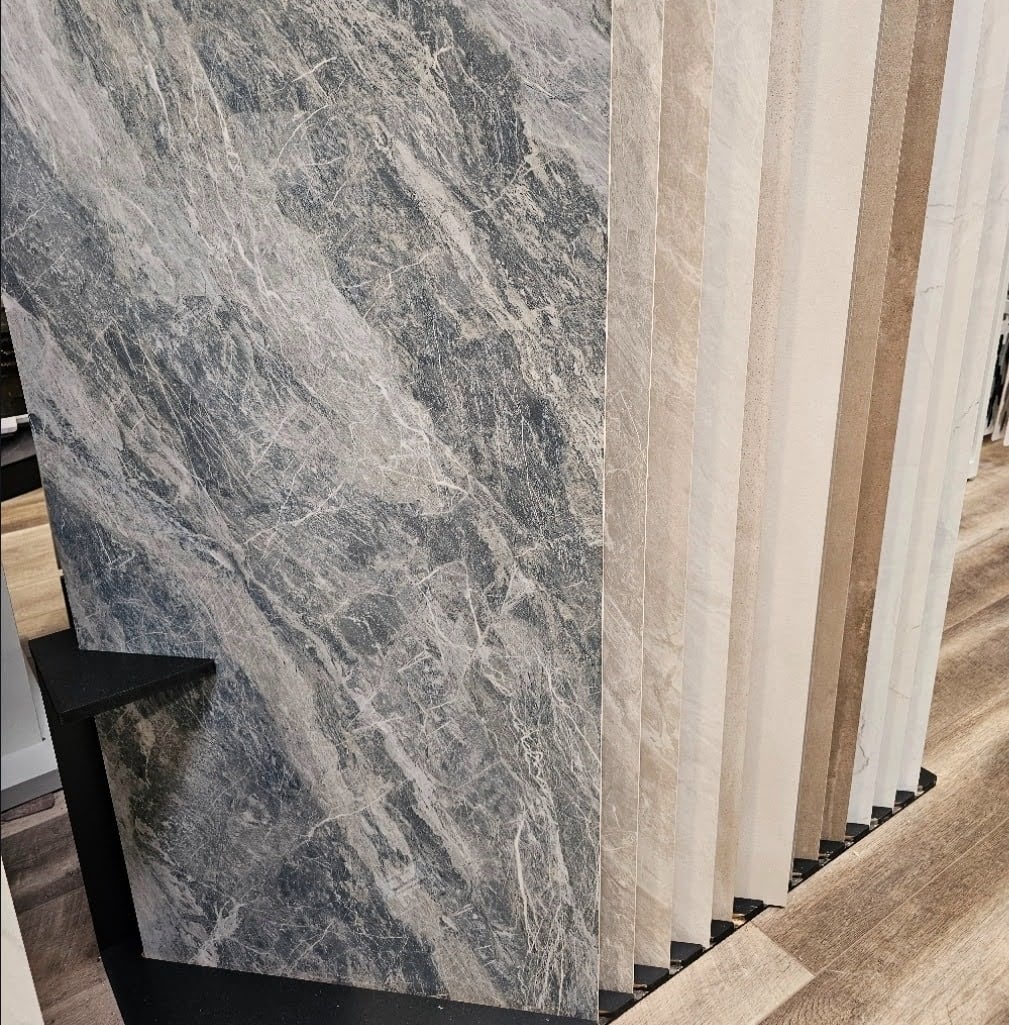
We often talk about porcelain and ceramic materials as being similar, sometimes we use the words interchangeably, depending on the nature of the tile. Here though, the difference has a specific distinction. These are porcelain tile and natural stone tiles as well. By comparison, natural stone cannot be cut quite so thin at such a large span. As well, ceramic, at this large width, lacks the intrinsic strength resistance to remain structurally stable.
Although these particular tiles, above, are shiny, they’re acceptable to be used both on floors and walls. Often, we will suggest using a tile material that has a bit more texture on the exposed surface if it’s going to be used for flooring. Even these tiles, although made to be used in both types of surfaces, can become dangerously slippery when wet. Outside of kitchens and bathrooms, it’s not as common for floors to be excessively wet. So therefore, in non wet areas, clients may choose to use a tile material like this.
The picture below shows a selection of ceramics and vitrified porcelain floor tiles.
The technical, scientific difference between ceramics and vitrified porcelain floor tiles is both the composition and the firing methods. Both porcelain and ceramic are fired to become at least partially vitreous.
Essentially, cooking these formed materials at extremely high temperatures changes their chemical composition. At higher temperatures, for longer periods of time, they’ve become more similar to glass. A firing that is on the spectrum towards that level of vitreousness, in some cases, be referred to as semivitreous.
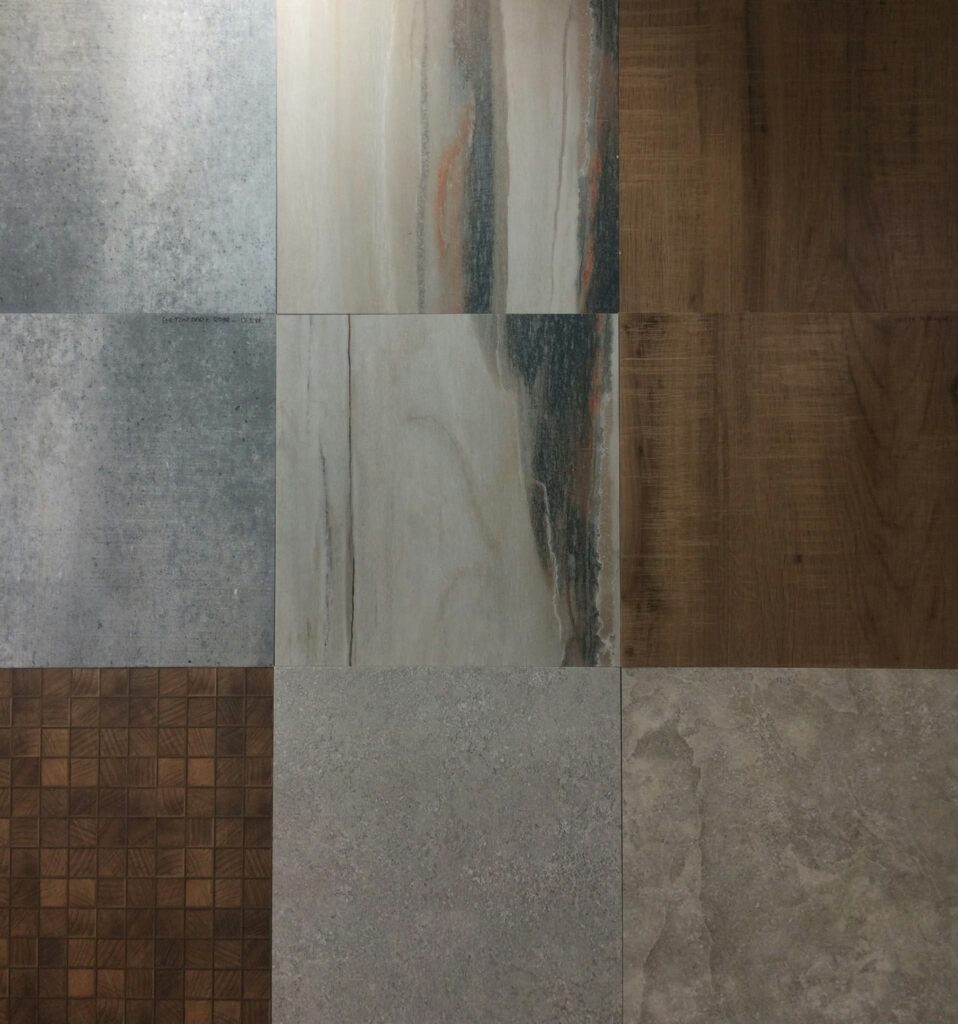
Standard ceramic generally contains a higher proportion of coarse,natural red or white earthenware substrate components. This is a type of unrefined clay blended often with basic naturally occurring minerals. The red variety of clay generally contains a higher ratio of iron oxides. The iron oxides, for example, provide the reddish color found in terracotta and brickwork. These materials are similar, even in ceramics.
The pictures below show a large format type of tile that is made to mimic natural marble. Marble occurs naturally in different parts of the world, but is actually a bit rare here within the continental United States.
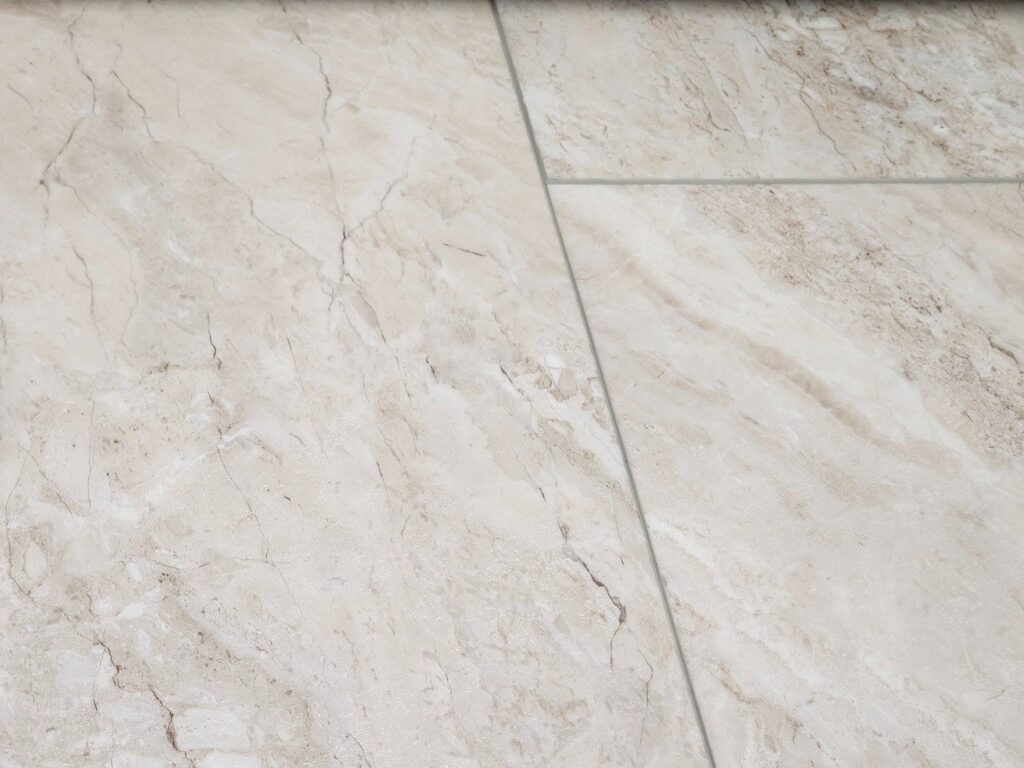
The option shown in the next picture below looks very similar from one to the next. There are differences though. If you look very closely you can see that the hue or shade of the near white or light gray colors is actually a bit different. When designing the precise points of the details of a kitchen or bathroom, it’s important to consider these finer details.
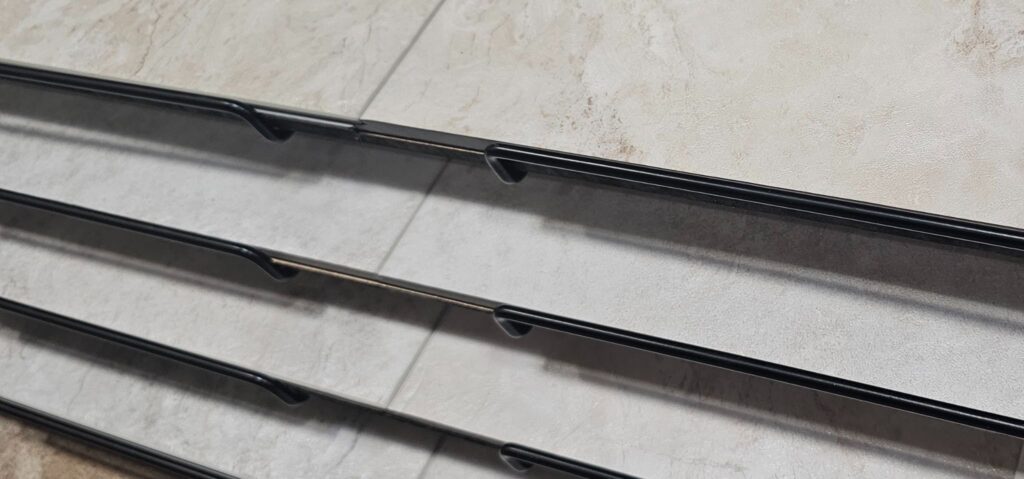
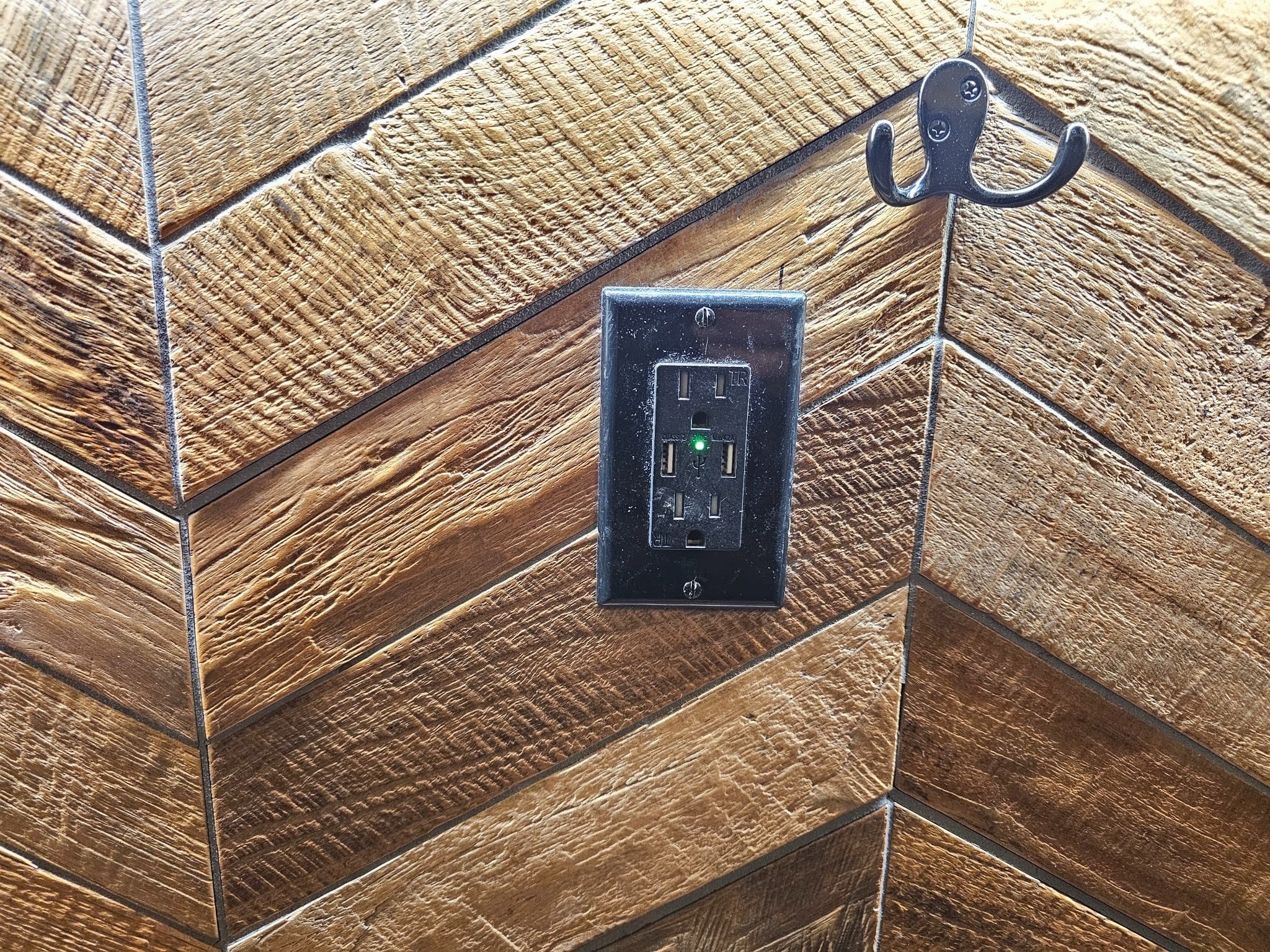
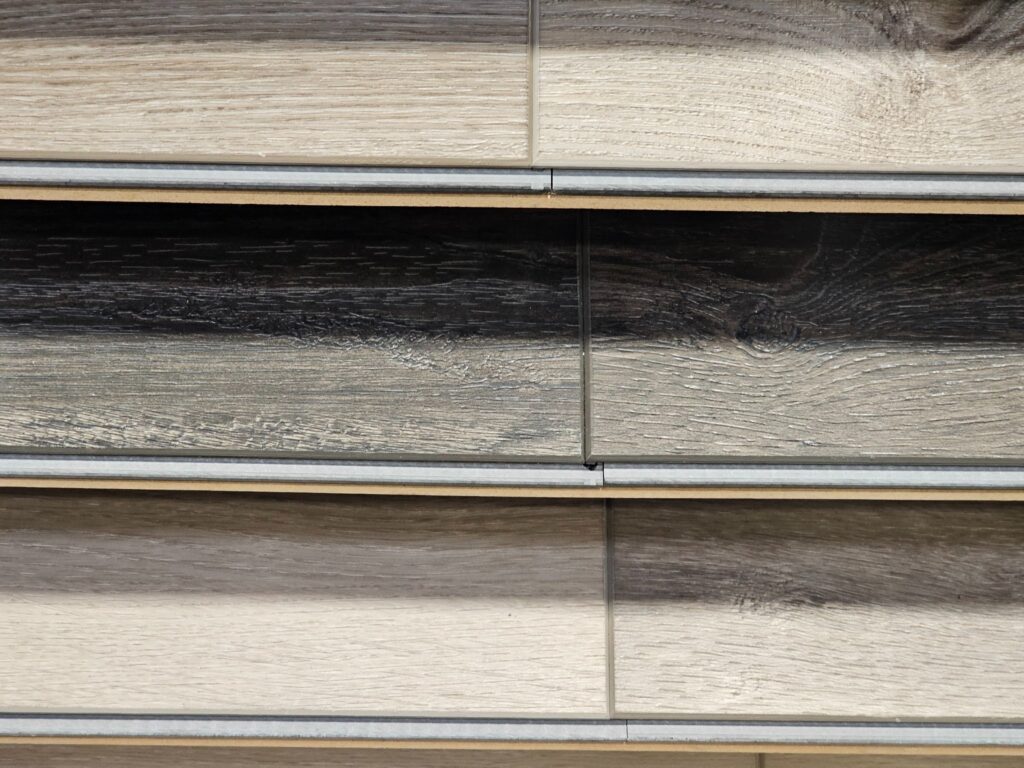
The next picture below shows different tiles that range in color from a light and warm color to a dark and cold gray. These particular tiles are large format but are made to look like natural wood. We’ve looked at other examples of natural wood type embellishments, they may look somewhat convincing at a glance but the difference can generally be discerned when you look closely.
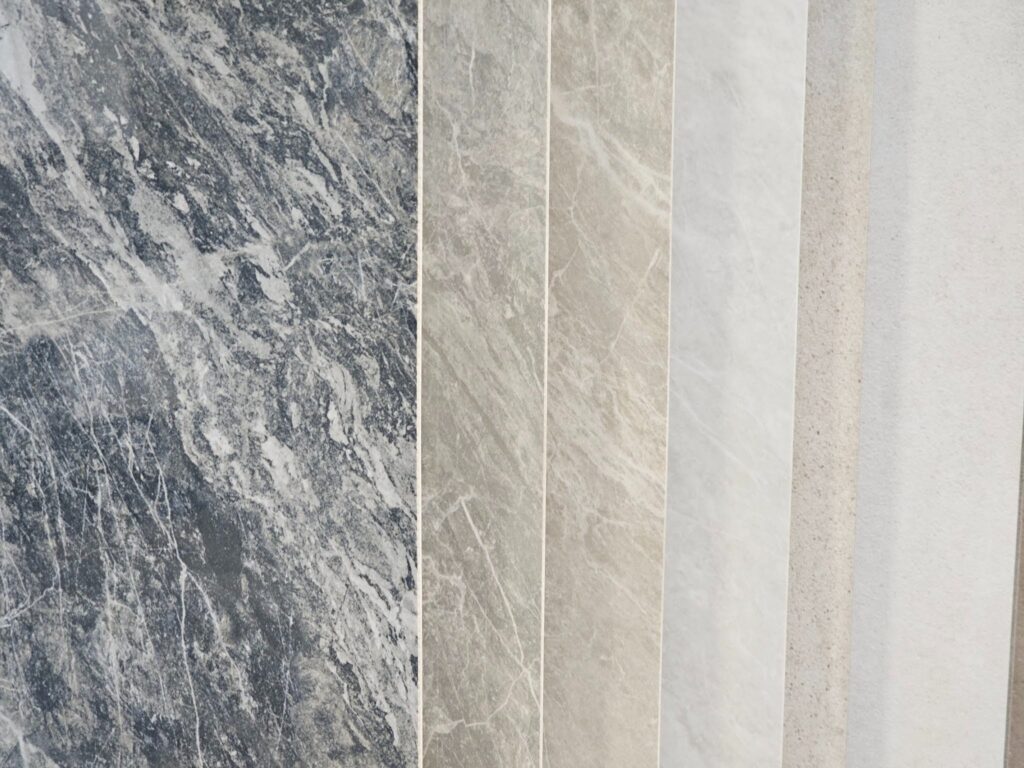
The next picture below says another group or selection of large format tiles that look like natural stone. These are similar to the other ones we looked at above but show a different range of colors and designs.
Dupont Kitchen & Bath Can Help
As dedicated and local DC metropolitan kitchen and bath builders and installers, we pride ourselves on turning your visions into reality. Your kitchen and bathrooms can reflect your unique style and be designed with personalized aesthetics. It can be a process from creative designs to the realization of your dream space.
Specializing in kitchen and bath construction, we bring expertise and skills to every project. If you’re contemplating a renovation, upgrade, or modernization in the local market, we’re happy to be your team. Consult with us and we can start together on a path to redefine and elevate your DC living experience.
You can visit our website and you will find a simple and convenient web form that you can fill to contact us quickly.