Built-In Wine Rack Ideas for Kitchen Cabinets – Part II
This week we looked at a couple different examples of wooden wine racks. One of the wine racks that we looked at was installed below a wall hung kitchen cabinet. That particular one was basically created within set of boards like planks that ran from corner to corner of the shelf. That particular configuration allows wine to be installed in groups that are segmented. Essentially, by allowing for different compartments, bottles can be easier to remove without necessarily destabilizing the entire section of wine bottles above.
For example, if the entire wine rack has no intermediary shelves, all of the bottles at the top will be sitting on top of the bottle just below them, and so on, all the way down to the base shelf. Therefore if you want to remove one of the wine bottles that’s very low in the rack, all the bottles above need to wiggle around a little bit to resituate themselves after the bottle is removed. It’s generally better ergonomics for the bottles to have an intermediary shelf where smaller sections or groupings of bottles can be maneuvered to pull one bottle out and or put another bottle back in place.
Sometimes to really read the label on the side of a bottle you have to remove it from its position so that you can see it clearly without obstruction.
The picture below shows a shelf that illustrates the concepts of large diamond or 45° turn where boxes can nestle several bottles. In this particular case the shelves are probably large enough to hold as many as 16 bottles per square cubby. Not all bottles have the exact same diameter though. To nestle consistently in a pattern, the sizes must be consistent

Bottle sizes of 750 ml are one of the most common sizes of wine bottles. There are even larger and smaller varieties, with different volumetric sizes. Just starting by looking at these 750 ml classification though, we can describe some of the variations you may find in the options out there in the wine market. Bordeaux like Cabernet or Merlot are generally one of the thinner types. Often the bottles will be between 2.75 inches in diameter up to about 3 inches in diameter.
Burgundy wines like Pinot Noir or Chardonnay wines have bottles that are a bit wider at around 3.2 to 3.5 inches in diameter. Champagnes and sparkly wines are under pressure and sometimes even at the same volume they have wider bottles because those glass bottles even withstand the pressure associated with carbonation. Often those bottles will be between about 3.5 inches to about 3.75 inches in diameter.

One of the secrets to making the cubbies work well is that all of the bottles within a particular cubby match the rest of the bottles within the same cubby. That consistency makes the visual presentation look a lot cleaner and more intentional.
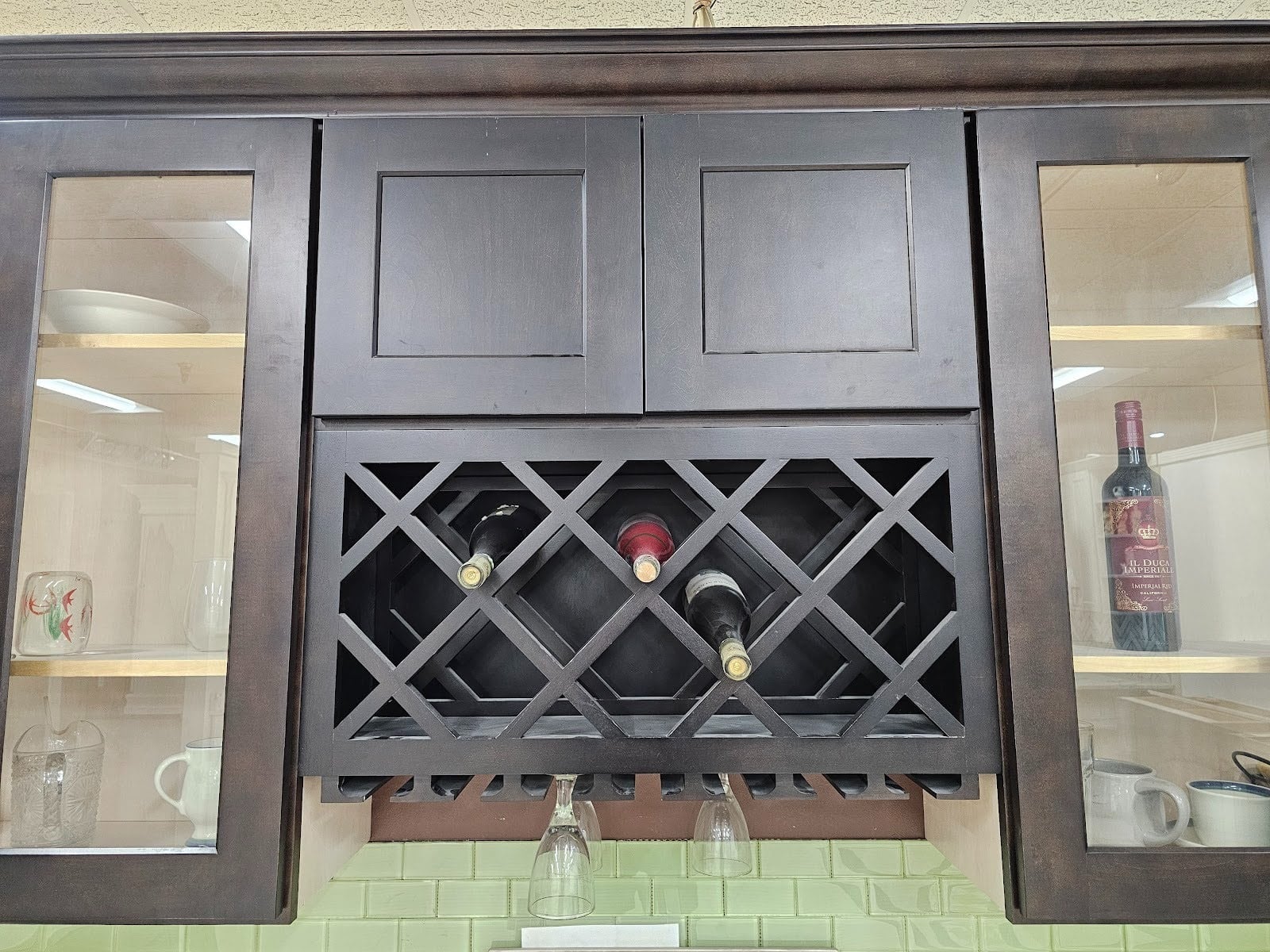
For restaurants who are serving many bottles and buying large quantities of single types of wine products, that cubby arrangement may work perfectly well. In individual household kitchens though, the type of wine rack shown in the picture below might make a bit more sense. Even if the bottles are of different sizes within this type of wine rack, shown below, you can lay out a configuration that will still look organized and intentional. The wood frame around each bottle keeps them organized and confined within a limited amount of space.
It is in many kitchen installations for there to be an upper cabinet that is shorter than the adjacent cabinets. You see this type of layout change at the area above cooktops, for example. You also see similar layouts at the refrigerators, particularly where the refrigerators are built into the cabinets without a panel or skin at a thin countertop depth refrigerator.
However, in cases of the refrigerators and the cabinets above the refrigerators, those cabinets generally have a greater depth than typical wall cabinets. While cabinets will generally have a depth of between about 12 to 15 inches. Where wall cabinets are built to coincide with the space above a refrigerator, those cabinets will often be built out to roughly 30 inches depth.
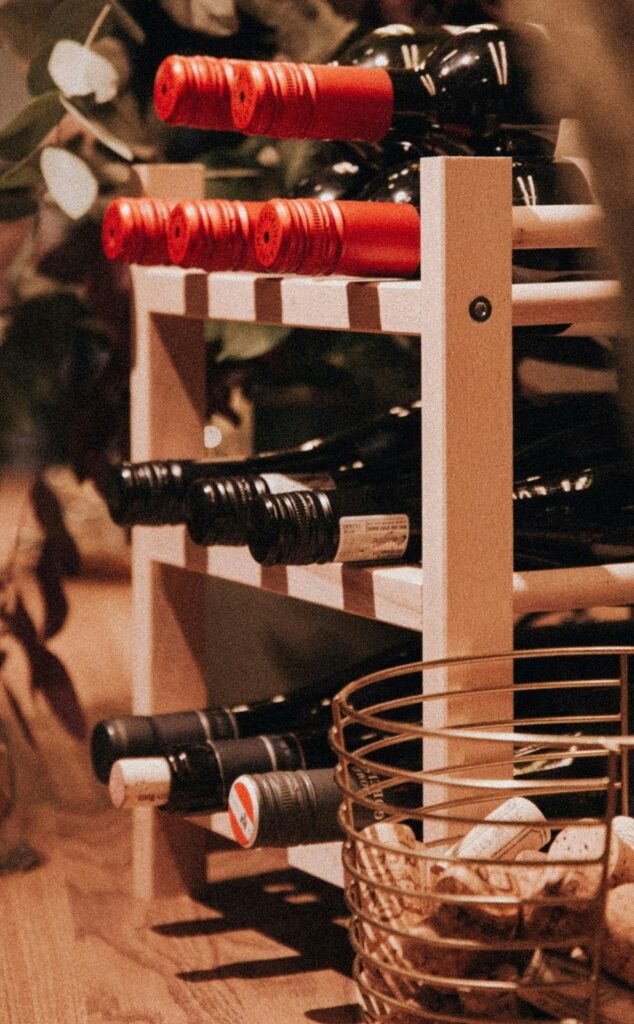
A more traditional and simple type of countertop wine rack is shown in the next picture below. This type of wine rack is prolific and easy because it doesn’t require any installation or mounting. The downside to this type of wine rack; however, is that it consumes the countertop space which is limited and valuable when using a kitchen for preparing food and normal kitchen purposes.
Dupont Kitchen & Bath Can Help
As dedicated and local DC metropolitan kitchen and bath builders and installers, we pride ourselves on turning your visions into reality. Your kitchen and bathrooms can reflect your unique style and be designed with personalized aesthetics. It can be a process from creative designs to the realization of your dream space. Specializing in kitchen and bath construction, we bring expertise and skills to every project. If you’re contemplating a renovation, upgrade, or modernization in the local market, we’re happy to be your team. Consult with us, and we can start together on a path to redefine and elevate your DC living experience.
You can visit our company website at https://dupontkitchenbathdc.com/
Here at our website you will find a simple and convenient web form that you can fill to contact us quickly.