Herringbone Pattern Wood-like Tile Installation Tips
This past week we looked at the insulation of a ceramic or porcelain tile that’s made to look like wood. The wood surface has a particularly rough texture and makes it look like the wood is rough and salvaged. It basically looks like the kind of wood you would cull from a pile of scraps if you were using it for something to be installed exposed on the interior of the building. Here though, they actually created this aesthetic intentionally so that it would have this rough looking effect.
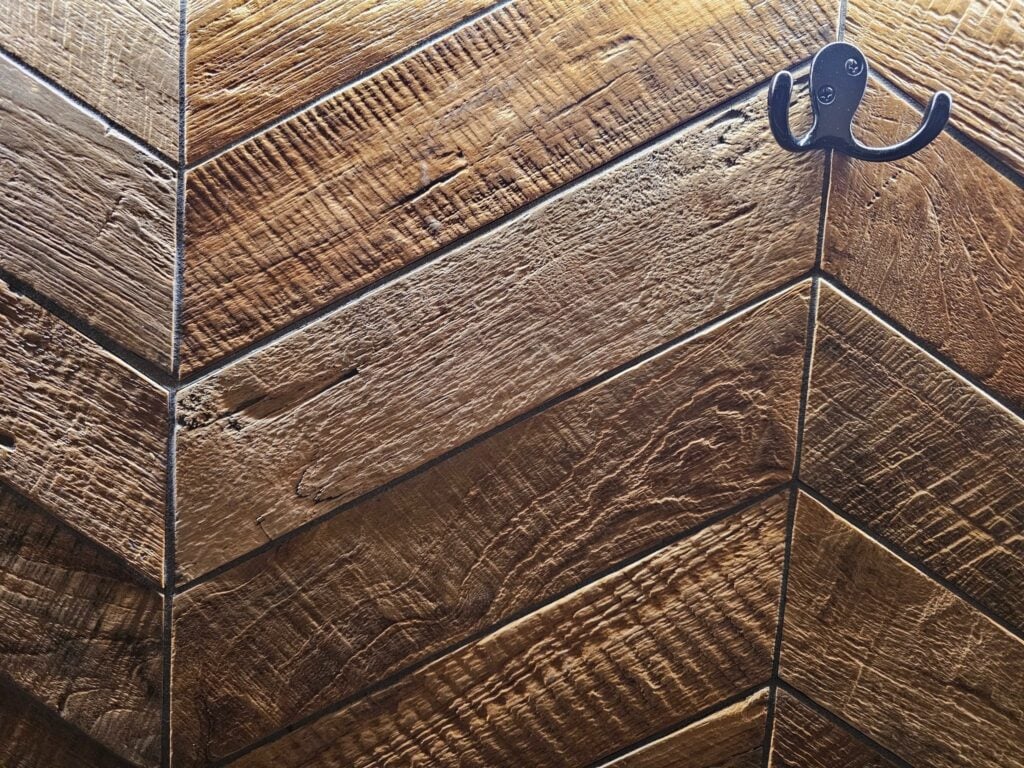
In this past week’s article we also complained about the hooks underneath the countertop because we thought they look chinchy and cheap. This installation was here in Washington DC and to be candid, we just expect a higher quality of hardware to be used in a commercial type of installation. Even if it was installed in a private residence, we would encourage our clients to go at least one step better because it’s not difficult.
To use a receptacle and receptacle cover plate that’s dark black directly in the field of the installation of the tile seems like a mistake. It just doesn’t look like it fits as an intentional accent color. Accent colors can work, aesthetically, even if they are in high contrast to the main color of the field of an installation. Here though it misses the mark because there’s just not enough other details to which this accent ties into or within which it is reflected.
Instead, you can just simply buy brown or wood color plates and you could buy a brown receptacle that doesn’t look that outrageously contrasting here. To build all of this tile and then just use with a cheap plastic cover plate seems like they missed an opportunity to make something look good, instead they took a cheap shortcut and it looks bad.
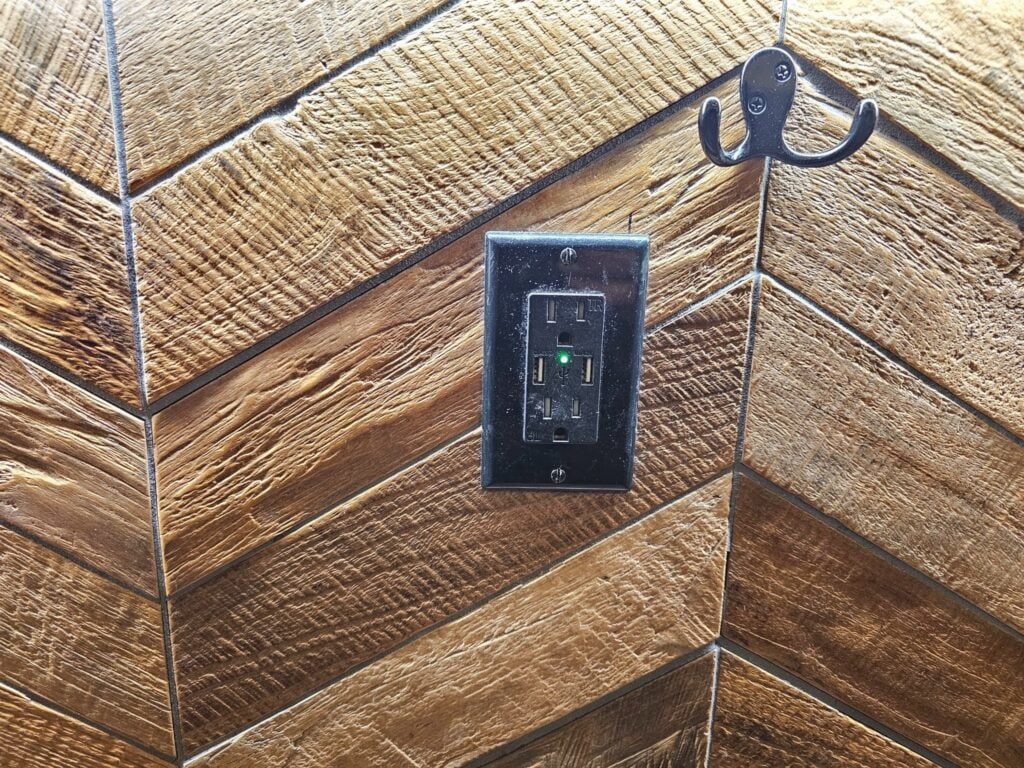
Last week, we referred to this particular installation shown here as a herringbone but it’s technically a little bit different. It’s actually more accurate to call it a chevron. Today though we’re looking at a real herringbone pattern where the ends of each of the individual tiles are set at their 90° angles yet staggered to join together.
The particular product actually looks pretty good. At a glance it almost looks like real wood. In this particular case, though, a really dark grout would probably look better than the light gray grout that they used. Also, they could have used a brown color grout and it would have made the effect look a little bit more real and less like tile. The goal here should have been to make it look like wood. They seemed to miss the mark and kind of confuse the concept a little bit.
The sharp corner, facing downwards at the center of the chevron joint, stands way away from its intended position. Not only were the designers and contractors missing the conceptual idea, they also didn’t know how to do good quality work. This is an example of an interesting product being used by people that didn’t know how to do the work.
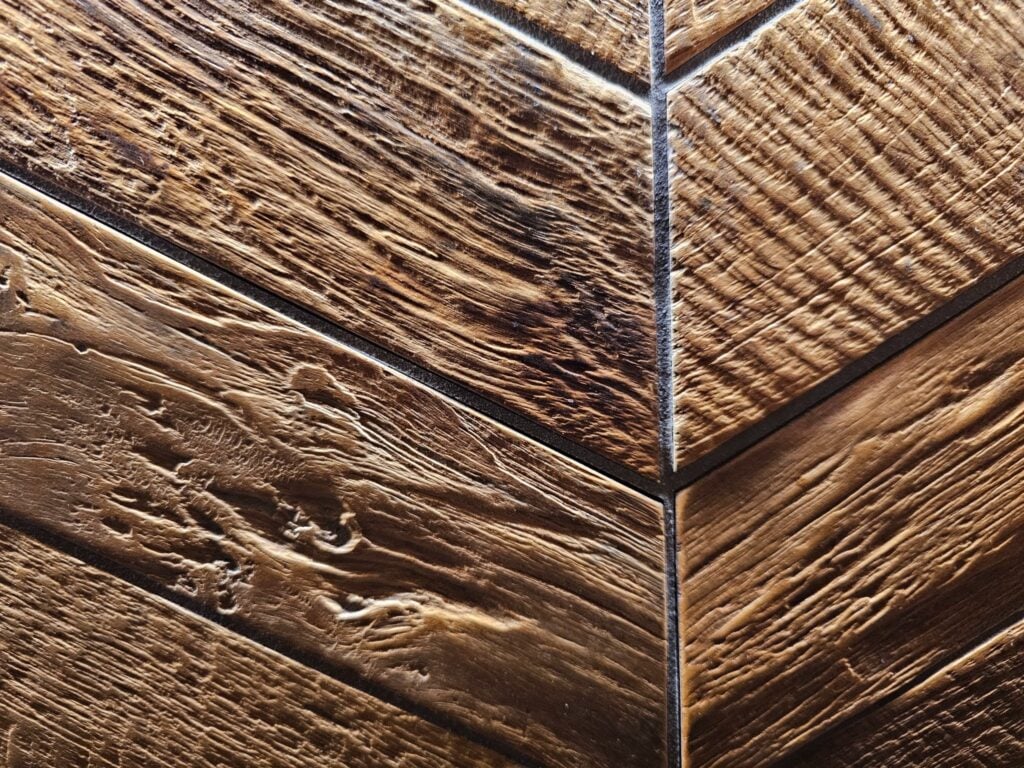
That same pronounced lippage is shown closer in the next picture below. It looks terrible.
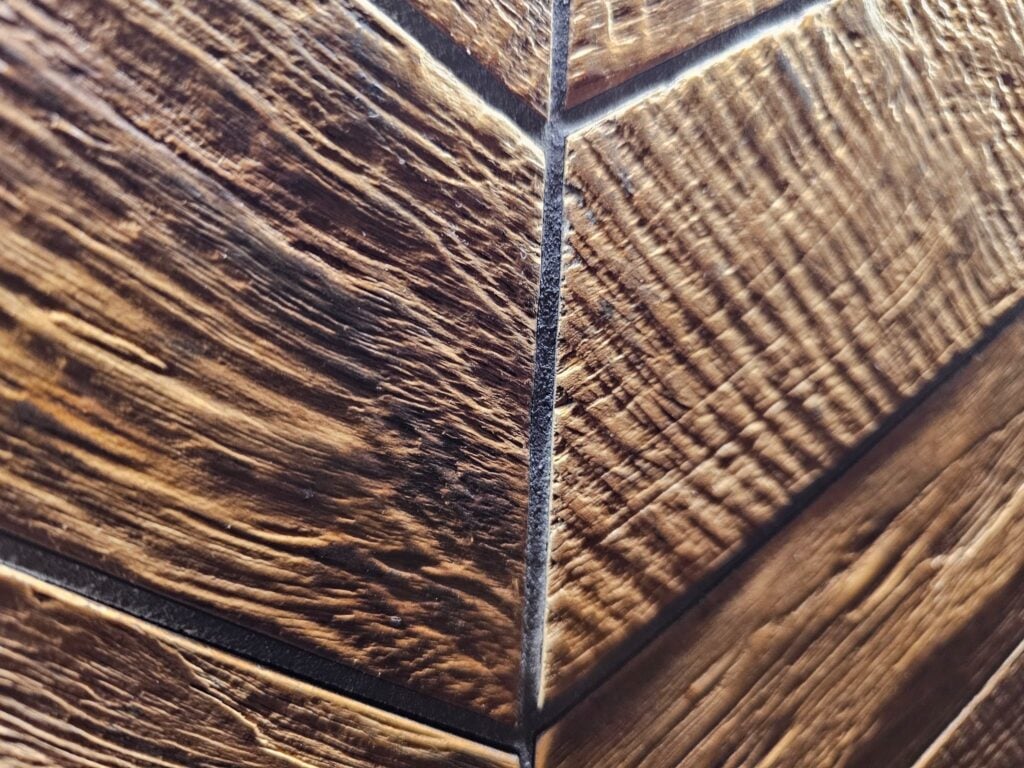
Another example of a different spot with the same type of bad joint lippage is shown in the next picture below.
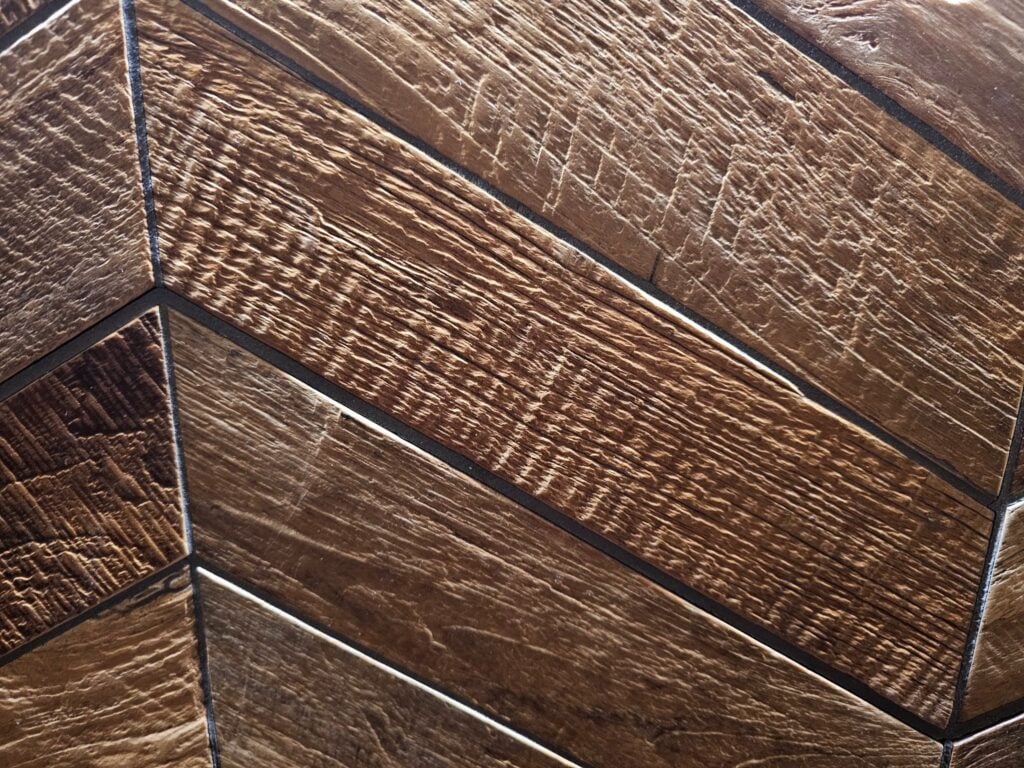
The next picture shows that ill-fitting looking coat hook screwed into the knee wall at a joint adjacent to another joint with a bad lippage in the tile settings.
The next picture shows a tile floor with a really similar ceramic or porcelain product. The tiles are not much different. Of course, the tile installed on the knee wall, shown in the pictures above and this past week, has much more texture. Here, on the floor it’s much smoother. The floor is also set without the same level of wonky low quality lippage.
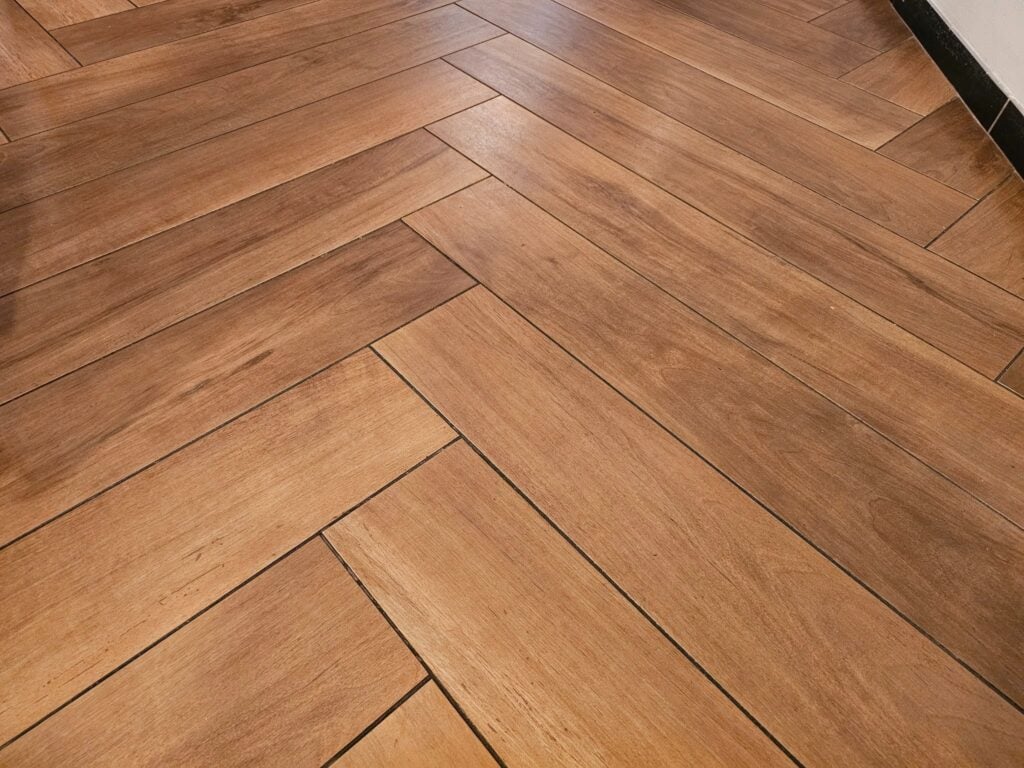
If you look closely, you can see the difference here with a real herringbone joint. It’s a lot different than a Chevron joint. The big difference isn’t just that each one of the individual pieces of the herringbone is a rectangle. The other difference is that these tiles do not line up in the same way. Even if you were to snap a straight line down the middle and then splice the tips together, after cutting off the corner on one end, it wouldn’t line up the same way.
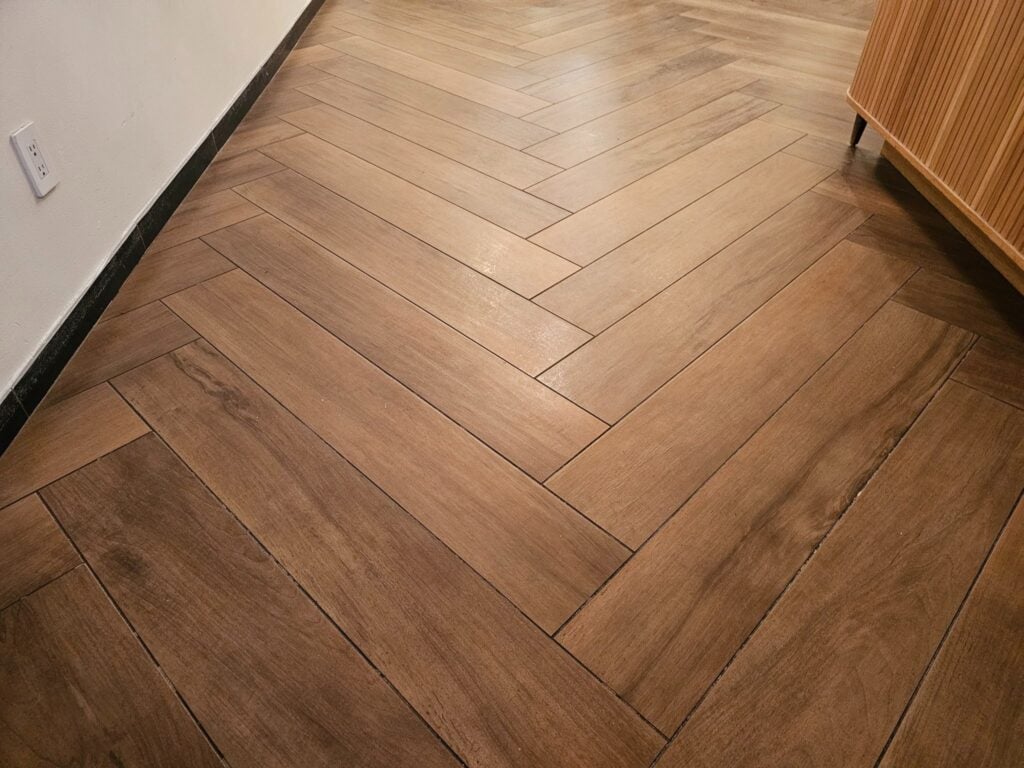
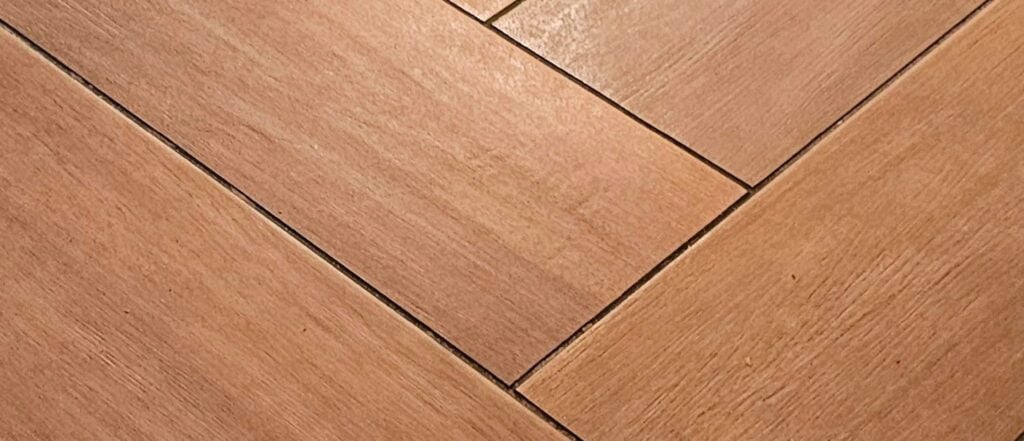
You can see that difference when you look at the next picture below. The only way to make it line up in the same way as the Chevron is to cut a big chunk out of both tiles.
Dupont Kitchen & Bath Can Help
As dedicated and local DC metropolitan kitchen and bath builders and installers, we pride ourselves on turning your visions into reality. Your kitchen and bathrooms can reflect your unique style and be designed with personalized aesthetics. It can be a process from creative designs to the realization of your dream space. Specializing in kitchen and bath construction, we bring expertise and skills to every project.
If you’re contemplating a renovation, upgrade, or modernization in the local market, we’re happy to be your team. Consult with us, and we can start together on a path to redefine and elevate your DC living experience.
You can visit our website and find a simple convenient web form that you can fill to contact us quickly.