Using Terracotta Wall Tile in a Rustic Bathroom Design
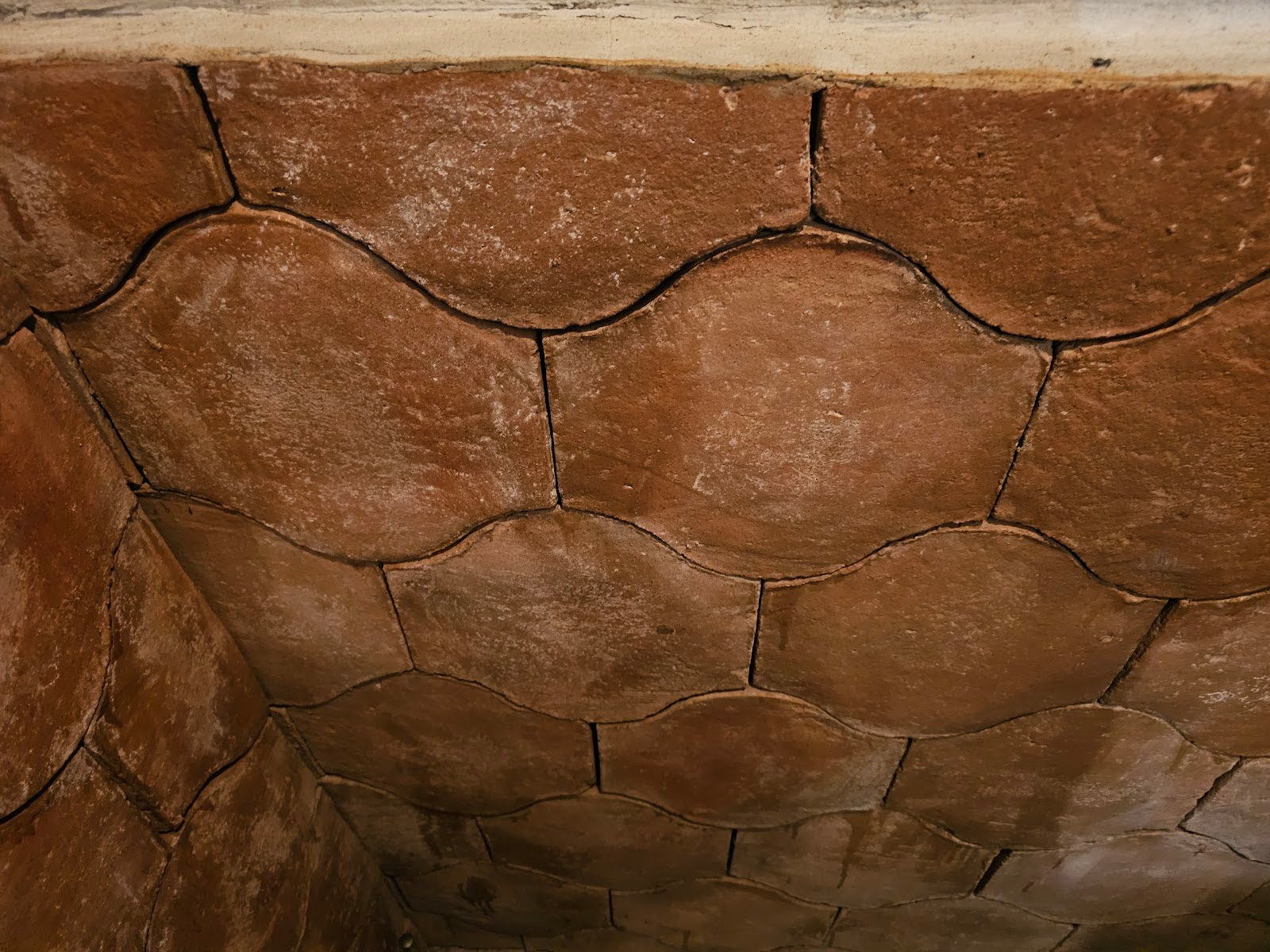
A while back, we got to look at the bathroom that had a terracotta wainscoting around the lower half of the walls. This particular wainscoting covering went up to about a chair rail height. The tile used is an arabesque type of terracotta tile. This particular type of tile is also similar to bricks in some ways, but it’s also made with a medium that is a bit filtered more than a typical brick. It’s fired at a higher temperature so it also has a bit more vitreousness which is better for wet environments.
The wall above the wainscoting was finished with a plaster type application. Together these elements fit well together. A light blue pinstripe was used as part of the wall plaster decoration in the hand painted finish. These different elements reflect a Southwestern type of style. The origin of the Arabesque shape, though, actually comes from North African Islamic culture, over a thousand years ago. In this particular case, the tile was set against the wall with a mortar similar to a modern thin set. They chose not to use a grout which although sounds like it could be a very controversial decision, it works well because it shows the depth of the tile.
The tiles are set relatively closely, yet the thin spacing still creates a shadow line around each of those tiles. A contrasting grout color would emphasize the shape of each individual piece, in this case the result is similar. Instead of emphasizing that particular shape around each tile, it instead is emphasizing the thickness of the tile. In this particular case, these tiles are much thicker than a typical modern ceramic tile. Ceramic tile thicknesses can vary, but in most cases they’re just between 1/4 of an inch to about 3/8 of an inch thick.
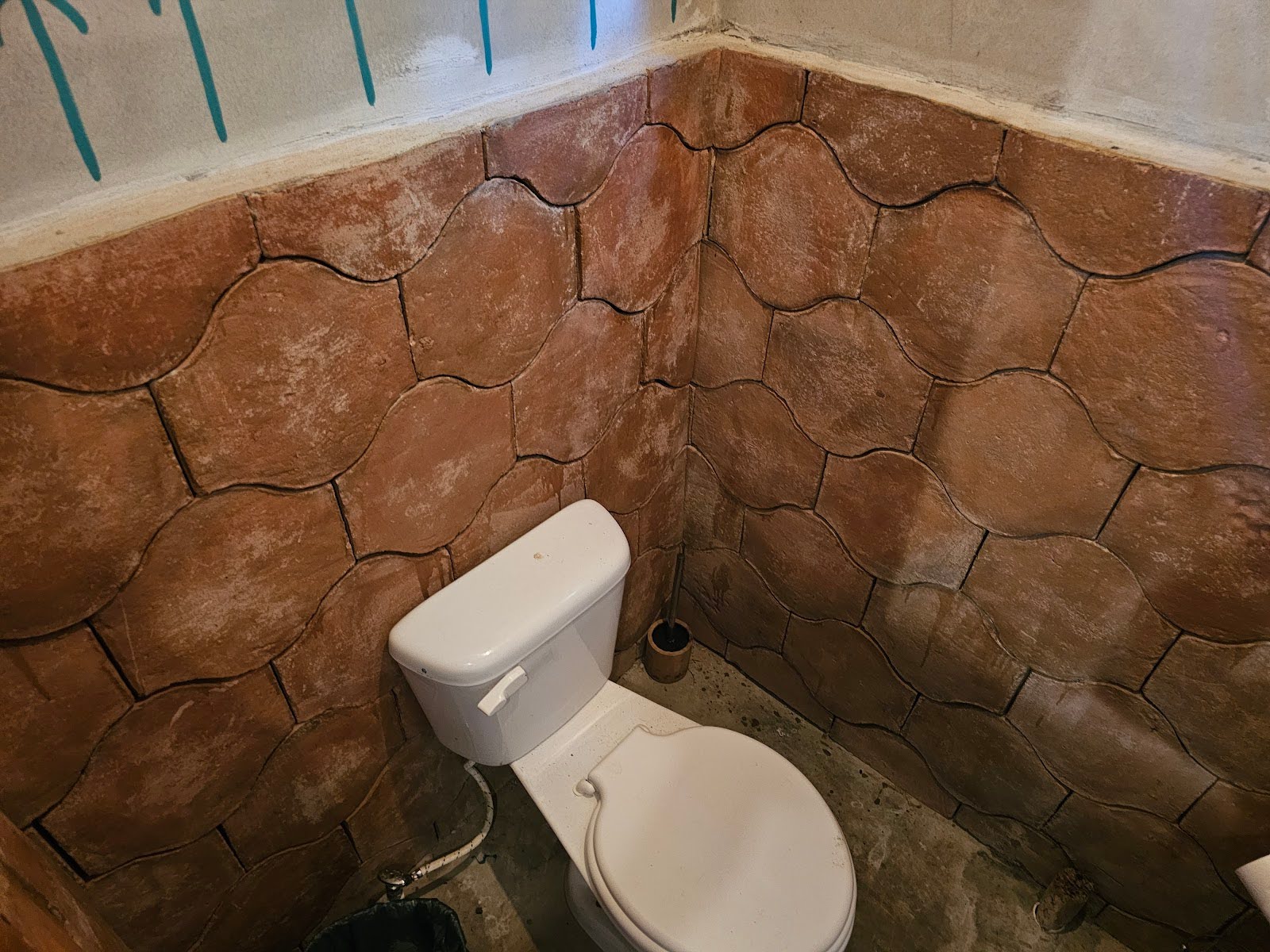
In contrast, this particular tile is over an inch thick. When set in a thinset mortar, it’s roughly about 1 and 1/8 of an inch tall / thick or away from the plane of the plaster wall. That tile basically projects away from the wall but at the top edge is treated with a thickening of the plaster. The thicken plaster works a bit like a cove base at the top of the wainscoting. The reveal or projection is graduated back like a transition to the planer face of the remainder of the upper portion of the plaster wall.
In the past, we showed examples of termination strips. At a top tile edge, they work to cover the raw edge of the tile. Something like that is needed here, but the termination strips generally have a more modern or contemporary type of aesthetic. That wouldn’t match with this type of tile at all. There’s no question, that wouldn’t fit. It just wouldn’t match. However, instead, they’ve built the plaster out by thickening it to cover the edge of the tile, almost like disguising the raw edge.
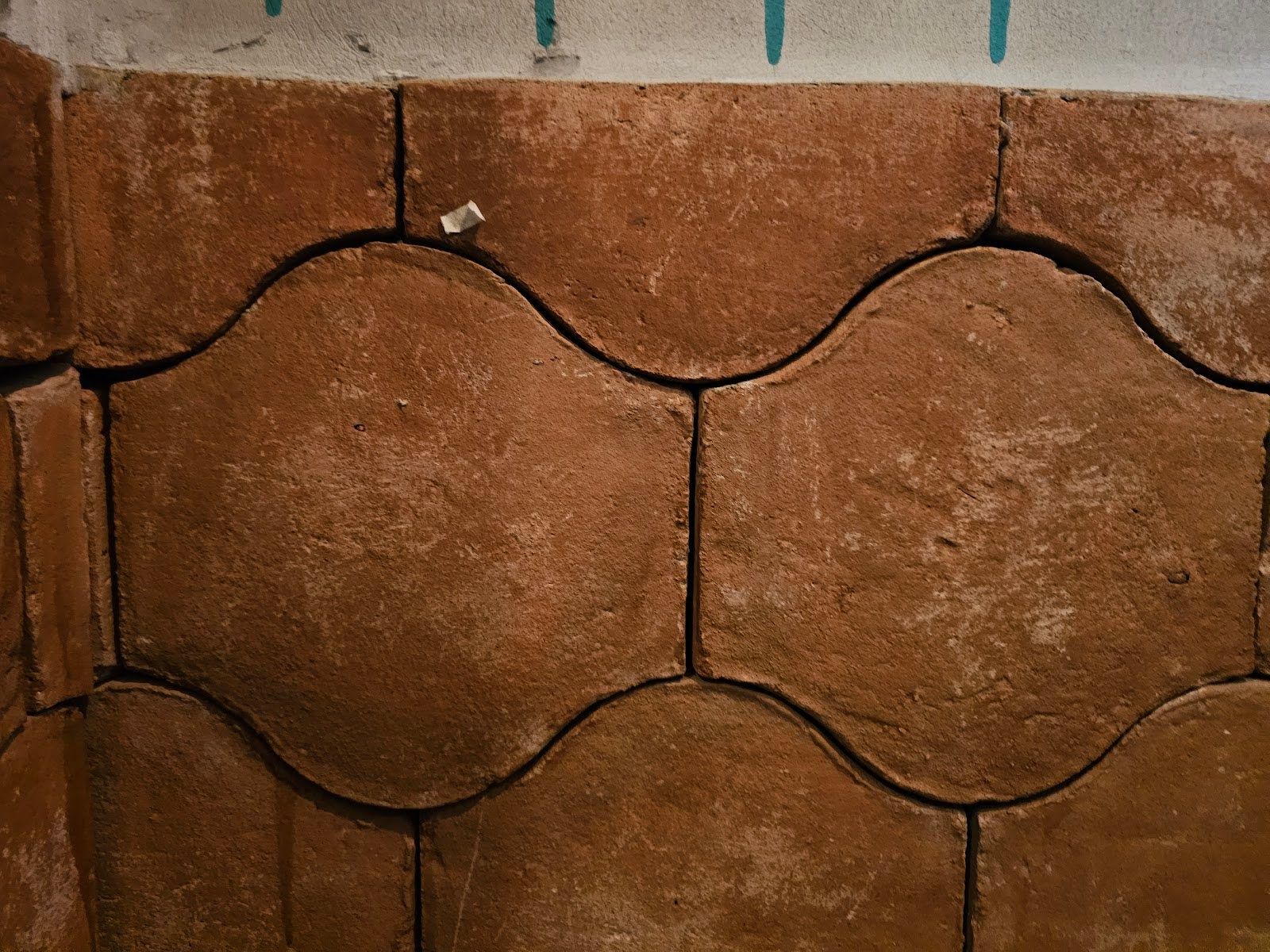
Another detail that should be mentioned about this particular type of tile is that it doesn’t have a glaze. Most tiles that we are familiar with have a glaze on the surface. Often the glaze will be created with an ash type base material that turns to a bit like vitreous glass in a firing process. Here though, the body of the tile is the same as the presented face. It’s consistently the same color throughout. As well it has the same vitreousness throughout. Typically a glaze would provide an impermeable surface like a glass covering. Here, though, the body of the tile is the same as the face which is significantly more porous than a typical tile surface.
In a constantly wet environment like a shower this porosity might be a problem. In most cases though along the wall of a kitchen or bathroom, where the wall will not be completely wet, this porosity or lack of impermeability is likely not as much of a problem as it would be in constantly or repeatedly wet areas.
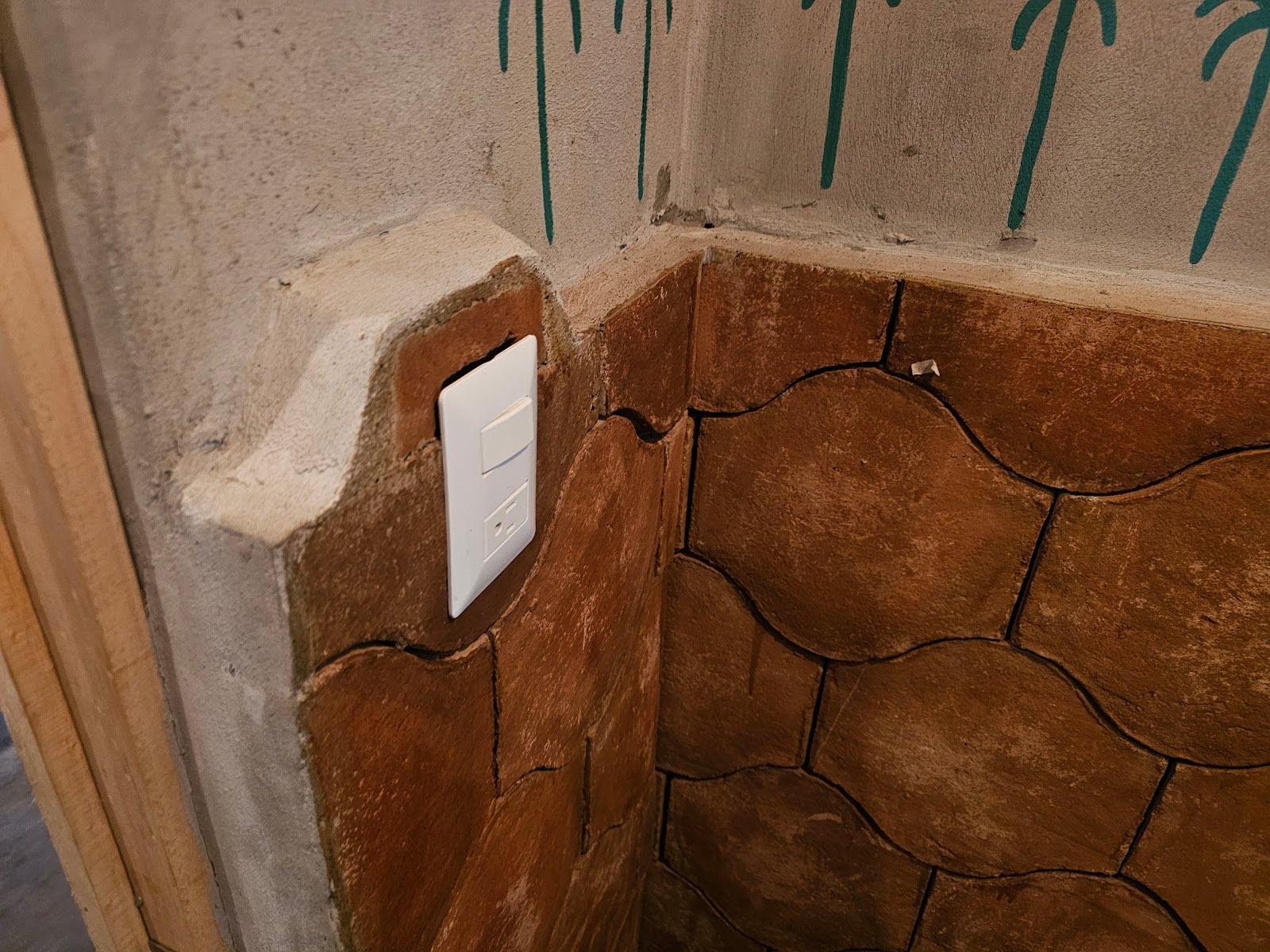
In the next picture below, you can see a la single box double wall switch was mounted onto the wall tile. We would strongly prefer a complimenting color instead of a bright white color switch plate, but here this decision wasn’t ours. If you look very closely, you may notice that the wall gets thicker closer to the end of the wall. The wall isn’t actually getting thicker, but the edge is curving because the wall returns with a radius back to the door jamb.
By keeping the tile in a straight and continuous plane, it ends by allowing the wall to turn away and therein, visually, thickening the gap or space that’s still between the edge of the tile and the door jamb. Here, they have skimmed the edge of the tile with this plaster finish to basically create a uniform surface that extends out to the front face of the tile. This was done intentionally to essentially hide the side edge of the tile.
It’s better to be hidden because without a termination strip, you would see both the edge of the tile and the substrate mortar which would not look particularly good. It would be too raw and essentially be showing the elements that are intended to be hidden. There’s not really any particular cases where you have tile mortar exposed. It’s almost always concealed by the tile and the grout itself.
Dupont Kitchen & Bath Can Help
As dedicated and local DC metropolitan kitchen and bath builders and installers, we pride ourselves on turning your visions into reality. Your kitchen and bathrooms can reflect your unique style and be designed with personalized aesthetics. It can be a process from creative designs to the realization of your dream space. Specializing in kitchen and bath construction in DC, we bring expertise and skills to every project. If you’re contemplating a renovation, upgrade, or modernization in the local market, we’re happy to be your team. Consult with us, and we can start together on a path to redefine and elevate your DC living experience.
You can visit our company website at https://dupontkitchenbathdc.com/
Here at our website you will find a simple and convenient web form that you can fill to contact us quickly.