Realistic and Durable Fake Wood Flooring Options
There are a wide range of different types of flooring that can be used in kitchens and bathrooms and all parts of a home. We’ve looked at several different types of ceramic and stone tiles. We’ve also looked at a few different types of woods used in countertops and other surfaces. Today we’re looking at different types of wood floorings that can also be used in most parts of a home. We generally don’t recommend natural wood flooring in kitchens and bathrooms. Kitchens and bathrooms happen to have more exposure to water than other rooms.
Particularly in the bathroom, when someone’s getting out of a shower or even just washing their hands or shaving at a sink, it’s common for droplets or even larger amounts of water to spill on the floor. When water spills on the floor it can damage flooring if the flooring isn’t resistant. Wood flooring has one of the lowest types of resistance to high degrees of moisture and or water. In fact, water can seep in between the joints of the floor and stay there causing the swelling and warpage and or dry rotting.
The same type of water infiltration can also happen to tile flooring if the tile grout hasn’t been well sealed and or if the tile is made of a porous stone or made from a ceramic or porcelain that doesn’t have a protective glaze covering on the top or upper surface of the flooring. However, it’s a bit different with these materials. The natural grain of wood absorbs water and is changed or damaged by it, in most cases. Tiles and stone and or cement or grout materials generally don’t suffer the same type of damage.
In fact, even where there’s a little bit of porosity in grout and or tile surfaces, a bit of water exposure can still dry up without causing significant damage. Over long periods of time, with residual exposure, even cement and stone materials can begin to break down. However, this deterioration happens at a much slower rate than it does compared to wood materials.
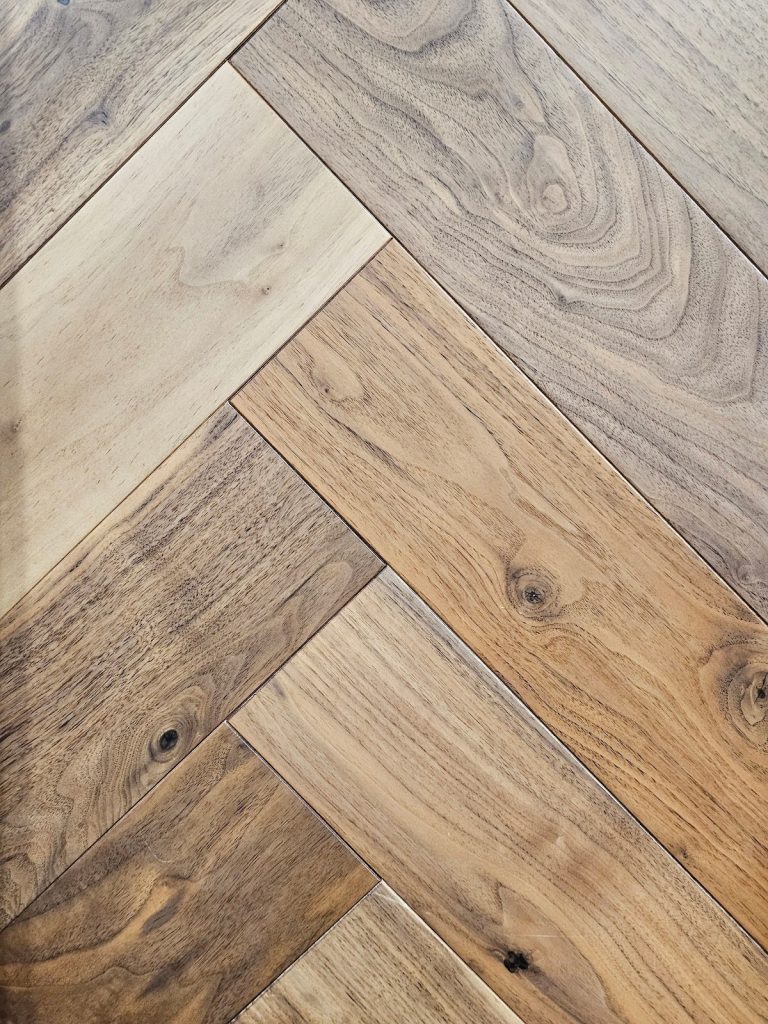
Even within different types of wood though, each type is not all the same as the next. In some cases certain species of wood can be highly resistant to exposure to moisture and water. In fact, certain types of exotic woods have such high resistance to moisture and water that they can even be installed outdoors. The products that we’re looking at today happen to have beautiful grain and color patterns.
But they’re not actually solid wood. The top layer of laminate flooring, in most cases, is actual real wood. However, in most cases, those underlying flooring materials are made of a wood by-product sandwich of sorts. Essentially, multiple different layers of wood and synthetic materials are joined together under heat and pressure with adhesive to create a multi-ply material. The multi-ply material, while not as real as pure solid wood, has some performance characteristics that are even better.
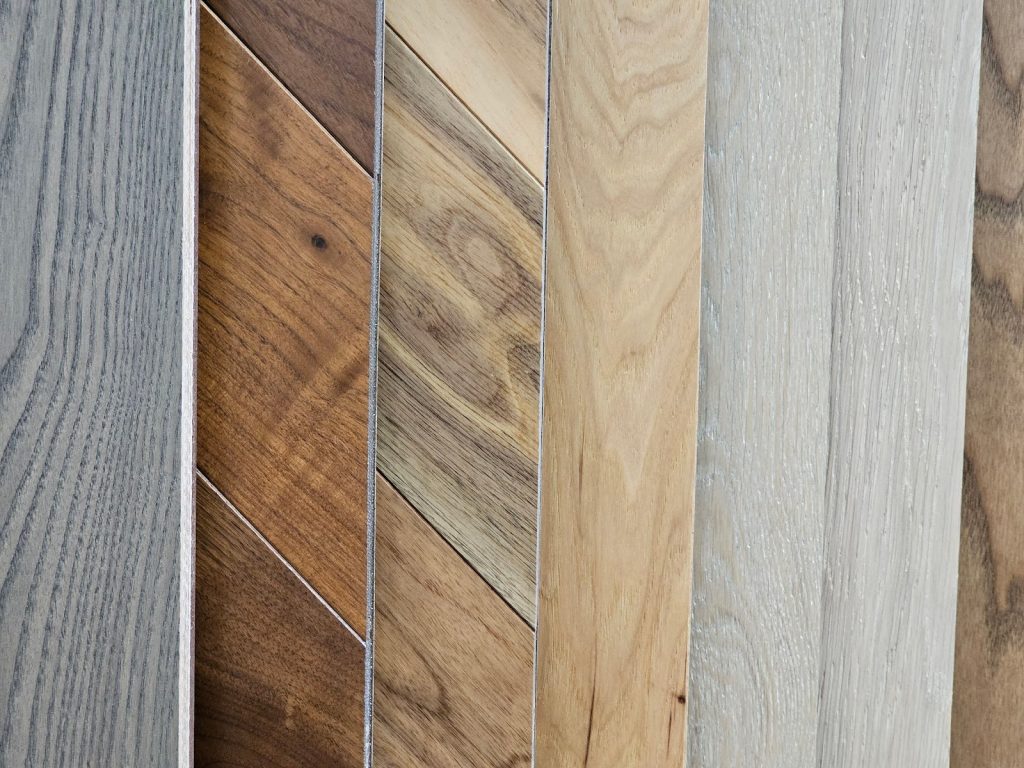
One of the downsides to this type of synthetic combination of materials is that it cannot be easily refinished nor it cannot be refinished as many times as natural wood. The refinishing process basically involves sanding off the surface of the exposed floor system. In most cases refinishing is done with the floor in place. The stain and sealers are basically sanded away leaving just a bare unfinished substrate below.
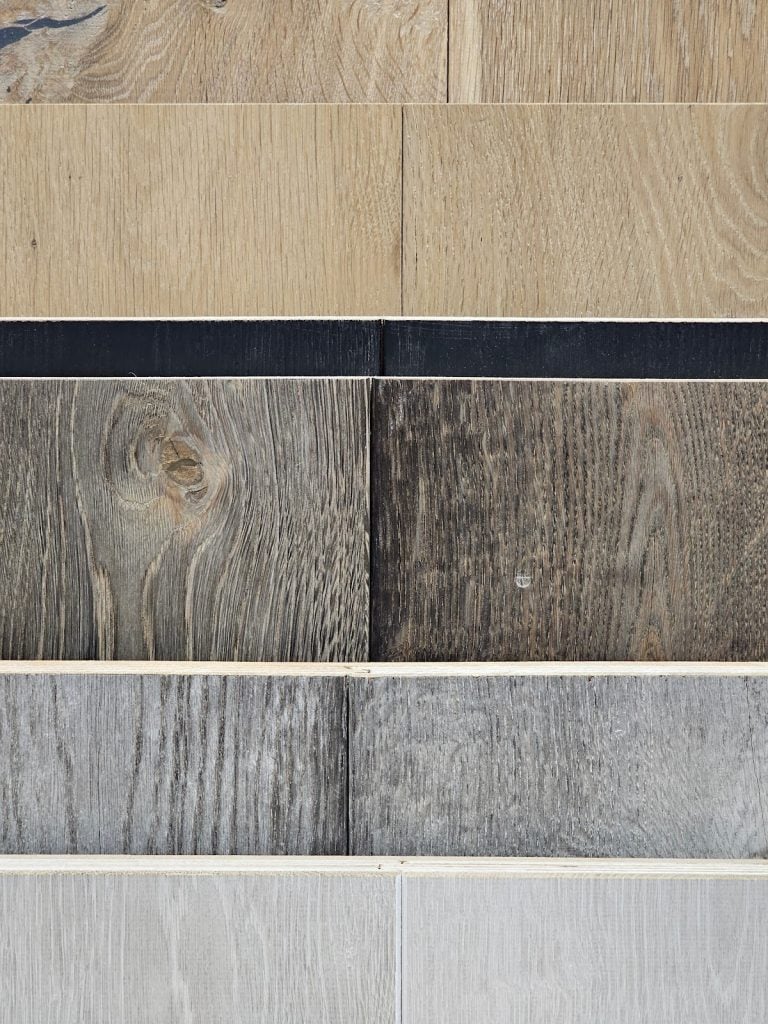
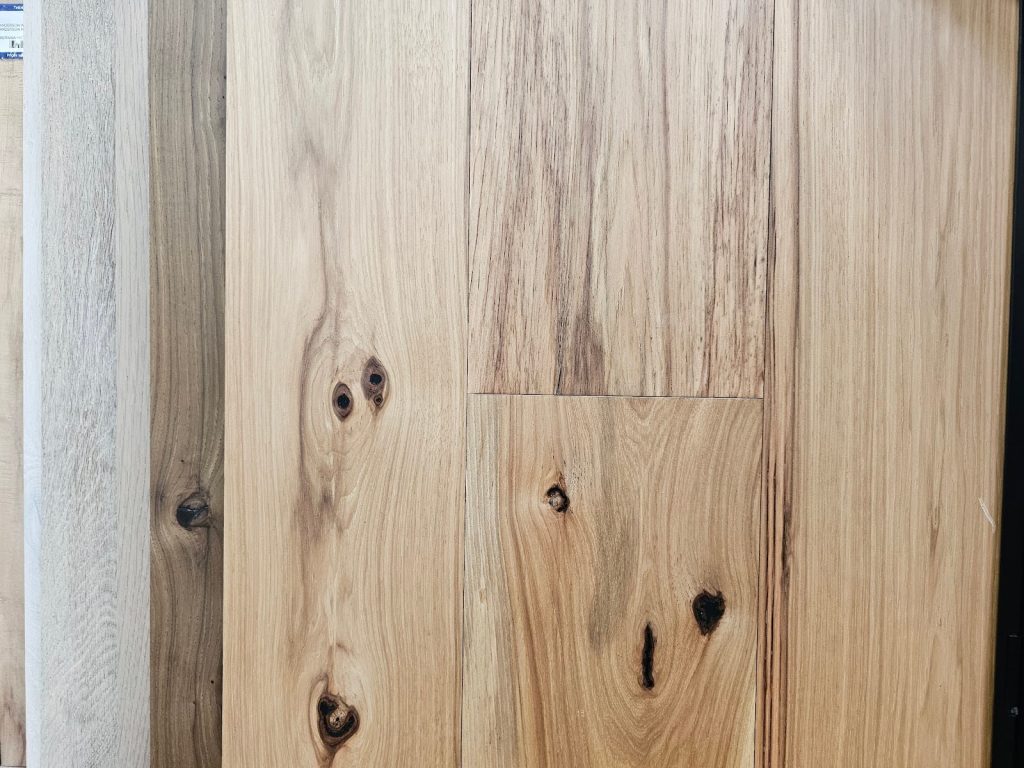
The example below shows a sample of hickory wood. This is a species which happens to have dark knots and a distinct variation between elements of the grain. In most other cases, wood will be harvested from parts of the tree and trunks that do not have significant elements or areas of exposed knots. Knots generally give the look of wood of lesser quality. However with some species like hickory, the variation is actually considered to be a visual interest. In another type of way, red oak has a similar characteristic.
Compared to more traditional or lower cost softwoods, Red oak has a higher degree of variation between the spring wood and the summerwood. These two different types of grain occur each year, in the annual tree rings. In some cases, in woods like douglas fir, hem fir, and even something varieties of yellow pine, the distinction isn’t particularly pronounced. In red oak, by comparison, the summer grain is particularly dark and the spring grain is particularly light.
In some cases, a greater degree of variation between the summer wood and the spring wood shows a higher degree of visual variation. Depending on the particular type of design, that style of visual differentiation may be desired. It happens to accentuate the wood elements of the floor finish, for example.
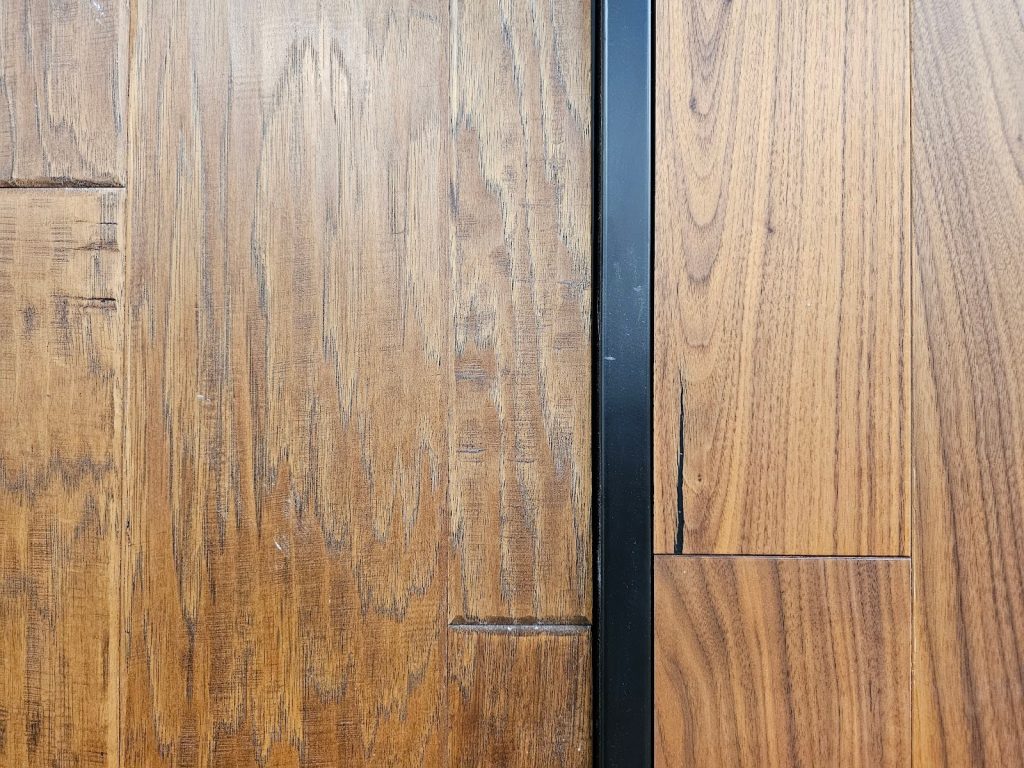
In the two different examples below, the color and grain is relatively similar in both examples. However, the example to the left side of the picture happens to be what’s referred to as hand scraped wood. It’s intended to resemble a more rustic type of flooring where the boards are scraped by hand instead of finished mechanically. The example to the right is a more common or more typical type of finish where the wood is intended to look just like every other wood that is finished by machine. The wood in this case, on the right, is consistently true across the horizontal surface.
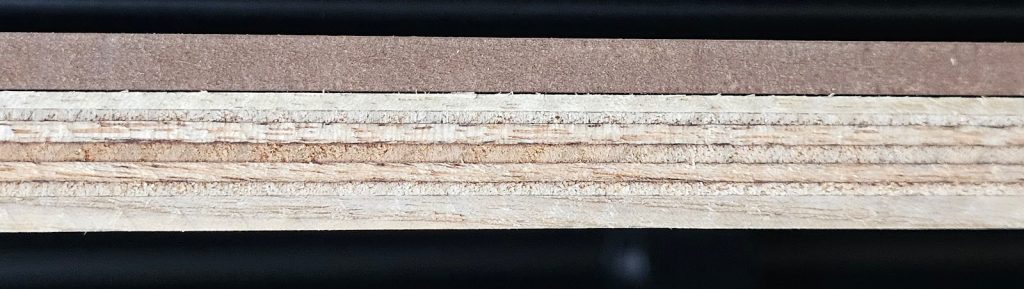
The picture below shows a cross section of the flooring. In total, the flooring happens to be 3/4 in thick which is similar to a more traditional tongue and groove solid wood floor. The topmost layer, in the photo, is roughly a quarter inch thick and that’s not actually part of the flooring, that’s the Masonite backer board used for display. The multiple plies or layers below are the interstitial flooring materials and are put together just like plywood.
Although plywood is not as authentic, in this case it’s covered with a veneer of actual wood so it looks like natural wood. And although it’s less authentic, the plywood helps maintain stability over time and particularly with exposure to air moisture. The grain direction changes between plies which adds to that stability.
Dupont Kitchen & Bath Can Help
As dedicated and local DC metropolitan kitchen and bath builders and installers, we pride ourselves on turning your visions into reality. Your kitchen and bathrooms can reflect your unique style and be designed with personalized aesthetics. It can be a process from creative designs to the realization of your dream space. Specializing in kitchen and bath construction, we bring expertise and skills to every project. If you’re contemplating a renovation, upgrade, or modernization in the local market, we’re happy to be your team. Consult with us, and we can start together on a path to redefine and elevate your DC living experience.
You can visit our company website at https://dupontkitchenbathdc.com/
Here at our website you will find a simple and convenient web form that you can fill to contact us quickly.