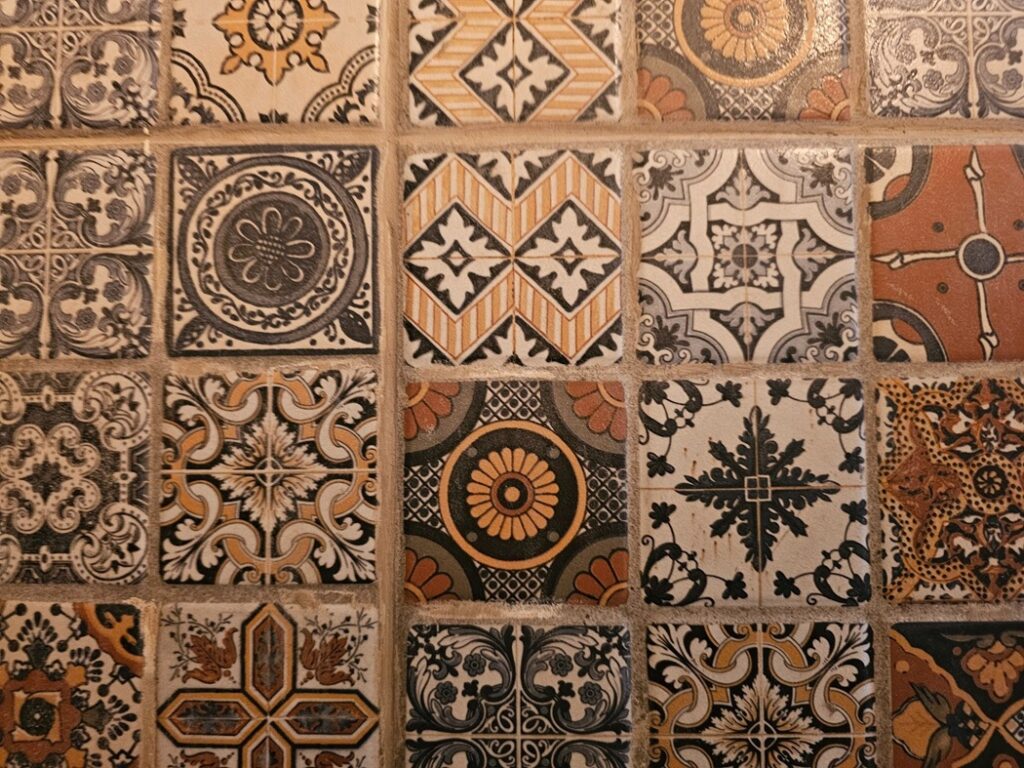
This past week we looked at several examples of a ceramic wall tile made with an intricate geometric pattern. The tile designs vary from one to the next and even though there are some repeats in the overall installation, there is a wide range of variety. This type of visual aesthetic is much busier than a single continuous color or a simpler and more minimalist type of installation. For a feature element and or a more intricate overall design, this type of installation looks really good. The origins of this type of design go back over a thousand years to historic Spain and North Africa. We described some of the interesting historic elements of architectural evolution in last week’s blog where we looked at some of the other pictures from our visit to see this installation.
One of the differences between this type of tile and a very similar bright Mexican tile that we’ve looked at in the past is that the colors here are a bit more earthtone. Unlike the bright yellows and blue colors found in the Mexican tiles, these tiles have a more tan or beige color. Earthtone colors are a bit more muted and generally lack some of the brilliant and bright colors. Instead Earth Tone colors may have a bit of gray and a lot of Tans or browns. The color of Earth is generally a mixture of Shades that range from light to dark and include a bit of red. Even though some examples of dirt might look much darker or lighter and not include distinct aspects of red, there’s generally a degree of red in earthtone colors. It might not be visually obvious at first. In some cases, that reddish color is related to the iron content of the soil. Often when clays or muds are filtered and fired, they change colors. Sometimes those original earthtone colors will look more brown or more tan, but when fired, the oxidation of the iron content within that composition of materials changes to show a deeper and more significant amount of red. In many cases, these colors are used for the manufacturing or fabrication of beautiful construction materials. The hand manufacturing of heavy building materials using earthtone colors goes back thousands of years.
We generally recommend that our designers and our clients select the grout color to reflect or compliment the darkest shade or color within a gradient of colors used inside of the tile work. Here though, every tile has a degree of complementing elements yet a wide variation nonetheless. Some of these elements within one tile to the next look very similar, but aside from actual duplicates, there are significant variations.
In this case, they have selected a bright or bolt beige color as the color of the grout. That color is complemented by some of the colors within the range found in the tiles, but it’s actually a little bit more red. For the most part, the tilework’s main glazed surface uses a slightly whiter color at the majority of the background. We mentioned the use of these patterns is replicated within the range of the tile installation. In the picture below, on the right hand side of the center of the picture, you can see two tiles that have the same pattern. The lower tile is turned at a 90° different angle than the tile shown above in the same vertical row.
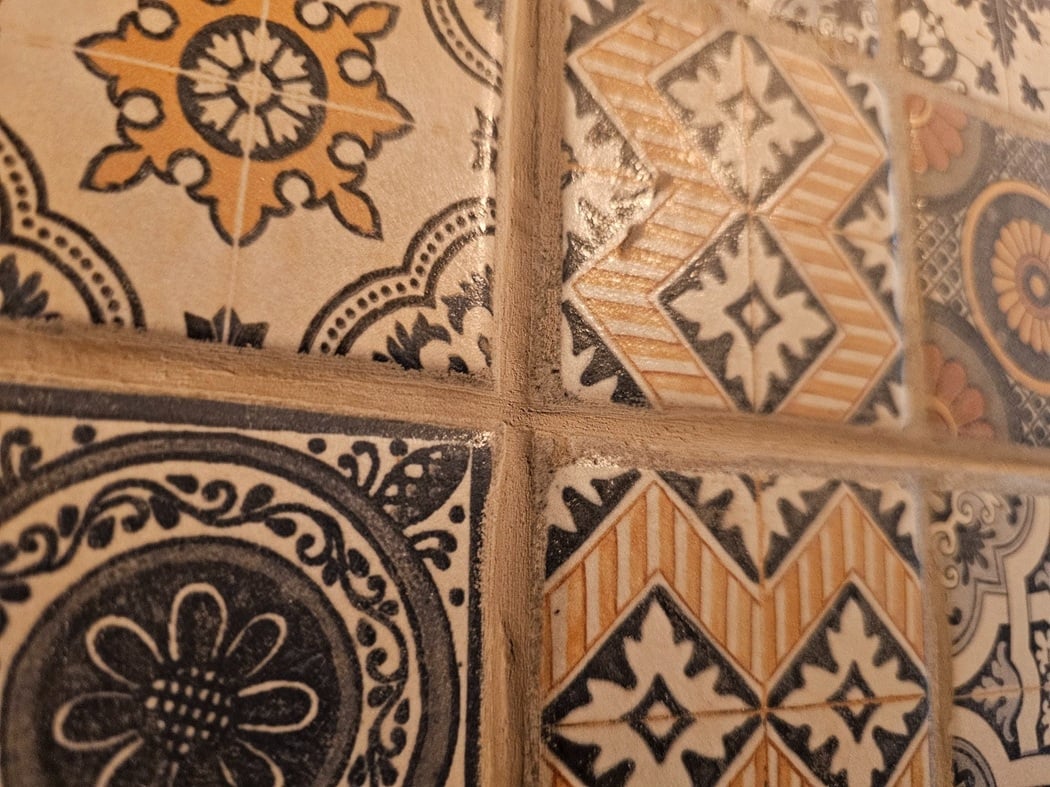
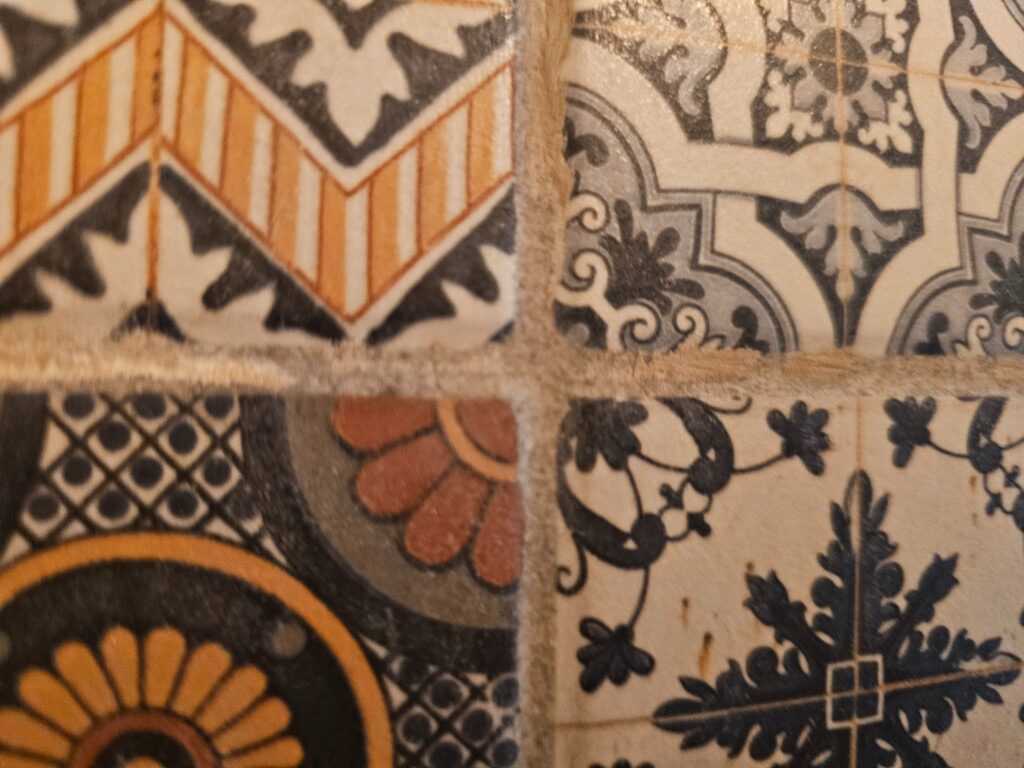
If you look very close to the grout line itself, you may notice that there is a higher degree of texture in this installation then the typical grout installation. Normally we recommend striking the grout line to a concave profile or finish. That concave shape allows for minimal retention of moisture. When there is a significant amount of texture within a grout line, it can retain moisture within the points and fissures built into the rough surface. Even where cracking doesn’t follow those rough texture areas, the rough surface allows for build up of moisture, dirt and that can lead to mildew growth. It makes it a little bit more difficult to clean. Here the texture is a bit rough and we believe it was applied like this intentionally.
The designer may have chosen to have a rougher texture at this location because it matches orbat le the overall aesthetic of the tile. Even though this particular ceramic tile is made in modern times, it’s made to resemble something that’s historic and antiquated. They may have believed that the texture grout line would be more convincing in an overall motif. The truth, though, is that at the time that the original buildings were built in clad with tiles of similar designs, craftsmanship was impeccable. Over the thousand years or so after that original installation, elements of mortars to the tiles may have deteriorated. We recommend considering that a new installation shouldn’t necessarily be made to look like the deteriorated version of the historic basis of the design. It depends on the conditions and every building owner and designer has a degree of artistic license to hodgepodge different elements together as they see fit. We generally recommend keeping closer to Historic authenticity as a default baseline.
Like giclee painting, some very interesting modern techniques have been used to replicate artistic elements, in modern times. For good reason, many people think hand-embellished giclee type painting is the epitome of low-taste gaudy schlock. Like the design for the new presidential ballroom, even though we haven’t seen it yet, the idea of covering things in fake gold doesn’t really project opulence. Instead it just looks like a cheap imitation. There’s always a risk of something looking pastiche and cheap when it’s borrowing or replicating something from a past style.
On the other hand though, if elements are chosen carefully, borrowed historic design elements can look really good. Some historic elements of design and construction make a space feel solid and real, even when using things that are imitations. Execution is really important. Sometimes the edge and or connecting elements like grout lines can make a big difference to the overall aesthetic effect.
Dupont Kitchen & Bath Can Help
As dedicated and local DC metropolitan kitchen and bath builders and installers, we pride ourselves on turning your visions into reality. Your kitchen and bathrooms can reflect your unique style and be designed with personalized aesthetics. It can be a process from creative designs to the realization of your dream space. Specializing in kitchen and bath construction, we bring expertise and skills to every project. If you’re contemplating a renovation, upgrade, or modernization in the local market, we’re happy to be your team. Consult with us, and we can start together on a path to redefine and elevate your DC living experience.
You can visit our company website at https://dupontkitchenbathdc.com/
Here at our website you will find a simple and convenient web form that you can fill to contact us quickly.