Using Dark Wood Grain Ceramic Plank Tile in DC Homes
Today, we’re looking at an example of ceramic tile that is made to look like wood planks. It has a hand-hewn type of surface shaping. This characteristic equality is a little bit different than the texture. It’s more about the shaping. There’s really two or three different characteristics regarding the surface of ceramic or porcelain tile that sounds similar but are slightly different. That doesn’t even include the coloring or the artistic elements of the tile.
Three ceramic tile characteristics regarding the surface:
Shaping
Texture / slips resistance
Sheen
The shaping is about a contour or carving or forming, like a molding impression, of a ceramic tile surface to make it look like it is the shape of something else. Normally this is part of a type of artifice to make it look like something else, in a faux type of a methodology. For example, here, the tile has a hand hewn shape, but this shaping is applied during the moldable wet clay stage before the clay is dried. In some cases, tile that has a wood type of the aesthetic and also be made to have a shaping that looks more like raised grain. The raised grain aesthetic is different than this hand hewn shaping.
If you look closely though in most cases, the shaping of the grain doesn’t actually match the coloring. That’s because it’s done in a large scale manufacturing processes that doesn’t focus on that level of detail.
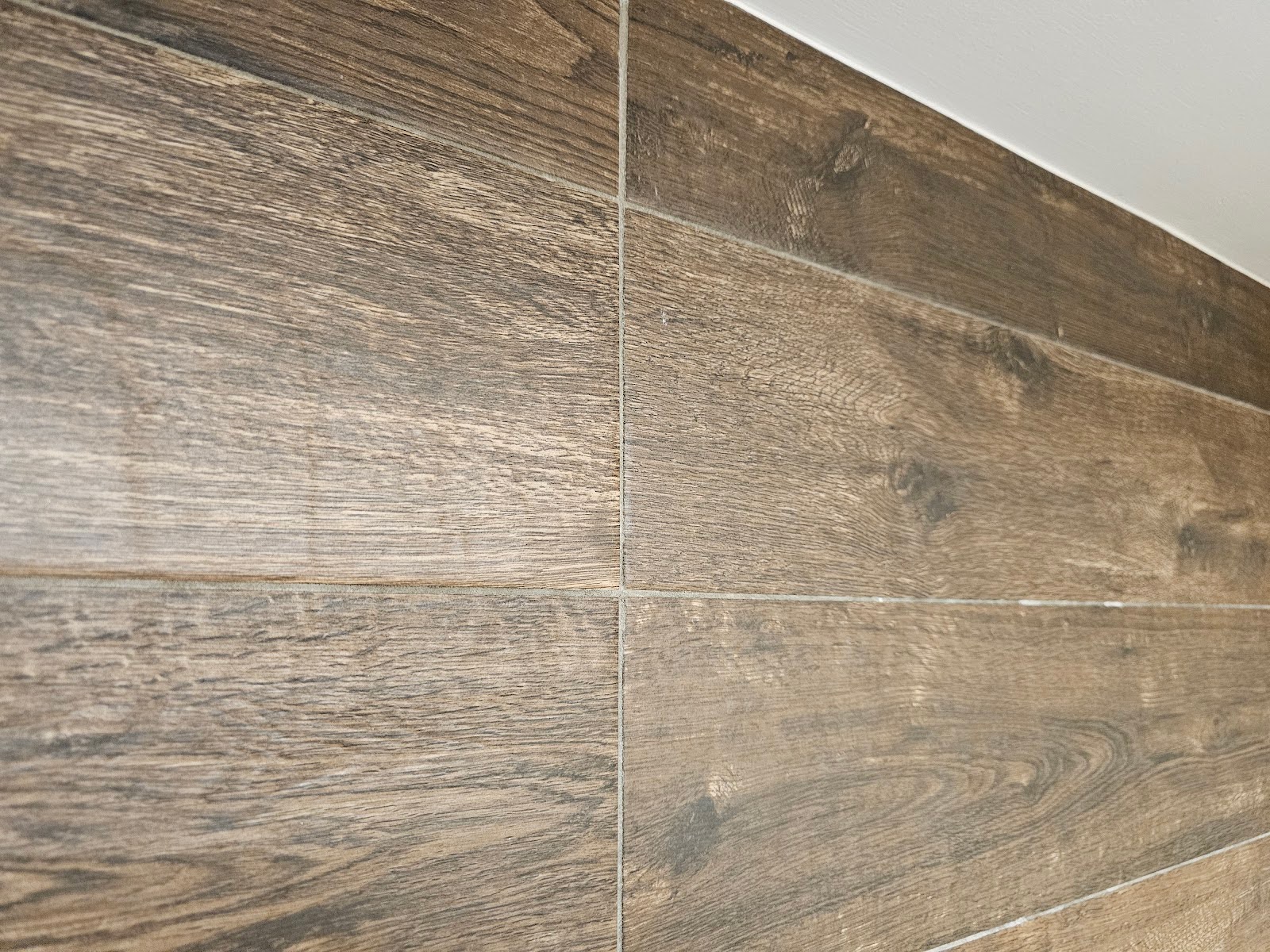
Generally, at the angle from which you notice the texture, it can’t simultaneously perceive the coloration very well. Often, depending on the angle of light inside of a space, your eye will see a texture or shaping of the surface of a ceramic tile more from a low angle. It becomes particularly apparent when the lights are at a low angle, as well. The color is best seen when the light is at a 90° angle from the surface of the tile and when your eye is looking at it as well from a 90° angle.
When you look at the tile from an oblique angle, the overall color is somewhat detectable but the details of the color and the variation within the color are hard to perceive.
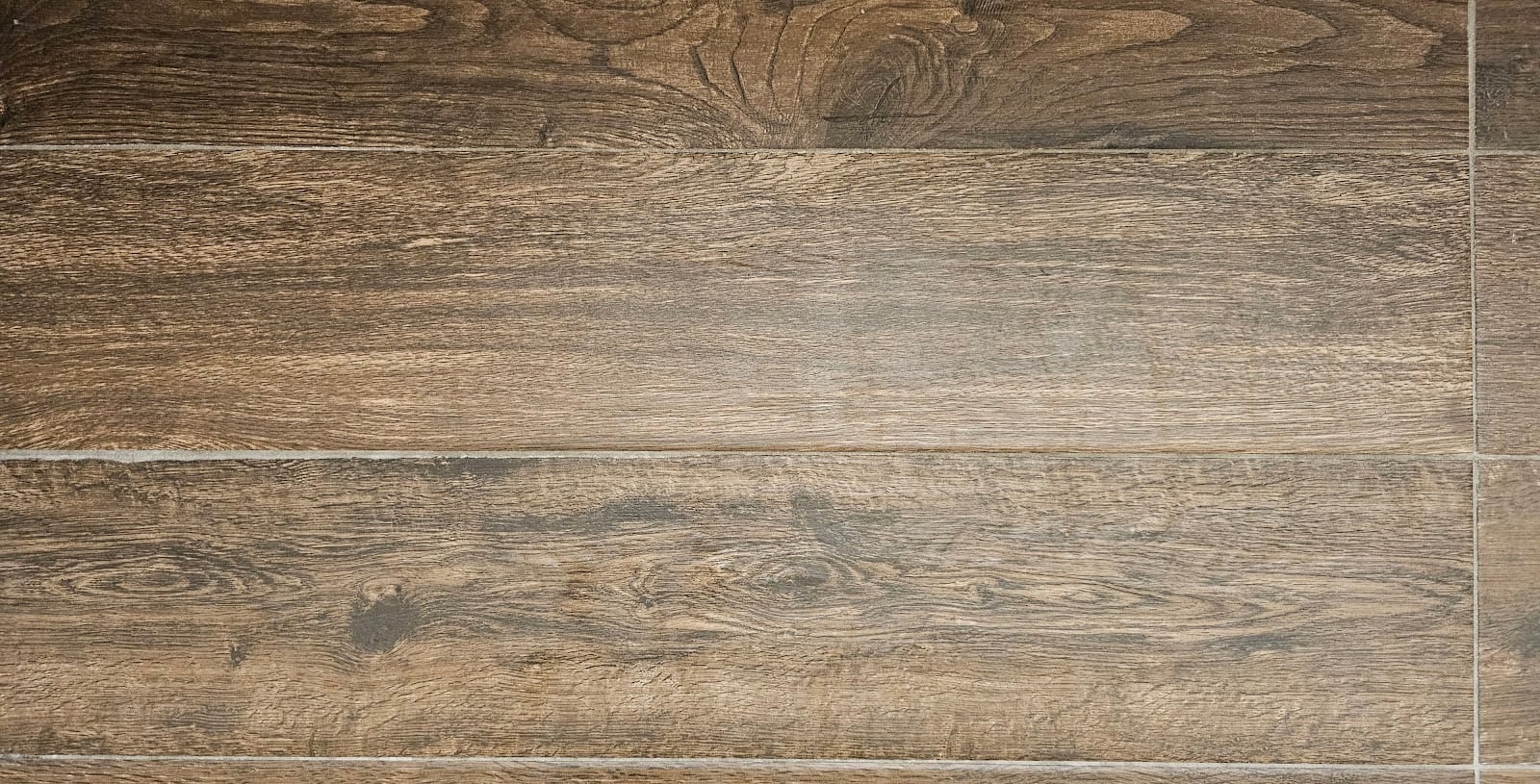
For example, the picture below, from a direct or roughly 90° angle, you can see the color and the variations very clearly. It’s perfectly apparent where the shading has been applied and where the different variations of the brown color are applied and the lines between them. However, from this particular angle, you can barely perceive the surface shaping of the tile at all.
Wood flooring that is actually, real hand-hewn is shaped or finished using traditional hand tools. Not only are the tools used for hand hewn traditional, they are also made of fast and rough cutting. By comparison, industrial tools, while they would still leave saw marks, would make the wood much more true and flat. By and large, today, the vast majority of ostensibly hand hewn wood flooring is rustificated in a faux type of approach as well.
This process, real and faux, creates a rustic, surface with intentional tool marks and irregularities that are hard for machines replicate exactly, but the faux distressed application can be mimicked, to a degree. A long time back, during the time of the construction of many of the historic buildings here in Washington DC and prior, post and beam construction was common. It wasn’t until decades later, about the mid 20th century that California platform framing or Western framing became popular here in the USA.
Post and beam framing, in contrast, used large post and large beams and then had infill walls instead of structural walls throughout the perimeter of the building the large post and beams were generally hand-hewn from large natural timbers.
In many cases these large timbers were literally the trunks of trees that had been felled. The rounded natural edges of the trunks of these trees and or branches were cut back with axes and adzes. The natural real wood flooring made from the reclaimed post and beam timbers had a rough aesthetic like this. Then, more in modern times, where people wanted things that looked more rustic or salvaged, the process of faux rustification by making flooring look like it was habd-hewn became popular.
We get it, it makes sense to us. From one perspective, we can see how things that are manufactured don’t feel natural or real. We can see how the vinyl siding, plastic and cardboard tract homes of the strip-mall.suburbs just feel: yuck. in contrast, even some of the faux aesthetics, where it’s not so obviously fake, look better. They feel more real and natural, in some cases.
Looking at the tile from a bit of an angle, you can start to see the of the shaping that we’re talking about.
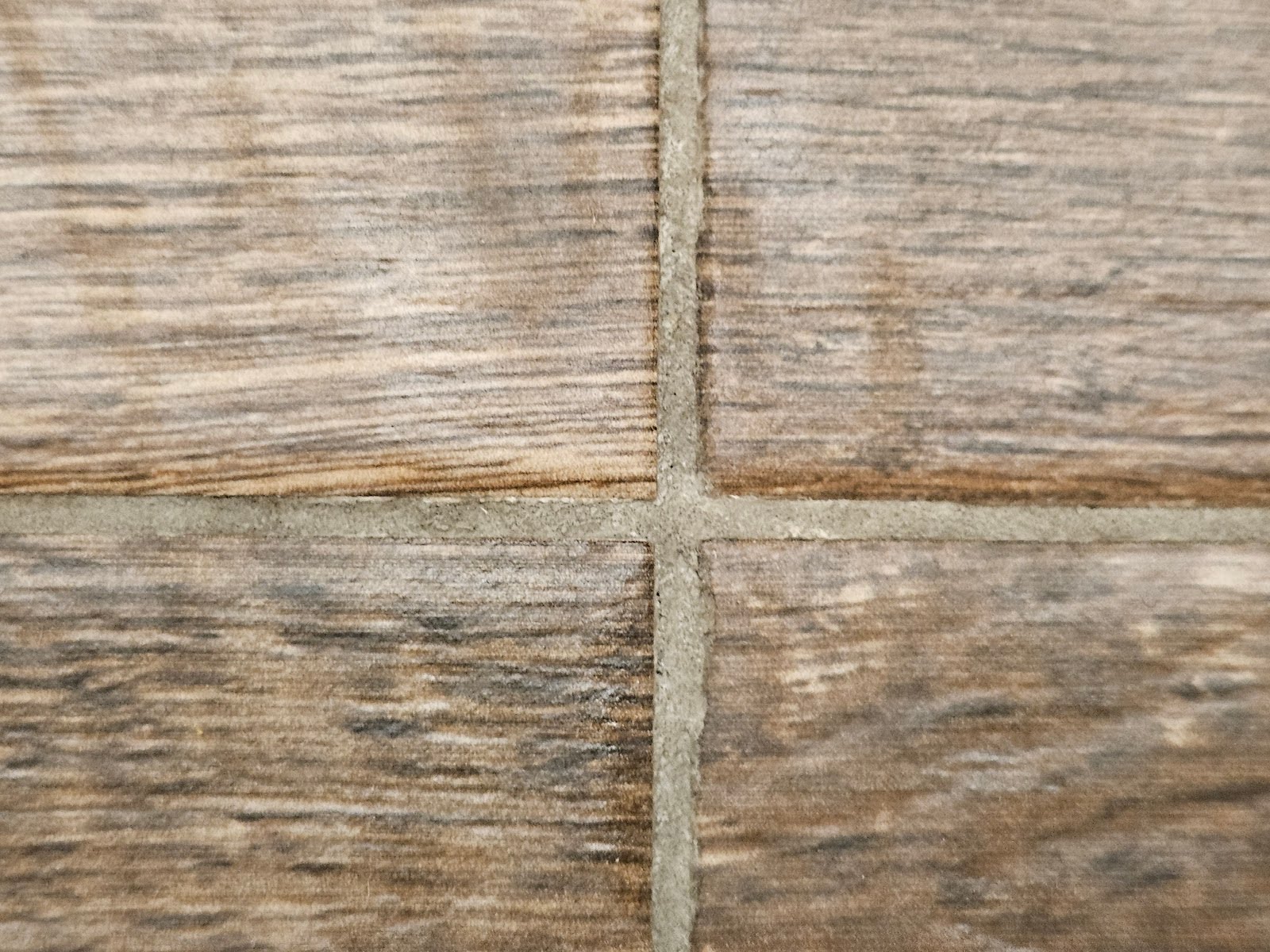
The next picture below shows a very close view. We’ll talk about grout lines this coming week and we will talk more about the popularity fad of ceramic tile made to look like wood.
Dupont Kitchen & Bath Can Help
As dedicated and local DC metropolitan kitchen and bath builders and installers, we pride ourselves on turning your visions into reality. Your kitchen and bathrooms can reflect your unique style and be designed with personalized aesthetics. It can be a process from creative designs to the realization of your dream space. Specializing in kitchen and bath construction, we bring expertise and skills to every project.
If you’re contemplating a renovation, upgrade, or modernization in the local market, we’re happy to be your team. Consult with us, and we can start together on a path to redefine and elevate your DC living experience.
You can visit our company website at https://dupontkitchenbathdc.com/ Here at our website you will find a simple and convenient web form that you can fill to contact us quickly.